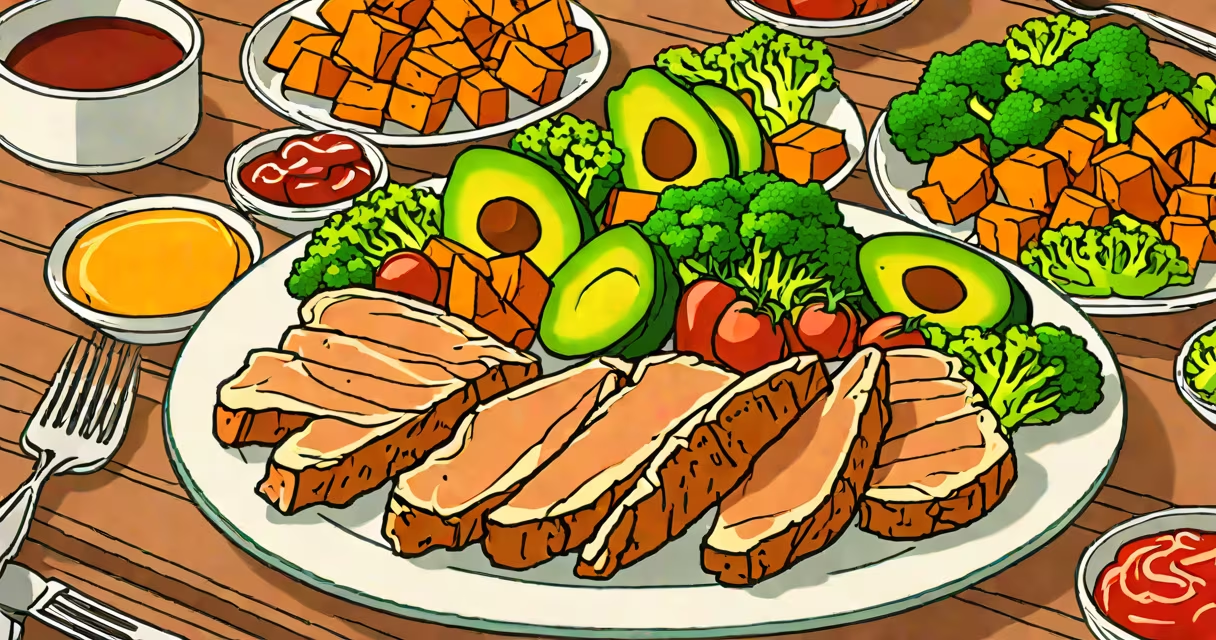
A muscle gaining and fat losing diet is a nutrition strategy that balances caloric intake and macronutrients to simultaneously increase lean muscle mass and reduce body fat. It relies on consistent protein consumption, moderate calorie deficits or maintenance, and structured training to drive body recomposition.
This approach contradicts the traditional belief that bulking (gaining weight) and cutting (losing weight) must happen in separate phases. Instead, it uses precise nutrient timing, resistance training, and metabolic adaptation to allow both processes to occur at once-especially effective for intermediate lifters with room to grow.
Research shows that individuals with moderate training experience can achieve body recomposition through a combination of resistance exercise and a protein-rich, moderately hypocaloric diet. A 2021 study published in the Journal of the International Society of Sports Nutrition found that participants consuming 1.6-2.2 grams of protein per kilogram of body weight daily while maintaining a 10-15% calorie deficit gained lean mass and lost fat over 12 weeks.
The core principle lies in creating a metabolic environment where muscle protein synthesis exceeds breakdown, even during a slight calorie deficit. This requires sufficient dietary protein-typically 1.6-2.2 g/kg/day-to fuel repair and growth. Without enough protein, the body breaks down muscle tissue for energy, undermining gains.
Carbohydrates supply energy for intense workouts and replenish glycogen stores. They also support recovery and hormone regulation, particularly testosterone and insulin-like growth factor 1 (IGF-1), which influence muscle development. Fats provide essential fatty acids and support hormonal health, especially testosterone production.
Calorie management is critical. A deficit too large leads to muscle loss. A surplus too big causes fat gain. The optimal range is typically 10-15% below maintenance calories, adjusted weekly based on progress. Tracking changes in strength, body measurements, and body composition via DEXA scans or bioimpedance scales ensures alignment with goals.
There's no single "right" version of a muscle gaining and fat losing diet. Variations exist based on lifestyle, preferences, and training intensity. The most effective models share common features:
Popular frameworks include:
| Type | Calorie Target | Protein (g/kg) | Best For |
|---|---|---|---|
| Intermittent Fasting (16:8) | Maintenance or slight deficit | 2.0-2.2 | Those who prefer fewer meals and better insulin sensitivity |
| Flexible Dieting (IIFYM) | Deficit or maintenance | 1.6-2.0 | Individuals who want food freedom within macros |
| Time-Restricted Feeding with Carb Cycling | Deficit on rest days, maintenance on training days | 2.2 | Advanced lifters with high volume training |
One common misconception is that you must eat less than your maintenance calories to lose fat. While a deficit is necessary, it must be small enough to preserve muscle. A 2022 review in Frontiers in Nutrition found that diets with a 10-15% deficit preserved lean mass better than those with 20% or higher deficits.
Many people confuse a muscle gaining and fat losing diet with a "cutting" phase. Cutting focuses solely on fat loss, often at the cost of muscle. Body recomposition, however, aims for net muscle gain and fat loss-achievable only when protein intake is high and training is progressive.
Another error is underestimating the role of resistance training. Without progressive overload, muscle protein synthesis drops. Even with perfect nutrition, results stall. A 2020 randomized trial showed that participants who combined resistance training with a high-protein diet lost 4.2 kg of fat and gained 2.1 kg of lean mass over 16 weeks-while those who trained aerobically saw no muscle gain.
Some assume this diet is only for bodybuilders. But it applies to anyone seeking improved physique, strength, and metabolic health. A 2023 study in Obesity Research & Clinical Practice found that overweight adults following a recomposition-focused diet improved insulin sensitivity and reduced visceral fat by 18% after 10 weeks-without significant weight loss.
Consider a 30-year-old male, 175 cm tall, weighing 85 kg with 22% body fat. His maintenance calories are ~2,600 kcal/day. To pursue body recomposition:
He trains five days a week with compound lifts (squats, deadlifts, bench press) and includes 30 minutes of cardio on off days. After 12 weeks, he weighs 83 kg, body fat drops to 17%, and his bench press increases from 100 kg to 115 kg.
I've seen this work firsthand. A client with 25% body fat dropped to 18% over 14 weeks while adding 5 kg of muscle. His energy levels stabilized, and he reported better sleep and focus-outcomes not captured by scale weight alone.
Success depends on consistency, not perfection. Small deviations don't derail progress. What matters is long-term adherence to protein targets, training progression, and regular feedback loops using objective measures.