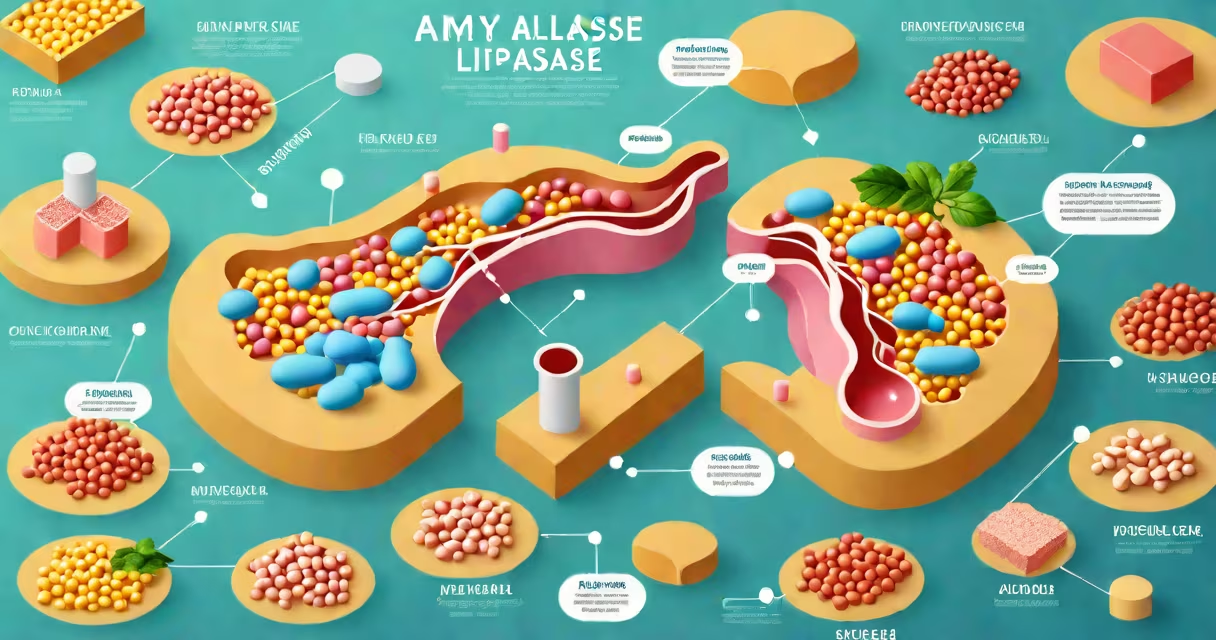
Amid the body's internal chemical processes, amylase and lipase are digestive enzymes primarily made by the pancreas and salivary glands. They break down starches and fats into simpler molecules for absorption. These enzymes circulate in the bloodstream, and their levels are routinely measured in clinical labs to assess pancreatic health.
When the pancreas becomes inflamed or obstructed, amylase and lipase leak into the blood. This rise triggers diagnostic testing. Clinicians rely on these markers to detect acute pancreatitis, gallstones, or chronic pancreatic disease. Normal levels typically fall within reference ranges set by laboratories-amylase between 30-110 U/L and lipase between 10-60 U/L, though values vary slightly by lab.
Both enzymes originate in the pancreas, but amylase also comes from salivary glands and parts of the gastrointestinal tract. Lipase is more specific to the pancreas. This difference makes lipase a more reliable indicator of pancreatic injury. A single elevated reading doesn't confirm disease-clinicians correlate results with symptoms, imaging, and patient history.
After eating, the pancreas secretes amylase into the small intestine through the pancreatic duct. There, it splits complex carbohydrates-like those in bread, rice, and potatoes-into maltose and glucose. Salivary amylase begins this process in the mouth, but stomach acid quickly halts its activity. Pancreatic amylase resumes digestion in the duodenum, where pH is neutralized by bicarbonate-rich fluid.
Lipase acts on triglycerides, breaking them into fatty acids and monoglycerides. This occurs in the small intestine, aided by bile from the liver. Without lipase, fat absorption drops. Deficiencies lead to steatorrhea-fatty, foul-smelling stools-and malnutrition. People with cystic fibrosis often lack sufficient lipase due to blocked ducts, requiring enzyme supplements.
A 2022 study published in Gastroenterology confirmed that serum lipase levels above 3 times the upper limit of normal predict severe acute pancreatitis with 89% sensitivity. Amylase rises less consistently-only 70% of patients show elevation during early attacks. This gap underscores why lipase is preferred in emergency settings.
Two main forms of amylase exist: salivary (P-type) and pancreatic (P-type). Both are isoforms of the same protein family. Salivary amylase is encoded by the *AMY1* gene and varies widely among individuals based on diet and ancestry. Populations with high-starch diets tend to have more copies of this gene, increasing amylase production.
Lipase comes in several forms. Pancreatic lipase is the primary enzyme responsible for fat breakdown. It requires colipase-a cofactor-to bind to fat droplets. Deficiency in either leads to fat malabsorption. Other lipases include gastric lipase (active in the stomach) and lingual lipase (from the tongue), which contribute minimally to digestion.
| Enzyme | Primary Source | Substrate | Normal Range (U/L) | Specificity for Pancreas |
|---|---|---|---|---|
| Amidase | Salivary glands, pancreas | Starch, glycogen | 30-110 | Low |
| Lipase | Pancreas (main), stomach, tongue | Triglycerides | 10-60 | High |
Non-pancreatic sources complicate interpretation. Conditions like mumps, kidney failure, or certain medications can raise amylase without pancreatic involvement. For example, a 2021 report in The Journal of Clinical Endocrinology & Metabolism linked elevated amylase to hyperglycemia in diabetic patients, independent of pancreatitis.
Many assume that high amylase always means pancreatitis. That's incorrect. A patient with a ruptured ectopic pregnancy may show elevated amylase due to peritoneal irritation, not pancreatic damage. Similarly, alcohol abuse can cause transient amylase spikes without lasting organ injury.
Lipase remains more accurate. A 2020 review in Clinical Chemistry found that lipase was abnormal in 94% of confirmed acute pancreatitis cases versus 73% for amylase. However, lipase can remain normal in mild or early cases. Patients with chronic pancreatitis may have normal levels despite ongoing tissue damage.
I once reviewed a case where a woman presented with abdominal pain and a lipase level of 180 U/L-three times the upper limit. Amylase was normal. She had no history of alcohol use or gallstones. Imaging revealed a small tumor compressing the pancreatic duct. Removing it normalized enzyme levels. This illustrates how lipase can reveal pathology even when amylase is silent.
Doctors order amylase and lipase together when evaluating abdominal pain. A ratio above 3:1 favors pancreatitis. Values below 1 suggest alternative causes like bowel obstruction or renal impairment. Repeat testing after 4-6 hours helps track trends-rising levels indicate worsening inflammation.
For people with known pancreatic disease, monitoring these enzymes helps adjust treatment. Chronic pancreatitis patients often require enzyme replacement therapy. A 2023 trial in Alimentary Pharmacology & Therapeutics showed that patients who took pancreatic enzyme supplements had lower lipase fluctuations and fewer flare-ups.
Understanding amylase and lipase isn't just academic. These enzymes serve as frontline indicators of internal balance. Their presence, absence, or excess reveals what's happening beneath the surface-often before symptoms become severe.