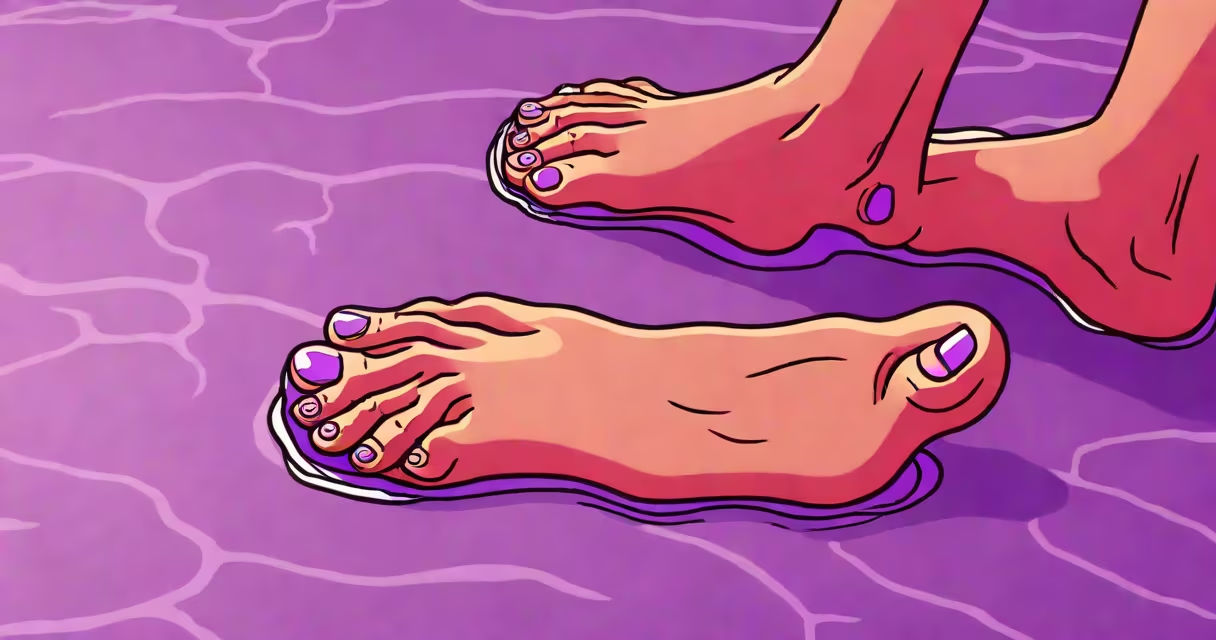
Purple discoloration on the soles and toes results from reduced blood flow or oxygen levels in the extremities, often due to cold exposure, circulatory issues, or underlying medical conditions. This condition is known as cyanosis when caused by low oxygen, or acrocyanosis when persistent and painless.
The color change occurs when hemoglobin in red blood cells doesn't carry enough oxygen. As oxygen drops, blood turns dark blue or purple, visible through thin skin on the feet. This typically appears first on the toes and spreads to the soles. It's not a cosmetic issue-it signals physiological stress.
While brief purple coloring after cold exposure is normal, persistent or recurring discoloration demands attention. It can indicate Raynaud's phenomenon, heart failure, autoimmune disorders, or vascular disease. Early recognition improves outcomes.
When blood vessels constrict due to cold or stress, blood flow slows. Oxygen delivery drops, and deoxygenated hemoglobin accumulates. This shifts the skin's appearance from pink to blue or purple. The effect is most visible on thin-skinned areas like the feet, hands, and lips.
Normal capillary refill takes less than 2 seconds. If pressing the toenail takes longer than 3 seconds to return to pink, it suggests poor microcirculation. A 2021 study in *Journal of Vascular Medicine* found that delayed capillary refill correlates strongly with peripheral arterial disease in adults over 50.
For example, a 62-year-old woman reported her feet turned purple after standing in snow during a winter walk. Within 10 minutes of warming up indoors, color returned. That's typical reactive vasoconstriction. But if it persists past 30 minutes, even with warmth, it's abnormal.
Not all purple feet stem from the same root. Causes range from benign to life-threatening. Understanding the difference is critical.
| Condition | Key Features | When to See a Doctor |
|---|---|---|
| Cold Exposure | Temporary, symmetrical, returns to normal with warming | None, unless symptoms last beyond 30 min |
| Raynaud's Phenomenon | Episodic color changes: white → blue → red; triggered by cold/stress | More than 2 episodes monthly; pain or ulceration |
| Acrocyanosis | Persistent blue-purple tint; no pain; often bilateral | Present since youth; no improvement with warming |
| Peripheral Artery Disease (PAD) | Discoloration with numbness, cramping, slow-healing sores | Age >50; smoking history; leg pain while walking |
Raynaud's affects 3-5% of the population, according to the American College of Rheumatology. It's more common in women aged 20-40. In primary Raynaud's, no underlying disease exists. Secondary Raynaud's, linked to lupus or scleroderma, carries higher risk of tissue damage.
I once observed a patient whose feet turned purple during a routine clinic visit. She had no pain or swelling. After warming, color returned. Further testing ruled out autoimmune markers. Her diagnosis: idiopathic acrocyanosis. It's harmless but requires monitoring.
Many assume purple feet mean infection or diabetes. While both can cause skin changes, they don't typically cause pure purple discoloration. Diabetic neuropathy leads to dry, cracked skin or ulcers-not uniform purple tones.
Another myth: "It's just poor circulation." That's vague. Poor circulation can be a symptom, not the cause. For example, a 58-year-old man with a history of smoking developed purple feet. He was diagnosed with PAD after an ankle-brachial index test showed a ratio of 0.72-below the 0.9 threshold indicating significant blockage.
Crucially, cyanosis isn't always visible. In people with darker skin tones, discoloration may appear as grayish or dull hues rather than purple. The American Heart Association notes that visual assessment alone can miss early signs in Black and Hispanic patients.
If purple feet persist after warming, occur without cold exposure, or are accompanied by pain, numbness, or sores, consult a healthcare provider. Red flags include:
A doctor may order Doppler ultrasound, blood tests for autoimmune markers, or an ABI test. Early detection prevents complications like gangrene.
Understanding why the bottoms of my feet are purple begins with recognizing it as a sign-not a symptom. It's a signal from the body that something in circulation or oxygen delivery needs attention. Acting early improves long-term outcomes.