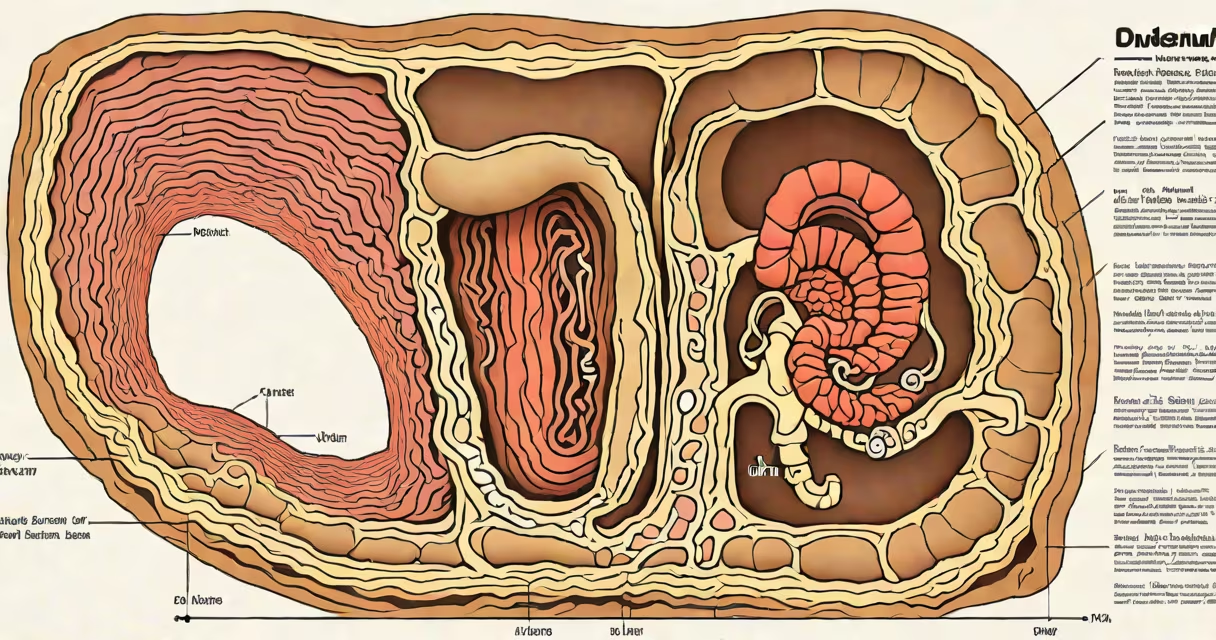
The esfinter de oddi is a ring-shaped muscle located at the junction of the common bile duct and pancreatic duct as they enter the duodenum. It regulates the release of bile from the liver and pancreatic enzymes from the pancreas into the small intestine during digestion.
This muscular valve functions as a gatekeeper. When closed, it prevents backflow of intestinal contents into the biliary and pancreatic ducts. When open, it allows bile and pancreatic juice to pass into the duodenum to aid fat digestion. Its coordinated contraction and relaxation depend on neural signals and hormonal cues such as cholecystokinin.
Dysfunction of the esfinter de oddi leads to biliary colic, pancreatitis, or obstructive jaundice. This condition occurs most often after cholecystectomy, particularly in patients with pre-existing biliary dyskinesia. The prevalence of post-cholecystectomy biliary pain attributed to sphincter of Oddi dysfunction ranges from 1% to 4%, according to the American Gastroenterological Association.
The esfinter de oddi consists of smooth muscle fibers that surround the ampulla of Vater-the site where the common bile duct and pancreatic duct join before emptying into the duodenum. During fasting, the sphincter remains contracted, maintaining pressure within the biliary system and preventing reflux.
After eating, especially fatty meals, the hormone cholecystokinin is released. It stimulates gallbladder contraction and triggers relaxation of the sphincter, allowing bile to flow into the duodenum. Simultaneously, pancreatic secretion increases, and the sphincter opens to permit enzyme release. This process typically takes 15 to 30 minutes postprandially.
When the sphincter fails to relax properly or contracts excessively, bile and pancreatic juices cannot exit freely. Obstruction leads to increased intraductal pressure, causing severe epigastric pain that may radiate to the back. Episodes often occur hours after meals and can mimic gallstones or peptic ulcer disease.
Sphincter of Oddi dysfunction is classified into three types based on clinical presentation and diagnostic findings:
| Type | Definition | Diagnostic Criteria |
|---|---|---|
| Type I | Recurrent biliary-type pain with abnormal liver function tests and imaging evidence of ductal dilation | Elevated bilirubin, alkaline phosphatase; ERCP shows dilated ducts |
| Type II | Pain with abnormal liver tests but normal imaging | Abnormal LFTs, normal ERCP findings |
| Type III | Pain without abnormal lab values or imaging | Pain only; normal labs and imaging |
Type I is the most severe and correlates with structural changes in the biliary tree. Type III is diagnosed clinically through exclusion and often responds poorly to therapy. The majority of cases fall under Type I or II.
Common causes include prior biliary surgery, idiopathic spasm, or anatomical variation. A 2021 study in *Gastroenterology* found that 68% of patients with post-cholecystectomy pain had elevated sphincter pressures measured via manometry, confirming functional obstruction.
Diagnosing esfinter de oddi requires ruling out other causes of abdominal pain. Initial evaluation includes ultrasound, MRI/MRCP, and blood tests for liver enzymes. Abnormal results prompt further investigation.
Endoscopic retrograde cholangiopancreatography (ERCP) with sphincter manometry is the gold standard. Manometry measures pressure within the sphincter. A resting pressure above 40 mmHg or a contraction lasting longer than 10 seconds indicates dysfunction. The procedure also allows therapeutic intervention, such as sphincterotomy.
For patients with confirmed Type I or II dysfunction, endoscopic sphincterotomy-cutting the sphincter muscle-is effective in 70% to 80% of cases. Success rates drop in Type III due to lack of objective markers. Medical management with antispasmodics or low-dose nitrates may help mild cases.
A 2023 review in *The New England Journal of Medicine* noted that surgical sphincteroplasty is reserved for refractory cases or those with failed endoscopic therapy. Risks include pancreatitis, bleeding, and infection, though complication rates remain below 5% in experienced centers.
Many assume that all post-cholecystectomy pain stems from residual gallstones. However, studies show that only 10% to 15% of such cases involve stones. The rest are due to motility disorders like esfinter de oddi dysfunction.
Another misconception is that ERCP is purely diagnostic. In reality, it's both diagnostic and therapeutic. Up to 60% of patients undergoing ERCP for suspected sphincter dysfunction receive immediate sphincterotomy, reducing hospital stay and pain recurrence.
Some clinicians confuse sphincter of Oddi dysfunction with irritable bowel syndrome. While both cause chronic abdominal pain, IBS lacks objective lab or imaging abnormalities. The presence of elevated liver enzymes or ductal dilation on MRCP points toward biliary pathology.
A 48-year-old woman presented with recurrent right upper quadrant pain six months after laparoscopic cholecystectomy. She reported episodes lasting 2 to 4 hours, occurring after meals and sometimes waking her at night. Labs showed mildly elevated AST (68 U/L) and ALT (72 U/L). Ultrasound was normal. MRCP revealed no ductal dilation.
She underwent ERCP with manometry. Pressure readings showed sustained contractions exceeding 50 mmHg. A diagnosis of Type II sphincter of Oddi dysfunction was confirmed. Endoscopic sphincterotomy was performed. Within two weeks, her pain resolved completely. Follow-up at six months showed no recurrence.
This case illustrates that persistent post-surgical pain after cholecystectomy should prompt advanced evaluation-not just symptom management.
Patients should consult a gastroenterologist if pain persists beyond three months post-cholecystectomy, especially with associated symptoms like jaundice, fever, or unexplained weight loss. Early diagnosis prevents progression to chronic pancreatitis or biliary cirrhosis.
For individuals experiencing recurring episodes of severe epigastric pain, particularly after eating, testing for sphincter of Oddi dysfunction may be warranted. Delayed diagnosis increases risk of irreversible organ damage.
Understanding the esfinter de oddi clarifies why some people continue to suffer after gallbladder removal. It is not a rare condition-it's a recognized cause of post-surgical pain that requires precise diagnosis and targeted treatment.