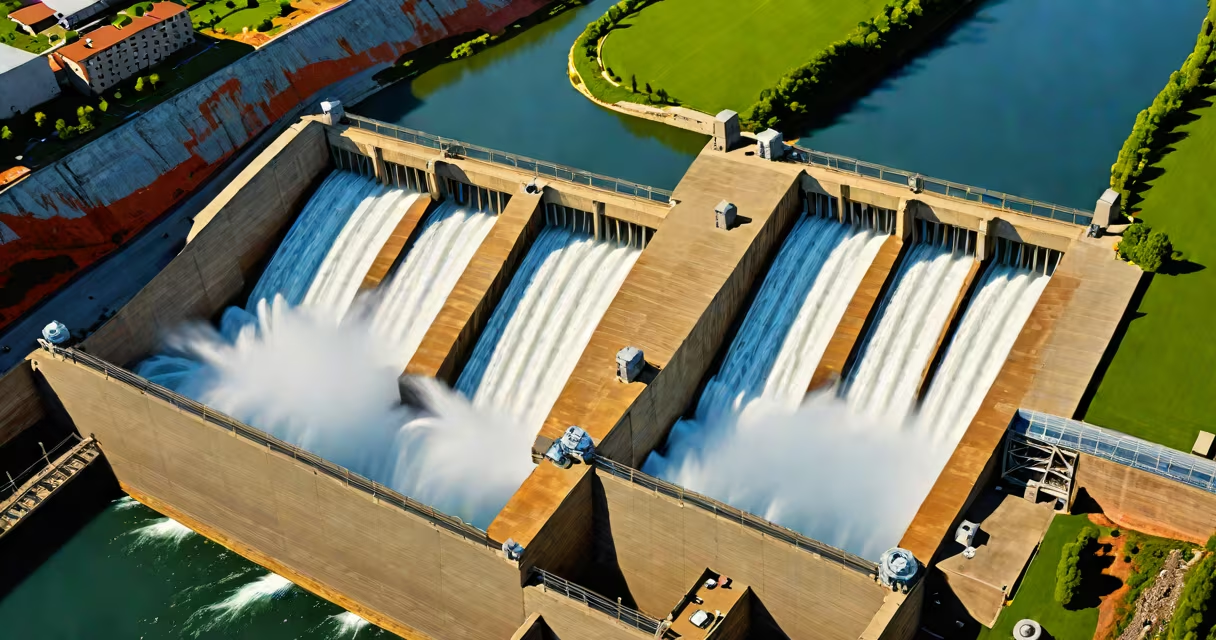
Hydroelectric energy generates electricity by harnessing the kinetic force of moving water, typically through dams on rivers. It accounts for about 16% of global electricity production and is among the most widely used renewable sources.
The core mechanism relies on water falling through turbines connected to generators. As water moves, it spins the turbine blades, converting mechanical energy into electrical energy. This process requires a consistent water flow and elevation change-ideal in mountainous or river-rich regions.
Hydroelectric plants operate with high efficiency, converting up to 90% of available energy into electricity, far exceeding fossil fuel plants. Major facilities like China's Three Gorges Dam produce over 22 gigawatts annually, enough to power tens of millions of homes.
Hydroelectric power produces no direct greenhouse gas emissions during operation. According to the International Energy Agency (IEA), hydropower emits less than 25 grams of CO₂ equivalent per kilowatt-hour-comparable to wind and lower than coal or natural gas.
Once built, hydroelectric plants have low operating costs and long lifespans. Many dams function for 50 to 100 years with minimal maintenance. The Grand Coulee Dam in Washington State, operational since 1942, continues to supply power to over 6 million people.
Hydroelectric systems provide grid stability. They can ramp up or down quickly to meet demand fluctuations, making them ideal for balancing intermittent sources like solar and wind. In Norway, hydropower supplies nearly 95% of national electricity and supports regional grid reliability.
Dams disrupt aquatic ecosystems. Fish migration routes are blocked, leading to population declines. The construction of the Belo Monte Dam in Brazil caused significant fish die-offs in the Xingu River, with species like the giant arapaima facing local extinction.
Flooded land releases methane. When vegetation submerged behind dams decomposes anaerobically, it emits methane-a greenhouse gas 28 times more potent than CO₂ over 100 years. A 2020 study in *Nature* found reservoirs contribute 1.2% of global anthropogenic methane emissions.
Displacement of communities is common. The Three Gorges Dam relocated over 1.2 million people. In India, the Sardar Sarovar Project displaced more than 300 villages, leading to long-term social and economic disruption for indigenous populations.
Not all hydroelectric systems are the same. Different designs suit different environments and priorities.
| Type | How It Works | Best For | Environmental Impact |
|---|---|---|---|
| Large-scale storage dams | Water stored in reservoirs, released to drive turbines | High, steady demand areas with river access | High-land flooding, habitat loss, methane release |
| Run-of-river | Uses natural river flow without large reservoirs | Mountainous or fast-flowing rivers | Low-minimal flooding, less habitat disruption |
| Pumped storage | Stores excess energy by pumping water uphill, releasing it later | Grid balancing and peak load support | Moderate-energy-intensive setup, land use |
Run-of-river systems avoid large reservoirs and reduce ecological damage. Canada's Mica Dam uses run-of-river design to generate 1,200 megawatts while minimizing land submersion. However, they depend on seasonal flows and cannot store energy for extended periods.
Hydroelectric energy is not universally "green." While operational emissions are near zero, construction and reservoir creation carry heavy environmental costs. The IPCC notes that lifecycle emissions from large dams can exceed those of some fossil fuel plants when methane is included.
Many assume hydroelectric power is always renewable. But reservoirs can dry up due to prolonged droughts. During California's 2012-2016 drought, hydropower output dropped by 50%, forcing reliance on natural gas and increasing emissions.
Another myth is that dams are purely beneficial. The Aswan High Dam in Egypt improved irrigation and flood control but caused soil salinization downstream and reduced nutrient flow to the Nile Delta, harming agriculture.
Iceland developed the Kárahnjúkar plant in 2007 to power an aluminum smelter. The project involved building a dam on the Jökulsá á Dal river, diverting water through tunnels to turbines.
Pros: The plant delivers 690 megawatts-about 15% of Iceland's total electricity capacity. It supports industrial growth and exports surplus power to Europe via undersea cables.
Cons: The project flooded 120 square kilometers of remote wilderness, including habitats for Arctic foxes and migratory birds. Environmental groups challenged the permits, citing irreversible system damage. The European Commission later ruled the project violated EU environmental laws.
This case shows that even in a country known for clean energy, hydroelectric projects involve trade-offs between development and conservation.
Hydroelectric energy remains a major source of low-carbon electricity, but its implementation demands careful assessment of location, scale, and long-term impacts. Not all hydro projects are equal-run-of-river systems offer better ecological balance than large storage dams.