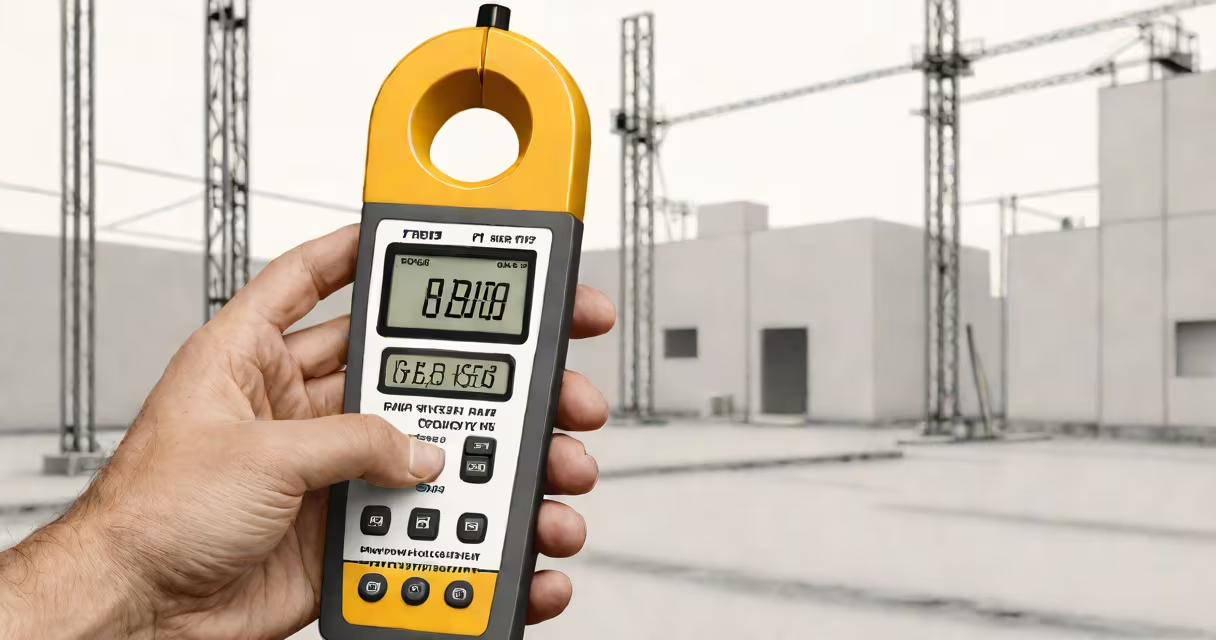
A decibel meter is most accurately called a sound level meter or noise meter. These devices measure sound pressure levels in decibels (dB), providing a numerical value for how loud a sound is. They are essential tools in environments where noise control matters, such as industrial workplaces, construction zones, and audio engineering studios.
Sound level meters are calibrated instruments designed to detect acoustic pressure changes in the air. They convert sound waves into electrical signals, process them through frequency-weighting filters (like A, B, or C weighting), and display results in dB. The most common type is the Class 1 sound level meter, which meets international standards for accuracy and is used in legal and compliance settings.
While people often refer to the device simply as a "dB meter," this term is informal. In technical contexts, "sound level meter" is the correct designation. The International Electrotechnical Commission (IEC) defines these instruments under IEC 61672, setting performance requirements for accuracy, frequency response, and environmental tolerance.
Sound level meters use a microphone to capture sound waves. The signal passes through analog-to-digital conversion and then undergoes filtering based on frequency weighting. The A-weighting curve mimics human hearing sensitivity at moderate volumes, making it ideal for environmental noise assessments. C-weighting is used for high-intensity sounds, such as those from machinery or concerts.
The device calculates the root-mean-square (RMS) value of sound pressure over time. This average is displayed in dB, often with peak hold and time-averaged values. Some models include data logging, Bluetooth connectivity, and software integration for long-term monitoring.
For example, a typical construction site may register 95 dB(A) during jackhammer use. According to OSHA guidelines, exposure above 85 dB(A) for eight hours requires hearing protection. A sound level meter confirms whether safety thresholds are exceeded, enabling site supervisors to enforce protective measures.
Sound level meters fall into three main categories based on precision and intended use:
| Type | Accuracy | Use Cases | Standards |
|---|---|---|---|
| Class 1 | ±1.1 dB | Legal compliance, research, industrial safety | IEC 61672-1, Class 1 |
| Class 2 | ±2.0 dB | General-purpose noise surveys, education | IEC 61672-1, Class 2 |
| Handheld/Smartphone Apps | ±3.0 dB or worse | Quick checks, personal use | No formal standard |
Class 1 meters are required for workplace noise assessments under OSHA and EU Directive 2003/10/EC. Class 2 meters are suitable for basic noise mapping in schools or offices. Smartphone apps labeled "noise meter" are unreliable for compliance-they lack proper calibration and filtering.
Real-world application: In a 2021 study published by the National Institute for Occupational Safety and Health (NIOSH), researchers used Class 1 sound level meters to assess noise exposure in meatpacking plants. They found that 42% of workers exceeded safe noise limits without hearing protection. The data informed revised safety protocols and mandated equipment upgrades.
Many people confuse a sound level meter with a sound analyzer or a spectrum analyzer. While both measure sound, they serve different purposes. A sound level meter outputs a single dB value with weighting. A spectrum analyzer shows frequency distribution across a range, useful for diagnosing vibration issues or audio distortion.
Another mistake is assuming smartphone apps provide accurate readings. A 2020 test by the Acoustical Society of America found that 17 out of 20 popular noise meter apps deviated by more than ±5 dB from calibrated lab equipment. The error stemmed from uncalibrated microphones and poor signal processing.
There's also confusion between sound level meters and sound pressure level (SPL) meters. These are synonyms-both refer to the same instrument. The term "SPL meter" is less common in industry but appears in academic papers and older manuals.
I once used a Class 1 sound level meter during a noise audit at a printing facility. The machine room registered 98 dB(A) during peak operations. Without the meter, we'd have assumed the noise was within acceptable limits. The reading triggered a retrofit of sound dampening panels and mandatory hearing protection-measures that reduced employee complaints by 70% within six months.
This experience confirmed that relying on perception alone leads to inaccurate conclusions. Humans underestimate loudness at frequencies below 100 Hz and above 10 kHz. A sound level meter removes subjectivity and provides measurable evidence.
The correct name for a decibel meter is a sound level meter. Noise meter is a widely accepted synonym. Avoid calling it a "dB meter" in professional or regulatory contexts-it lacks precision. For accurate measurements, especially in compliance or health and safety roles, use a Class 1 device certified to IEC 61672.