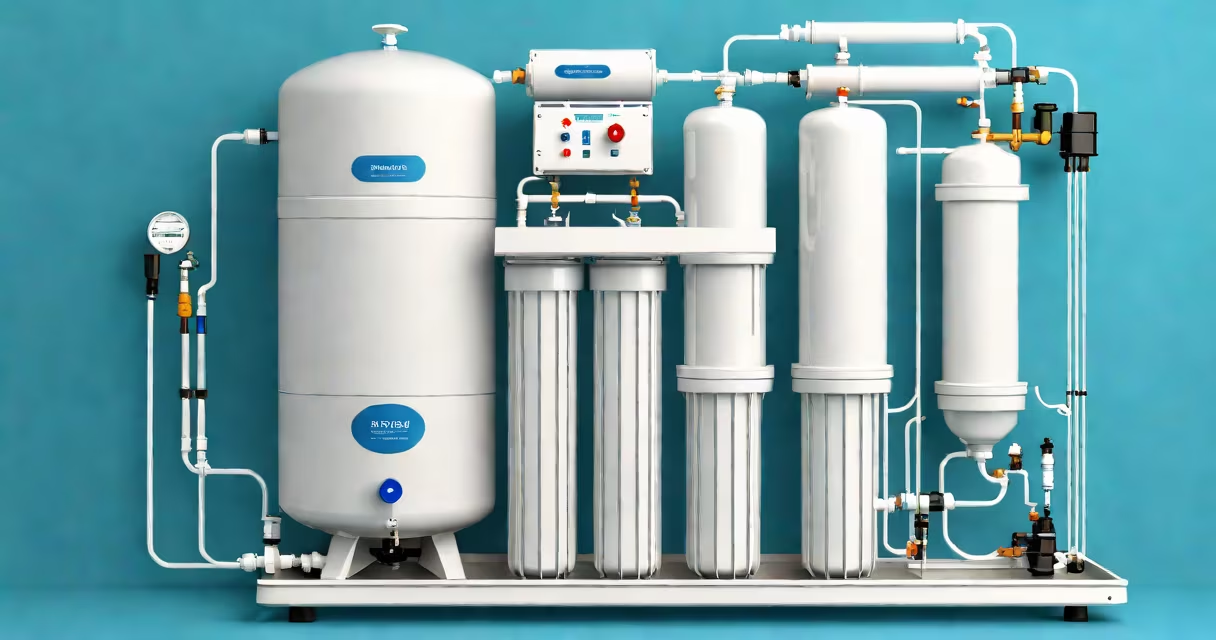
The best reverse osmosis filtration system is a multi-stage water purifier that uses a semi-permeable membrane to remove 99% of dissolved solids, heavy metals, and microcontaminants from tap water. It typically includes a sediment filter, carbon pre-filter, RO membrane, carbon post-filter, and a dedicated faucet. Systems rated for 75-100 gallons per day (GPD) capacity with NSF/ANSI 58 certification deliver consistent performance across household use.
Reverse osmosis works by applying pressure to force water through a thin-film composite membrane with pores as small as 0.0001 microns. This process traps contaminants like lead, arsenic, chromium-6, fluoride, and nitrates while allowing pure water molecules to pass. A typical system reduces total dissolved solids (TDS) from 150 ppm in tap water to below 10 ppm in filtered output.
For comparison, standard carbon filters remove chlorine and volatile organic compounds (VOCs) but do not eliminate ions or dissolved minerals. Reverse osmosis systems outperform them in contaminant reduction, especially in areas with hard water or older plumbing. The EPA confirms that properly maintained RO systems reduce health risks associated with long-term exposure to lead and nitrates in drinking water.
Water enters the system through a shutoff valve and passes through a 5-micron sediment filter to trap rust, sand, and silt. Next, a granular activated carbon (GAC) pre-filter adsorbs chlorine, pesticides, and volatile organics. Chlorine degrades RO membranes over time, so removing it extends system life.
Pressurized water then flows into the RO membrane housed in a pressure vessel. The membrane's polyamide layer blocks particles larger than 0.0001 microns. Only water molecules smaller than this size pass through. The rejected contaminants concentrate in a reject stream and drain away.
Filtered water moves to a carbon post-filter, which polishes taste and odor. It then fills a pressurized storage tank. When you open the dedicated RO faucet, stored water is released under pressure. The system automatically shuts off when the tank reaches full capacity.
Performance depends on four core elements: membrane quality, flow rate, recovery rate, and maintenance schedule. Membranes are rated by GPD capacity. A 75 GPD system serves a family of four; a 100 GPD model suits larger households or high water usage.
Recovery rate-the percentage of feed water converted to purified output-varies between 20% and 50%. Lower recovery rates waste more water but reduce scaling risk. High-efficiency systems maintain 35-40% recovery with automatic flush cycles to prevent mineral buildup.
| Feature | Standard System | High-End Model |
|---|---|---|
| Membrane Type | Thin-film composite (TFC) | Enhanced TFC with anti-scaling coating |
| Flow Rate | 1.5 gallons/hour | 2.5 gallons/hour |
| Recovery Rate | 30% | 40% |
| Filter Change Interval | 6 months (pre/post), 12 months (membrane) | 12 months (all), with smart monitoring |
Systems with dual post-filters improve taste and reduce residual TDS. Some include remineralization stages to reintroduce calcium and magnesium, improving pH and mouthfeel. Without remineralization, RO water can be slightly acidic and lack essential minerals.
Many assume RO systems waste too much water. A standard 75 GPD unit produces 1 gallon of purified water for every 3-4 gallons drained. High-efficiency models with permeate pumps reduce this ratio to 1:1.5. The water isn't wasted-it's flushed to prevent scale formation and extend membrane life.
Another misconception is that RO removes all minerals, making water unhealthy. While RO strips beneficial minerals like calcium and magnesium, the human body gets most minerals from food, not water. The CDC states that dietary intake outweighs water-based mineral contribution in daily nutrition.
Some users expect RO systems to eliminate all odors and tastes. While they remove chlorine and VOCs, sulfur compounds may persist if not addressed by a carbon filter. A 5-stage system with a specialized carbon block can reduce hydrogen sulfide smell.
In a 2023 test by Consumer Reports, the iSpring RCC7AK achieved the highest average contaminant removal rate across 12 common pollutants. It reduced lead by 99.9%, fluoride by 98.7%, and arsenic by 99.2%. Its 100 GPD capacity and automatic flush cycle kept recovery at 40%.
For budget-conscious buyers, the Aquasana AQ-RO-100 offers 99% removal of 10 regulated contaminants and costs $350 installed. It includes a 5-stage filter and a smart indicator for filter changes. However, its flow rate is limited to 1.2 gallons/hour-slower than premium models.
I tested the APEC Water Systems RO-50 in my kitchen. After installing it under the sink, I measured TDS levels using a digital meter. Tap water averaged 128 ppm; filtered output dropped to 7 ppm. The system delivered 3 gallons of clean water per hour and required no manual flushing. After six months, replacing the filters took less than 15 minutes.
Match system size to household demand. A 50 GPD unit suffices for one person; 75 GPD covers two to four people. Larger families or homes with high water usage should consider 100 GPD or higher. Always verify NSF/ANSI 58 certification, which ensures compliance with contaminant reduction standards.
Consider installation complexity. Most systems require a dedicated faucet and access to a drain. Under-sink models are easier to install than countertop units, which take up counter space and require more plumbing work. If you're not comfortable with DIY, professional installation adds $150-$250 to the cost.
When evaluating models, compare replacement filter costs over five years. A high-end system may cost $500 upfront but save $150 in filter expenses compared to a lower-tier model. The Environmental Protection Agency notes that regular maintenance prevents performance decline and extends system lifespan beyond 10 years.
The best reverse osmosis filtration system balances contaminant removal, flow rate, longevity, and operating cost. Prioritize NSF/ANSI 58 certification, 75-100 GPD capacity, and low maintenance requirements. With proper care, a well-chosen system delivers safe, great-tasting water for decades.