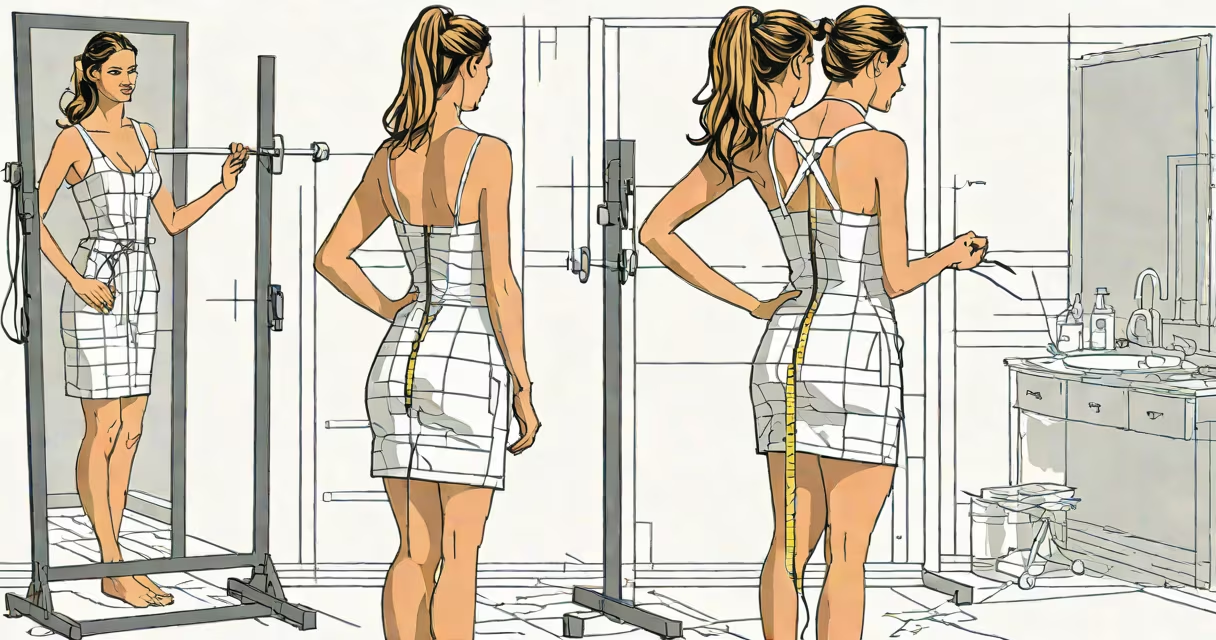
Your dress size is determined by your body measurements-bust, waist, and hips-compared against a brand's specific size chart. Sizes vary between brands and styles, so a size 10 in one label may fit differently than a size 10 in another. Always measure yourself and cross-reference with the retailer's size guide.
Dress sizes are not standardized across manufacturers. A size 10 in a department store may differ from a size 10 in a boutique or online brand. This inconsistency causes fitting issues, especially when shopping online. Measuring your actual body dimensions eliminates guesswork and ensures a better fit.
For example, a woman with a 36-inch bust, 28-inch waist, and 38-inch hips might find that she fits into a size 14 in one brand but a size 12 in another. The difference lies in how each brand interprets standard sizing. According to the National Institute of Standards and Technology (NIST), commercial apparel sizing lacks uniformity due to historical variations in patternmaking practices.
Most retailers use a combination of numerical size codes (like 6, 10, 14) and letter designations (XS, S, M, L) to classify garments. These codes are based on average body measurements derived from decades-old population data. However, current body proportions have shifted, making older standards less accurate.
When you measure your bust, waist, and hips, compare those numbers to the size chart provided by the brand selling the dress. If your bust measures 36 inches, and the size 14 chart lists a bust range of 36-38 inches, then size 14 is appropriate. If your measurement falls outside the listed range, choose the closest size that accommodates your body.
Some brands offer extended sizing. For instance, a brand may list sizes up to 30, with detailed measurement guides. These are often labeled as "plus size" or "extended size." If you're a size 16 or above, look for brands that explicitly state their size range includes larger figures. A size 16 in a plus size dress may differ from a size 16 in a standard women's line.
| Body Measurement | Size 10 (Standard) | Size 10 (Plus Size) | Size 16 (Plus Size) |
|---|---|---|---|
| Bust (inches) | 36-38 | 40-42 | 44-46 |
| Waist (inches) | 28-30 | 32-34 | 36-38 |
| Hips (inches) | 38-40 | 42-44 | 46-48 |
Notice the gap between standard and plus size ranges. A size 10 in a standard line doesn't equate to a size 10 in a plus size collection. This distinction is critical when selecting a dress. If you're shopping for a size 10, confirm whether the brand uses standard or extended sizing.
Many people assume that a size 10 in one brand equals a size 10 in another. This assumption leads to returns, frustration, and wasted time. A 2022 study by the Fashion Institute of Technology found that 43% of online dress purchases were returned due to incorrect sizing.
Another common error is relying solely on height and weight. A woman who is 5'6" and weighs 150 pounds may have a different body shape than someone of the same height and weight. Body shape matters-hourglass, pear, apple, or rectangular-all affect how a dress fits. A-line dresses, for example, are designed to flatter hourglass and pear shapes by cinching at the waist and widening toward the hem.
I once bought a size 12 a-line dress online based on my weight and height. It fit tightly across the chest and was too long in the torso. After measuring myself, I realized my bust was 38 inches-outside the size 12 range. Switching to a size 14 corrected the fit. This experience taught me that measurements trump assumptions.
If your measurements fall between two sizes, choose the size that matches your largest measurement. For example, if your bust is 38 inches and your waist is 29 inches, and the size 12 chart lists bust 36-38 and waist 28-30, size 12 fits. But if your hips are 40 inches and the size 14 chart lists hips 38-40, go with size 14.
Consider the style. A fitted sheath dress requires precise measurements. An A-line or empire-waist dress allows more flexibility. If you're between sizes in a stretchy knit dress, go with the smaller size-it will stretch to fit. For non-stretch fabrics, err on the side of larger.
When in doubt, consult the brand's customer service team. Many retailers provide size advisors who can recommend a size based on your measurements. Some even offer virtual fitting tools using uploaded photos.
Never rely on past size experiences when buying a new dress. Always measure your bust, waist, and hips. Compare those numbers to the size chart of the specific brand and style you're considering. A size 10 in one brand may not match a size 10 in another, especially when comparing standard and plus size lines.
Understanding your true dress size prevents return costs, saves time, and ensures confidence in your outfit choice. Measure, compare, and choose with precision.