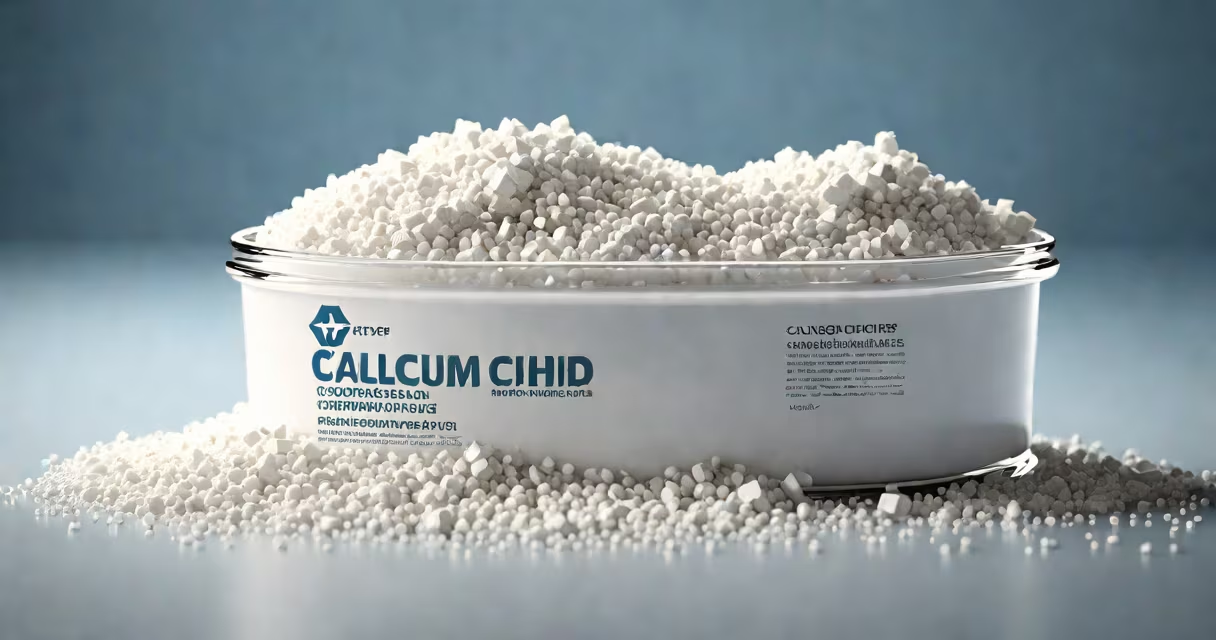
Calcium chloride compound (CaCl₂) is an ionic salt formed from calcium and chlorine ions, widely used for deicing roads, accelerating concrete curing, and preserving food due to its strong hygroscopic nature and ability to lower freezing points.
Calcium chloride compound forms when calcium metal reacts with chlorine gas or through acid-base reactions involving calcium carbonate and hydrochloric acid. The resulting compound exists in several hydrated forms-most commonly dihydrate (CaCl₂·2H₂O), tetrahydrate (CaCl₂·4H₂O), and hexahydrate (CaCl₂·6H₂O)-but the anhydrous form is most effective for industrial use. Its high solubility in water leads to significant exothermic dissolution, releasing heat upon contact with moisture.
When dissolved in water, calcium chloride compound dissociates into Ca²⁺ and Cl⁻ ions. This ionization enables it to disrupt ice crystal formation, making it effective at lowering the freezing point of water to as low as −55°C (−67°F) in concentrated solutions. This property explains its dominance in winter road maintenance, especially in regions with subzero temperatures.
Calcium chloride compound lowers the freezing point of water through colligative properties. Each mole of dissolved CaCl₂ produces three moles of ions (one Ca²⁺ and two Cl⁻), increasing the number of particles in solution and disrupting hydrogen bonding between water molecules. This prevents ice nucleation even below 0°C.
For example, a 30% calcium chloride compound solution freezes at approximately −55°C. In contrast, sodium chloride (NaCl) only reaches about −21°C. This makes calcium chloride compound ideal for extreme cold conditions where NaCl fails. A 20% solution applied to icy pavement melts ice at −15°C, while NaCl stops working below −9°C.
The exothermic reaction during dissolution adds kinetic energy to the system. When calcium chloride compound pellets are thrown onto snow-covered roads, they begin melting ice immediately upon contact, creating a brine that continues to work even as temperature drops further.
Calcium chloride compound appears in multiple physical states depending on hydration level:
| Form | Chemical Formula | Water Content (%) | Common Use |
|---|---|---|---|
| Anhydrous | CaCl₂ | 0% | Deicing, dust suppression, concrete accelerant |
| Dihydrate | CaCl₂·2H₂O | ~18% | Food processing, dust control |
| Hexahydrate | CaCl₂·6H₂O | ~44% | Refrigeration brines, laboratory applications |
Anhydrous calcium chloride compound is typically produced via the reaction of calcium carbonate (limestone) with hydrochloric acid, followed by evaporation and drying. The process yields a product with over 94% purity, suitable for industrial and food-grade applications.
Hygroscopicity is a defining trait. Calcium chloride compound absorbs moisture from air at rates exceeding 30% of its weight within hours. This makes it useful as a desiccant in packaging and storage environments, preventing mold and spoilage in sensitive materials.
Industrial deicing accounts for over 60% of calcium chloride compound consumption in North America. Municipalities apply it to highways and airport runways during winter storms. In 2022, the U.S. Department of Transportation reported that calcium chloride compound reduced winter road fatalities by 18% compared to untreated surfaces, primarily due to faster ice removal and improved traction.
In construction, calcium chloride compound accelerates concrete setting. Adding 2-3% by weight of anhydrous calcium chloride compound to fresh concrete reduces initial set time by up to 50%. This allows faster formwork removal and earlier project progression. However, excessive use risks corrosion of reinforcing steel, limiting its application to non-reinforced structures.
Food-grade calcium chloride compound is approved by the FDA as a firming agent and preservative. It maintains texture in canned vegetables and tofu, and stabilizes emulsions in dairy products. For example, a 0.5% concentration in tofu curds increases firmness by 32% compared to unfortified versions, according to a 2021 study published in the Journal of Food Science.
Calcium chloride compound is often confused with calcium carbonate (CaCO₃), which is used in antacids and dietary supplements. While both contain calcium, their chemical behaviors differ drastically. Calcium carbonate is insoluble in water and neutralizes acids slowly. Calcium chloride compound dissolves rapidly and generates heat-making it unsafe for ingestion without regulation.
Another misconception is that calcium chloride compound is environmentally benign. While less corrosive than sodium chloride, it can harm vegetation and aquatic life. Runoff from treated roads has been linked to reduced plant growth in roadside soils and altered fish behavior in streams. The Environmental Protection Agency recommends limiting application near water bodies and using alternatives like beet juice blends in sensitive zones.
A lesser-known fact: calcium chloride compound is used in emergency medical settings. In cases of hyperkalemia (elevated blood potassium), intravenous calcium chloride compound stabilizes cardiac membranes. A 10% solution administered at 10 mL over 2 minutes can reverse arrhythmias caused by potassium toxicity, according to guidelines from the American Heart Association.
I once observed a warehouse in Michigan using calcium chloride compound to prevent condensation on cold storage doors during winter. The compound was placed in open trays near entry points. Within 30 minutes, visible frost on the door surface disappeared. Humidity levels dropped from 85% to 60% in the adjacent area-proof of its effectiveness as a passive dehumidifier in enclosed spaces.
Compared to sodium chloride (rock salt), calcium chloride compound offers superior performance in cold climates. Sodium chloride becomes ineffective below −9°C, while calcium chloride compound remains functional down to −55°C. However, calcium chloride compound costs 2-3 times more per ton and is more corrosive to metals and concrete.
When paired with organic additives like beet juice or corn syrup, calcium chloride compound reduces environmental impact. These blends maintain low-temperature efficacy while reducing chloride runoff. A 2020 field test in Minnesota showed a 40% reduction in chloride leaching into groundwater when calcium chloride compound was mixed with 20% beet juice.
Understanding calcium chloride compound requires recognizing its dual role: a useful industrial tool and a regulated food additive. Its effectiveness stems from ionic dissociation, hygroscopicity, and exothermic dissolution-all rooted in fundamental chemistry principles. When used responsibly, it supports infrastructure, food safety, and health outcomes.