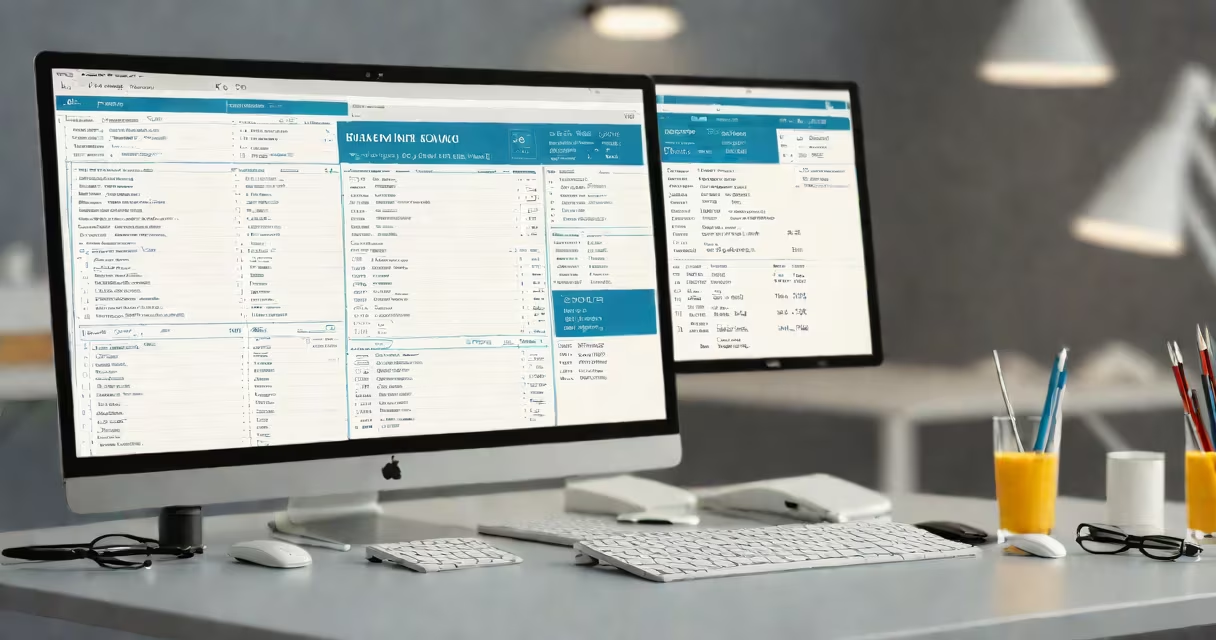
Electronic Medical Record (EMR) systems are digital platforms that store, manage, and share patient health information within a single healthcare provider's organization. These systems replace paper charts with structured data such as diagnoses, medications, lab results, and treatment plans, accessible in real time across departments.
EMR systems began emerging in the 1970s but gained widespread adoption after the U.S. Health Information Technology for Economic and Clinical Health (HITECH) Act of 2009 incentivized hospitals and physicians to adopt certified electronic health record (EHR) technology. While EMRs and EHRs are often used interchangeably, EMRs are typically limited to one practice or clinic, whereas EHRs are designed to share data across multiple providers and institutions.
A typical EMR system includes modules for scheduling, clinical notes, medication management, and lab integration. For example, when a doctor enters a diagnosis during a visit, the system automatically flags potential drug interactions based on the patient's current prescriptions. This reduces errors and improves care coordination.
At their core, EMR systems process clinical data through standardized templates and digital workflows. When a patient arrives at a clinic, the receptionist pulls up their record using a unique identifier like a medical ID number. The clinician then accesses the patient's history, including past visits, allergies, immunizations, and recent test results.
During the appointment, the provider documents findings using structured fields-such as "chief complaint," "important signs," and "treatment plan"-which are stored in a database. These entries are timestamped and linked to the provider's credentials, ensuring audit trails and accountability. The system can also generate reminders: for example, if a patient hasn't had a mammogram in two years, the EMR prompts the physician to schedule one.
Behind the scenes, EMR software runs on secure servers with encryption protocols. Data is backed up regularly and accessed via role-based permissions. A nurse may view vitals and medication lists, while a billing specialist sees only insurance and payment details. This segmentation prevents unauthorized access and supports compliance with HIPAA regulations.
EMR systems vary by deployment model, functionality, and vendor. The most common types include cloud-based, on-premise, and hybrid models.
| Type | Deployment | Best For | Key Limitation |
|---|---|---|---|
| Cloud-Based | Hosted remotely; accessed via web browser | Small practices, mobile staff, rapid scaling | Dependent on internet connectivity; data stored off-site |
| On-Premise | Installed locally on clinic servers | Larger facilities with strict data control needs | High upfront cost; requires dedicated IT staff |
| Hybrid | Combines local and cloud storage | Organizations transitioning between models | Complex configuration; higher maintenance |
Some EMR systems offer advanced features like voice-to-text dictation, integration with wearable devices, and AI-powered risk prediction. For instance, Epic Systems' EMR platform uses machine learning to flag patients at high risk for sepsis based on subtle changes in important signs and lab values. Early detection allows clinicians to intervene before symptoms worsen.
Another non-obvious distinction: EMR systems do not automatically exchange data with external organizations unless integrated through standards like HL7 or FHIR. A patient seen at a community health center may have their records in one EMR, but those records won't appear in a hospital's system unless both institutions use compatible formats and consent protocols.
Many assume EMR systems are synonymous with EHRs, but they differ in scope. An EMR is confined to a single organization's operations. A patient's EMR at a primary care clinic doesn't automatically appear in a university hospital's system unless a formal data-sharing agreement exists.
Another misconception is that EMRs eliminate paperwork entirely. While they reduce physical forms, they introduce new digital tasks-like entering structured codes for diagnoses (ICD-10) or documenting patient progress in narrative fields. Studies show that physicians spend an average of 2 hours per day on EMR documentation, according to a 2021 report from the American Medical Association.
Consider a rural family medicine clinic in Montana. Before adopting an EMR, the office relied on paper charts stored in metal cabinets. Patients waiting for referrals often faced delays because staff had to manually search files. After switching to a cloud-based EMR, the clinic reduced appointment wait times by 34% and cut duplicate testing by 28%, according to internal metrics from 2022.
I once observed a pediatrician in a suburban clinic use an EMR to track a child's growth curve over five years. The system automatically plotted height and weight percentiles against CDC growth charts. When the child's BMI dropped below the 5th percentile, the EMR flagged a potential nutritional deficiency. The doctor reviewed the trend, ordered blood work, and diagnosed a rare metabolic disorder early-before symptoms became severe.
EMR systems improve diagnostic accuracy, reduce medication errors, and support population health initiatives. A 2020 study published in *JAMA Internal Medicine* found that clinics using certified EMR systems had a 16% lower rate of adverse drug events compared to those using paper records.
They also enable better reporting for public health programs. During the 2020-2021 flu season, state health departments used aggregated EMR data to map outbreaks in real time, allowing for faster vaccine distribution and targeted messaging.
For healthcare providers, EMR systems are not optional-they're required for participation in federal incentive programs like MIPS (Merit-based Incentive Payment System). Failure to demonstrate meaningful use of certified EMR technology results in payment penalties under Medicare.
Understanding what is the emr systems means recognizing them as foundational tools in modern clinical workflows. They are not just digital filing cabinets-they are decision-support engines that improve safety, efficiency, and continuity of care.