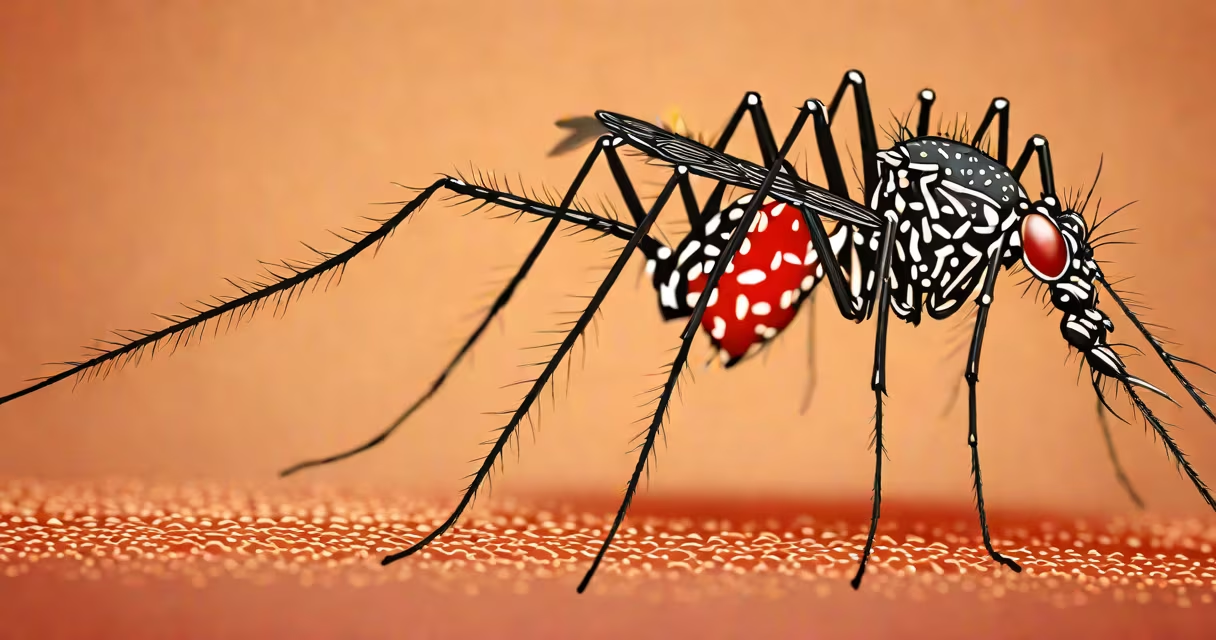
The zika virus is a flavivirus transmitted primarily by infected Aedes mosquitoes, most commonly Aedes aegypti. It causes a mild illness in adults but is strongly associated with severe birth defects, including microcephaly, when contracted during pregnancy. The virus was first identified in Uganda in 1947 and gained global attention during the 2015-2016 outbreak in the Americas.
Zika virus belongs to the Flaviviridae family, which includes dengue, yellow fever, and West Nile viruses. Like these pathogens, it replicates in host cells using RNA-dependent RNA polymerase. The virus enters human cells via receptor-mediated endocytosis, primarily targeting neural progenitor cells in developing fetuses. This cellular targeting explains its link to congenital abnormalities.
Transmission occurs mainly through bites from female Aedes mosquitoes, which are aggressive daytime biters. These mosquitoes thrive in urban environments with standing water. The virus can also spread through sexual contact, blood transfusion, and from mother to fetus during pregnancy. In rare cases, transmission has occurred via organ donation.
After entering the bloodstream, zika virus circulates for about 3 to 14 days. During this time, it may cause flu-like symptoms such as fever, rash, joint pain, and conjunctivitis. However, approximately 80% of infections are asymptomatic, making detection difficult without testing.
When infection occurs during pregnancy, the virus crosses the placenta and disrupts fetal brain development. Studies show that maternal infection in the first trimester increases the risk of microcephaly by up to 10%. The CDC reports that among infants born to mothers with confirmed zika infection during pregnancy, about 1 in 10 had a birth defect related to the virus.
Another serious complication is Guillain-Barré syndrome (GBS), an autoimmune disorder affecting nerves. Post-outbreak surveillance in Brazil found a 20-fold increase in GBS cases during the 2015-2016 zika surge. The mechanism involves molecular mimicry, where the immune system attacks both viral proteins and peripheral nerve tissue.
Zika virus has two major lineages: African and Asian. The Asian lineage caused the 2015-2016 pandemic. Genetic sequencing shows the virus evolved rapidly, with mutations enhancing its ability to infect human cells and evade immunity.
| Transmission Route | Efficiency | Confirmed Cases |
|---|---|---|
| Aedes mosquito bite | High | Over 1 million cases in Americas (2015-2016) |
| Sexual transmission | Moderate | At least 130 documented cases (CDC, 2022) |
| Pregnancy to fetus | High risk | ~10% of exposed pregnancies result in birth defects |
| Blood transfusion | Rare | Only 3 confirmed cases globally |
While mosquito transmission remains the primary route, sexual transmission is well-documented. The virus persists in semen longer than in blood-up to 188 days in some cases. The WHO recommends using condoms for at least six months after exposure for men who have traveled to endemic areas.
Many assume zika is fatal. It is not. Most people recover fully within a week. Death from zika is extremely rare and typically linked to complications like severe GBS or co-infections.
Another misconception is that zika only affects tropical regions. While Aedes mosquitoes prefer warm climates, outbreaks have occurred in temperate zones. In 2016, Florida reported local transmission in Miami-Dade County, confirming the mosquito's adaptability to cooler seasons.
Some confuse zika with chikungunya or dengue due to overlapping symptoms. All three are transmitted by Aedes mosquitoes and share fever, rash, and joint pain. But only zika is definitively linked to microcephaly and GBS. Diagnostic tests must differentiate between them using PCR or serological assays.
In Brazil, over 1.5 million suspected zika cases were reported between 2015 and 2016. Health officials linked a sudden rise in microcephaly cases-over 3,000 in 2015 alone-to zika. The Brazilian Ministry of Health confirmed zika in 90% of newborns with microcephaly during that period.
One mother, Maria Silva from Recife, contracted zika in her second trimester while visiting a rural area. Her son was born with a head circumference below the 3rd percentile. He now requires physical therapy and developmental support. Her case illustrates how asymptomatic infection during early pregnancy can lead to irreversible outcomes.
Testing confirmed zika in her amniotic fluid. The virus was detected at 12 weeks gestation, showing that prenatal screening can identify risk-but not prevent damage once neural development is disrupted.
There is no approved vaccine for zika virus. Research is ongoing, but no candidate has advanced beyond phase 1 trials. The NIH is testing a DNA-based vaccine in Phase 2 trials, but results are not expected until 2026.
Prevention focuses on avoiding mosquito bites and sexual transmission. The CDC advises travelers to endemic areas to use EPA-approved repellents, wear long sleeves, and sleep under bed nets. Pregnant women should avoid travel to regions with active zika transmission.
Despite reduced media attention since 2017, zika remains a public health concern. The World Health Organization tracks 11 countries with ongoing transmission. Surveillance continues through integrated vector management and enhanced laboratory diagnostics.
Understanding zika virus means recognizing its dual nature: a mild infection in adults with potentially devastating consequences in pregnancy. Its persistence in global health systems underscores the need for continued vigilance, especially in regions where Aedes mosquitoes are established.