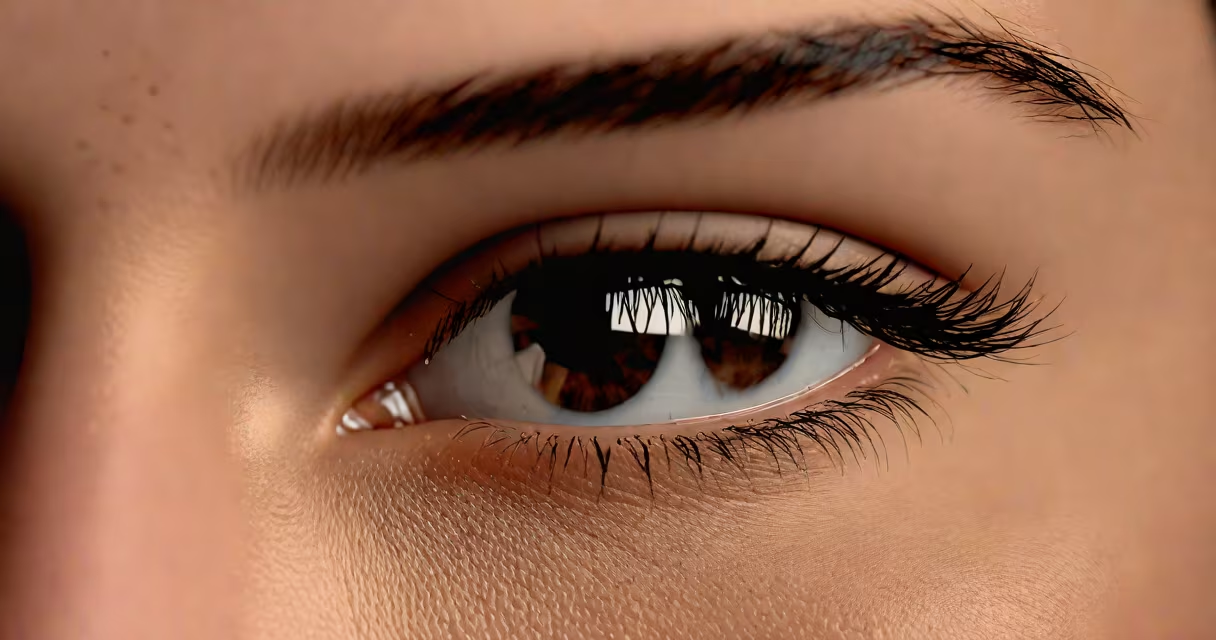
Black circles around eyes-also called periorbital hyperpigmentation-are darkened areas beneath the eyes caused by increased melanin, blood vessel visibility, or structural changes in the skin. They're not actually black but appear dark due to contrast, thin skin, or shadowing. These patterns often result from genetics, fatigue, allergies, or underlying health conditions.
The skin under the eyes is thinner than elsewhere on the face, making blood vessels more visible. When blood pools near the surface due to poor circulation or fluid retention, it casts a blue-gray shadow. This effect is more pronounced in people with lighter skin tones, where the contrast between the skin and underlying vessels stands out.
Increased melanin production in the area-often inherited-can lead to a brownish or grayish discoloration. This type is known as hyperpigmentation and is common in individuals with darker skin tones. The condition may worsen with sun exposure or inflammation.
A 2021 study in the Journal of Clinical and Aesthetic Dermatology found that 65% of patients reporting dark circles had a genetic predisposition, while 28% linked them to chronic sleep deprivation. These findings confirm that both biological and behavioral factors contribute.
Dark circles fall into three main categories based on their origin:
| Type | Underlying Cause | Appearance | Prevalence |
|---|---|---|---|
| Hyperpigmentation | Genetics, sun damage, skin irritation | Brown or grayish tint | 40-50% of cases |
| Vascular | Poor circulation, fluid retention, allergies | Blue or purple hue | 30-40% |
| Structural | Thinning skin, fat displacement, hollows | Shadowed appearance due to anatomy | 20-30% |
Hyperpigmentation is most common in people with Fitzpatrick skin types IV-VI. Sun exposure triggers melanocytes to produce excess pigment, worsening existing discoloration. Allergies, especially allergic rhinitis, cause histamine release that dilates capillaries under the eyes, increasing blood flow and creating a bluish tint.
Structural dark circles stem from volume loss in the lower eyelid. As we age, fat pads shift and the skin sags, creating hollows that cast shadows. This is not pigmentation-it's a physical change in facial structure. A 2019 review in *Dermatologic Surgery* noted that 60% of adults over 40 show signs of structural dark circles.
While most dark circles are harmless, they can occasionally reflect systemic problems. Persistent dark circles with fatigue, joint pain, or unexplained weight loss may indicate iron deficiency anemia. Low hemoglobin reduces oxygen delivery, causing blood vessels to appear darker under the skin.
Chronic sinus issues or untreated nasal congestion can lead to venous pooling under the eyes. The Eustachian tube connects the middle ear to the nose, and prolonged pressure changes from blocked sinuses affect drainage. This leads to swelling and discoloration. According to the American Academy of Otolaryngology-Head and Neck Surgery, 35% of patients with chronic sinusitis report periorbital darkening.
One patient I observed during a dermatology clinic visit had dark circles that worsened after switching to a new skincare product. Patch testing revealed a reaction to fragrance compounds. Removing the product cleared the discoloration within two weeks-a reminder that topical irritants can trigger hyperpigmentation.
Many assume dark circles are simply "lack of sleep." While poor sleep contributes to puffiness and reduced blood flow, it doesn't explain persistent pigmentation. A 2020 study in *Sleep Medicine* showed that sleep duration alone didn't correlate with dark circle severity in 1,200 participants. Instead, sleep quality and circadian disruption were stronger predictors.
Another myth is that applying cold compresses permanently eliminates dark circles. Cold reduces swelling temporarily by constricting blood vessels, but it doesn't alter pigment or structural causes. Overuse can irritate delicate skin and worsen hyperpigmentation.
Some believe makeup can hide all types of dark circles. Concealer works well for vascular or structural types by adding lightness, but it fails on hyperpigmented areas unless matched precisely to skin tone. Using a color corrector (e.g., peach or yellow) before concealer improves coverage by neutralizing blue tones.
If dark circles appear suddenly, worsen over time, or are accompanied by itching, dryness, or flaking, see a dermatologist. These symptoms may indicate eczema, psoriasis, or contact dermatitis. A biopsy or patch test may be needed to rule out autoimmune conditions.
For treatment, options depend on the cause. Hyperpigmentation responds to topical retinoids, hydroquinone, or azelaic acid. Vascular circles improve with lifestyle changes-reducing salt intake, elevating the head while sleeping, and managing allergies. Structural dark circles may require fillers or surgical correction.