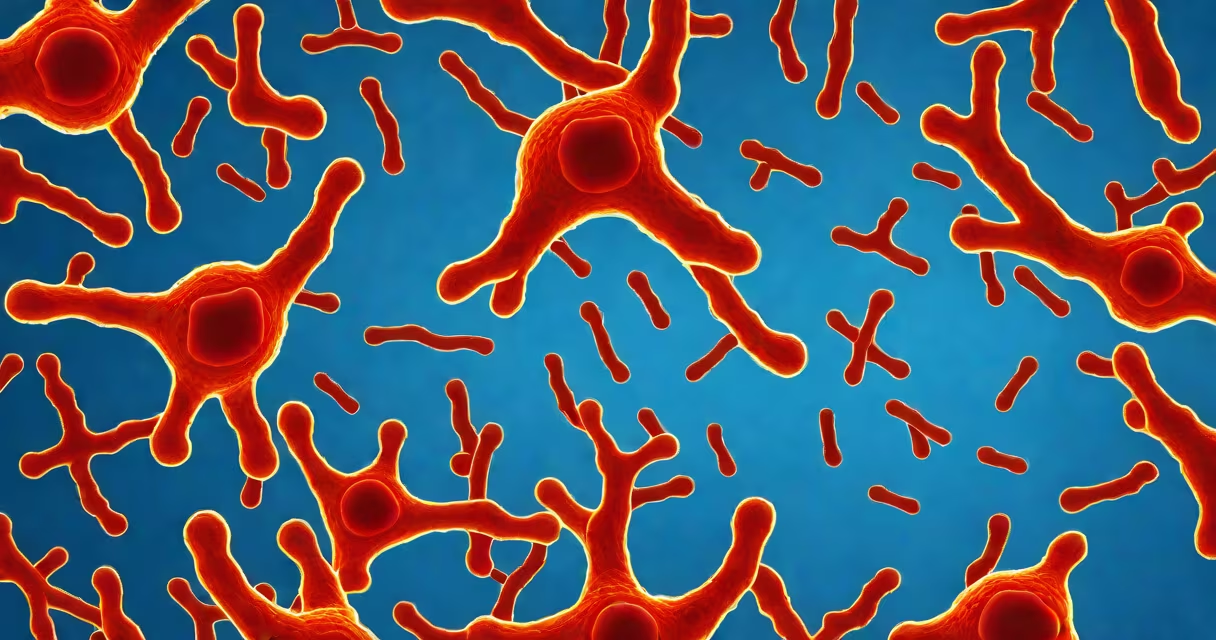
Mycobacterium tuberculosis is a bacterium that causes tuberculosis, a contagious respiratory illness transmitted through airborne droplets when an infected person coughs, speaks, or sneezes. The bacteria primarily infect the lungs but can spread to other organs if untreated.
The infection begins when inhaled droplets containing M. tuberculosis reach the alveoli in the lungs. There, the bacteria survive inside macrophages-white blood cells meant to destroy pathogens-by inhibiting the cell's ability to kill them. This allows the bacteria to replicate and form granulomas, clusters of immune cells that wall off the infection. In many cases, the immune system contains the bacteria, leading to latent TB, which shows no symptoms but can reactivate later.
Active tuberculosis develops when the immune system fails to control the bacteria. This typically happens in people with weakened immunity due to HIV, malnutrition, diabetes, or immunosuppressive treatments. Active disease causes persistent cough, fever, night sweats, weight loss, and hemoptysis (coughing up blood). Without treatment, it can lead to lung damage, spread to other organs, or death.
Tuberculosis spreads through the air, not by touch or sharing food. An individual with active pulmonary TB releases infectious droplets when they cough or speak. These droplets can remain suspended in the air for hours, especially in poorly ventilated spaces.
Exposure does not guarantee infection. The risk depends on the duration and proximity of contact. A single brief encounter in a well-ventilated area rarely transmits the disease. However, prolonged close contact-such as living in the same household with an infected person-carries a high risk. Studies show that household contacts have a 10% to 20% chance of developing TB within two years of exposure.
Not everyone exposed becomes ill. Only about 5% to 10% of people infected with M. tuberculosis develop active disease during their lifetime. The majority control the infection and enter a latent phase, where the bacteria remain dormant but detectable via screening tests like the tuberculin skin test or interferon-gamma release assay.
Latent tuberculosis is asymptomatic and non-contagious. The immune system suppresses bacterial growth, often for decades. During this time, the person feels healthy and cannot spread the disease. However, if immunity weakens, the bacteria can reactivate and cause active TB.
Reactivation typically occurs within the first two years after initial infection. Risk increases in people with HIV, who face a 5% to 10% annual risk of progression from latent to active TB. In contrast, people without comorbidities have less than 1% annual risk.
A 2022 study published in *The Lancet Infectious Diseases* found that nearly 25% of global TB cases originate from reactivation of latent infections, not recent transmission. This highlights the importance of identifying and treating latent TB in high-risk populations.
Several conditions increase the likelihood of latent TB progressing to active disease:
Age also plays a role. Children under five and adults over 65 are more vulnerable due to immature or declining immune systems. In children, primary infection can progress rapidly to disseminated TB, affecting multiple organs.
Many assume TB is rare or only affects people in developing countries. In reality, the World Health Organization reported 10.6 million new cases globally in 2022, including 1.3 million in the United States. The disease remains a leading cause of death from a single infectious agent worldwide.
Another misconception is that TB is easily cured with a single antibiotic. M. tuberculosis is intrinsically resistant to many drugs due to its thick, waxy cell wall. Treatment requires a combination of four antibiotics-isoniazid, rifampin, pyrazinamide, and ethambutol-for at least six months. Failure to complete the regimen leads to drug-resistant strains.
Drug-resistant TB is a growing concern. Multidrug-resistant TB (MDR-TB) results from inadequate treatment or poor adherence. Extensively drug-resistant TB (XDR-TB) is even harder to treat, requiring second-line drugs with higher toxicity and lower success rates. WHO estimates that only 60% of MDR-TB patients achieve successful treatment outcomes.
In 2021, a 45-year-old man in New York City presented with a three-week history of cough, fatigue, and unintentional weight loss. He had emigrated from India at age 10 and tested positive for latent TB during a routine health screening. He never received treatment because he felt healthy.
After being diagnosed with active pulmonary TB, chest X-rays showed bilateral infiltrates and cavitation. Sputum cultures confirmed M. tuberculosis. His condition worsened until he began a standard six-month regimen. After three months, his symptoms improved, and sputum tests turned negative.
This case illustrates how latent TB can remain undetected for decades and reactivate under stress. The patient's long-term residence in a country with high TB burden increased his initial exposure risk. His lack of treatment for latent infection was a critical factor in disease progression.
| Type | Transmission | Symptoms | Treatment Duration | Global Prevalence |
|---|---|---|---|---|
| Latent TB | None (non-contagious) | None | 3-4 months (preventive therapy) | 1.7 billion people infected worldwide |
| Active Pulmonary TB | Through airborne droplets | Cough, fever, weight loss, hemoptysis | 6-9 months (combination therapy) | 10.6 million new cases in 2022 |
| MDR-TB | Same as active TB | Similar to active TB, but refractory to first-line drugs | 9-18 months (second-line drugs) | 450,000 new cases annually |
Understanding what causes mycobacterium tuberculosis involves recognizing both the biological mechanisms of infection and the social and health factors that influence transmission and progression. Early diagnosis and preventive treatment are essential to breaking the chain of transmission.