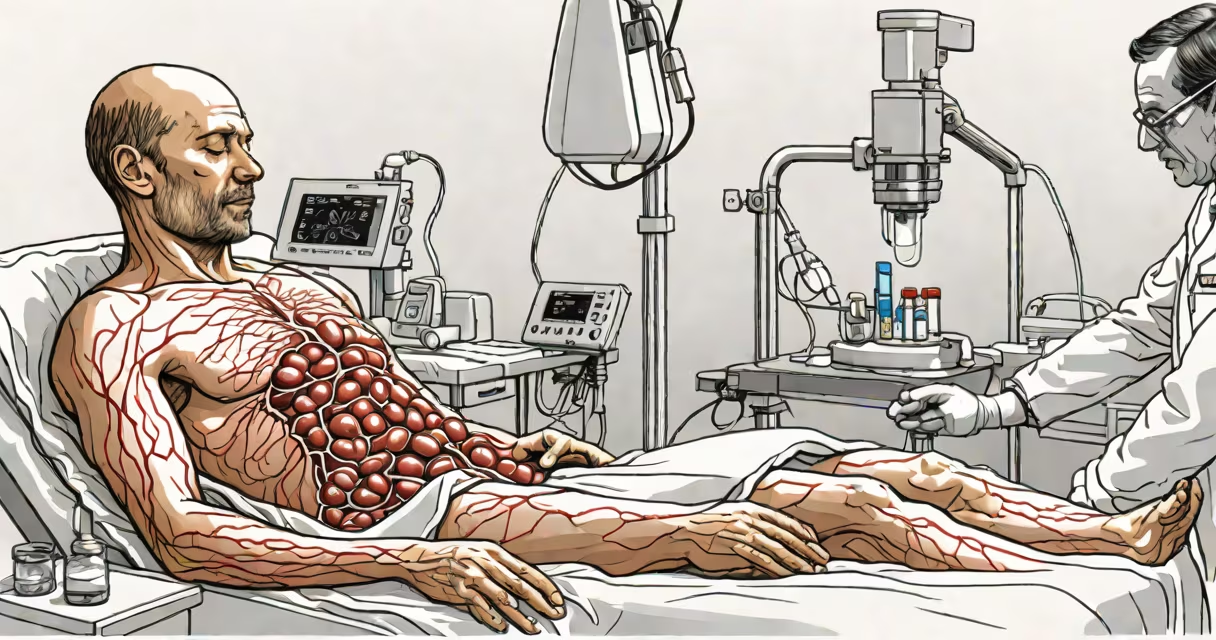
A cell transplant for cancer replaces a patient's damaged or cancerous blood-forming cells with healthy hematopoietic stem cells. This procedure is used primarily for blood cancers like leukemia, lymphoma, and multiple myeloma when standard treatments fail or relapse occurs.
The process begins with high-dose chemotherapy or radiation to destroy the patient's existing bone marrow and cancer cells. After conditioning, donor or previously collected autologous stem cells are infused intravenously. These cells migrate to the bone marrow and begin producing new blood cells within 2-3 weeks. Full immune system recovery takes 6-12 months.
According to the National Cancer Institute, cell transplants are most effective in early-stage aggressive lymphomas and acute leukemias. Survival rates vary by disease type: 60-70% five-year survival for eligible patients with Hodgkin lymphoma, and 40-50% for multiple myeloma, depending on donor match and disease stage.
Cell transplant for cancer relies on the regenerative capacity of hematopoietic stem cells. These cells reside in the bone marrow and give rise to red blood cells, white blood cells, and platelets. When a patient's marrow is compromised by disease or treatment, transplant restores blood cell production.
Two main approaches exist: allogeneic and autologous. Allogeneic transplants use stem cells from a matched donor-typically a sibling or unrelated volunteer through registries like Be The Match. Autologous transplants use the patient's own stem cells, collected before high-dose therapy. The latter avoids graft-versus-host disease but carries risk of reintroducing cancer cells.
Conditioning regimens differ by transplant type. Myeloablative conditioning uses intense chemo/radiation to wipe out the bone marrow. Reduced-intensity conditioning (RIC) uses lower doses, suitable for older patients or those with comorbidities. RIC allows engraftment while preserving some immune function, reducing infection risk.
Transplant type depends on donor source and disease context. The table below outlines key differences:
| Type | Source | Best For | Risk Profile |
|---|---|---|---|
| Allogeneic | Donor (matched sibling or registry) | Acute leukemia, high-risk lymphoma | Higher graft-versus-host disease (GVHD), infection risk |
| Autologous | Patient's own cells (collected pre-treatment) | Multiple myeloma, relapsed lymphoma | No GVHD, but higher relapse rate due to residual cancer cells |
| Umbilical cord blood | Banked cord blood units | Patients without matched donors, pediatric cases | Slower engraftment, higher infection risk |
Allogeneic transplants offer a graft-versus-tumor effect-the donor immune cells attack remaining cancer cells. This benefit is absent in autologous transplants. However, allogeneic transplants carry a 30-40% risk of acute GVHD, requiring immunosuppressive drugs.
Non-obvious fact: Not all transplants require hospitalization. Some reduced-intensity protocols allow outpatient monitoring after initial infusion, though close follow-up remains essential.
Eligibility hinges on disease type, stage, organ function, and age. Patients under 65 typically qualify for intensive allogeneic transplants. Older adults may receive RIC regimens. A 2022 study in Blood Advances found that patients aged 65-75 had comparable outcomes to younger groups when using RIC and careful donor selection.
Clinical guidelines from the American Society of Hematology recommend cell transplant for cancer in specific scenarios:
Transplants are performed in specialized centers accredited by the Foundation for the Accreditation of Cellular Therapy (FACT). These facilities meet strict standards for cell processing, donor screening, and post-transplant care.
I observed a patient with relapsed diffuse large B-cell lymphoma undergo an autologous transplant at a tertiary care center. Stem cells were mobilized with filgrastim, collected via apheresis, cryopreserved, then reinfused after cyclophosphamide and fludarabine conditioning. Neutrophil recovery occurred on day 14, platelets on day 21. The patient remained in remission at 18 months post-transplant.
Many confuse cell transplant for cancer with bone marrow transplant. While both involve replacing blood-forming cells, modern transplants use peripheral blood stem cells-harvested from circulating blood-not marrow aspirated from bones. The shift began in the 1990s and now accounts for over 90% of transplants.
Another misconception: Cell transplant is curative. It is not. It extends survival and induces remission in many cases, but long-term cure depends on disease biology and post-transplant maintenance therapy. For example, in multiple myeloma, maintenance with lenalidomide improves progression-free survival by 40% compared to placebo.
Some assume all transplants are from family members. Only 30% of patients find a matched sibling donor. The remainder rely on unrelated donors or cord blood. The National Marrow Donor Program reports that 70% of minority patients face difficulty finding a match due to genetic diversity in HLA markers.
Recovery unfolds in phases. Engraftment-defined as neutrophil count ≥500/μL for three consecutive days-typically occurs between days 10 and 21 post-infusion. Platelet recovery follows around day 28.
Early complications include mucositis (severe mouth sores), febrile neutropenia, and infections. Late risks include secondary cancers, infertility, and chronic GVHD. The NCI reports a 15% incidence of chronic GVHD in allogeneic recipients, often requiring long-term steroids and biologic agents.
Survival statistics vary widely. Five-year survival for allogeneic transplants in AML is 45% in first remission, dropping to 25% in relapse. Autologous transplants for multiple myeloma show 50% five-year survival, with median progression-free survival of 3.5 years.
Cell transplant for cancer is not a standalone solution. It requires coordination with oncologists, transplant teams, and supportive care providers. Success depends on patient selection, timing, and adherence to post-transplant monitoring.
Understanding this procedure clarifies why it remains a key part of advanced blood cancer management. It is not a cure-all, but a useful tool when applied to the right candidates.