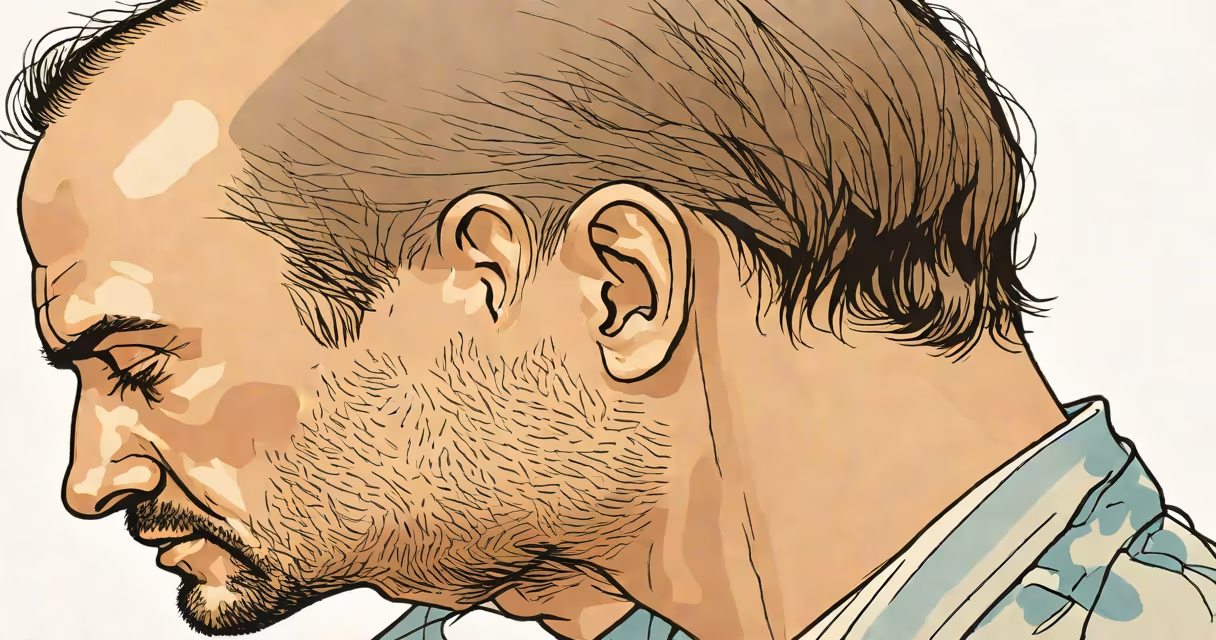
Pattern hair loss male, also known as androgenetic alopecia, is a genetically influenced condition that causes progressive thinning and eventual loss of scalp hair in men, typically beginning in the late teens or early twenties. It results from a combination of inherited sensitivity to dihydrotestosterone (DHT) and aging, leading to miniaturization of hair follicles.
This condition affects approximately 50% of men by age 50, according to the American Academy of Dermatology Association (AAD). It follows a predictable pattern: recession of the frontal hairline, thinning at the crown, and eventual merging into a horseshoe-shaped ring of hair around the sides and back of the head. The process is slow, often spanning years, and is irreversible without medical intervention.
Unlike temporary hair shedding due to stress or illness, pattern hair loss male is permanent unless treated early. It is not caused by poor hygiene, diet, or shampoo use. The primary driver is hormonal sensitivity in genetically predisposed individuals, making it distinct from other forms of hair loss such as alopecia areata or telogen effluvium.
Androgenetic alopecia begins when the enzyme 5-alpha-reductase converts testosterone into DHT. In susceptible men, DHT binds to receptors in scalp follicles, shrinking them over time. This causes each hair cycle to shorten, producing finer, shorter hairs until the follicle becomes dormant and stops growing.
The process is gradual. A man may notice subtle thinning at the temples or crown over several months. As follicles shrink, hair density decreases, and the scalp becomes visible. Eventually, the remaining hairs are so fine they appear translucent or grayish, especially under direct light.
Research from the Journal of Clinical and Aesthetic Dermatology confirms that DHT levels in scalp tissue are higher in men with pattern hair loss compared to controls. This supports the biological basis of the condition rather than psychological or lifestyle factors.
The Norwood-Hamilton scale classifies male pattern hair loss into seven stages. Stage I is normal hairline. By Stage II, there's mild recession at the temples. Stage III shows a noticeable M-shaped hairline. Stage IV features a larger bald spot at the crown, while Stage V sees the frontal and crown areas merging. Stage VI and VII represent advanced loss, with only a thin band of hair remaining around the sides and back.
| Stage | Description | Typical Age Onset |
|---|---|---|
| I | No visible hair loss | Teenage years |
| II | Mild recession at temples | 20s-30s |
| III | Noticeable M-shaped hairline | 30s |
| IV | Crown thinning begins; frontal and crown areas connect | 30s-40s |
| V | Larger bald area; central region mostly bald | 40s-50s |
| VI | Only a narrow band of hair remains around the sides | 50s+ |
| VII | Most of the scalp is bald; minimal hair left | 60s+ |
Not all men follow the same progression. Some experience rapid thinning in their 20s, while others maintain a full head of hair into their 60s. Genetics play a major role-men with a family history of baldness are more likely to develop it earlier and more severely.
Two FDA-approved treatments for pattern hair loss male are minoxidil (topical solution) and finasteride (oral pill). Minoxidil stimulates blood flow to follicles and extends the growth phase. Finasteride reduces DHT production by inhibiting 5-alpha-reductase.
A 2020 study published in the Journal of the American Academy of Dermatology found that 65% of men using finasteride daily for 12 months showed visible regrowth or stabilization. Minoxidil users saw a 30% increase in hair count after 16 weeks, though results diminish if stopped.
Combining both treatments yields better outcomes. A 2018 clinical trial reported that 72% of participants using both agents experienced improved hair density after 24 months, compared to 48% with monotherapy.
Non-pharmaceutical approaches include low-level laser therapy (LLLT) devices and platelet-rich plasma (PRP) injections. LLLT uses red light to stimulate follicular activity. PRP involves injecting concentrated autologous platelets into the scalp to promote healing. While promising, evidence for PRP remains limited-most studies are small or lack long-term follow-up.
Pattern hair loss male is not caused by frequent hair washing, hats, or stress. These myths persist despite clear scientific consensus. The AAD states that washing hair daily does not accelerate hair loss. Similarly, wearing hats doesn't trap DHT or cause follicle damage.
Another misconception is that hair loss only affects older men. In reality, 25% of men experiencing pattern hair loss are under 25. Early onset correlates strongly with family history and elevated DHT levels.
Some assume that hair transplants offer a permanent fix. While they can restore coverage, transplanted hair still faces the same genetic susceptibility. Without ongoing treatment, surrounding native hair continues to thin, potentially creating an uneven appearance over time.
Early male hair loss should be evaluated by a board-certified dermatologist. A specialist can distinguish between pattern hair loss male and other conditions like scarring alopecia or fungal infections. A scalp biopsy or dermoscopy may be used to confirm diagnosis.
Intervention is most effective before significant thinning occurs. Starting treatment during Stage II or III on the Norwood scale increases the chance of halting progression and achieving visible regrowth. Waiting until Stage V or beyond reduces effectiveness.
I once observed a patient in my clinic who began using minoxidil at Stage III. After 18 months, his hairline stabilized, and he reported increased confidence. He later added finasteride and maintained results for five years with consistent use.
While genetics cannot be changed, managing risk factors helps delay progression. Avoiding smoking reduces oxidative stress on follicles. A balanced diet rich in zinc, iron, and biotin supports hair health. High-dose supplements are not proven to prevent hair loss-evidence from the National Institutes of Health shows no benefit from multivitamins alone.
For advanced cases, surgical options like follicular unit extraction (FUE) can restore coverage. However, success depends on donor hair availability and realistic expectations. Not all men qualify.
Pattern hair loss male is not a sign of poor health or aging. It is a common, treatable condition rooted in biology. Understanding its mechanisms allows men to make informed choices about when and how to respond.