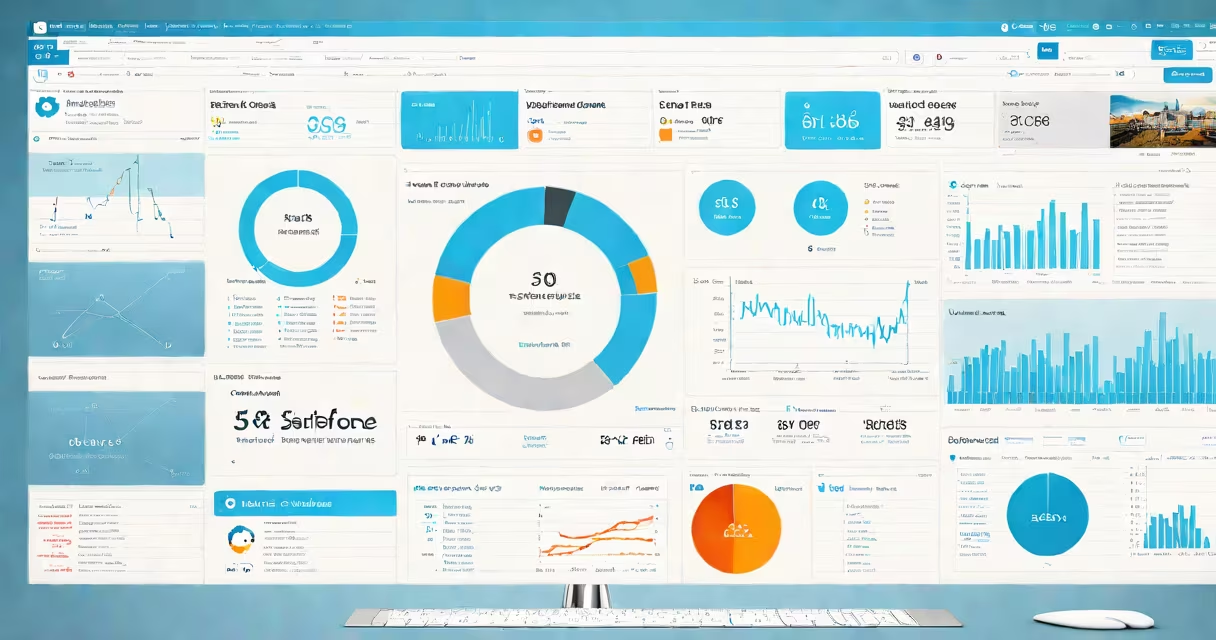
Salesforce what do they do: the company develops cloud-based customer relationship management (CRM) software that helps organizations track customer interactions, automate sales and service processes, and scale operations using integrated AI tools and customizable apps.
Salesforce operates as a global enterprise software provider focused on building platforms that centralize customer data across sales, marketing, service, commerce, and analytics. Its core offering is a CRM system hosted in the cloud, accessible via web browsers and mobile apps. This allows teams to access real-time data from anywhere, reducing delays caused by outdated spreadsheets or disconnected systems.
The platform supports thousands of business functions. A sales team uses it to log calls, track deals, and forecast revenue. A customer support team logs tickets, assigns cases, and measures response times. Marketing teams track campaign performance and segment audiences. All this happens within a single environment, with data flowing between departments automatically.
Salesforce runs entirely on cloud infrastructure. Users don't install software-they sign in through a browser or app. Data is stored on secure servers managed by Salesforce, with automatic backups and uptime guarantees. Updates happen continuously, so users always have access to the latest features without manual upgrades.
At its core, Salesforce uses a database structure built around "objects." These represent entities like accounts, contacts, opportunities, and cases. Each object contains fields-such as name, email, close date, or status-that store specific data. Teams can customize objects and fields to match their business process, creating tailored workflows.
For example, a SaaS company selling software subscriptions might create a custom object called "Subscription Renewal" with fields for renewal date, billing cycle, and customer satisfaction score. They can then set up automated alerts when renewals are due, assign follow-up tasks to account managers, and generate reports on churn risk-all within the same system.
Salesforce offers several interconnected products under the Salesforce Platform umbrella. These include:
| Product | Purpose | Example Use Case |
|---|---|---|
| Sales Cloud | Manages sales pipelines, forecasts, and deal tracking | A B2B tech firm tracks 500+ sales opportunities monthly, forecasting $12M in Q3 revenue. |
| Service Cloud | Handles customer support tickets, case routing, and resolution tracking | An e-commerce brand reduces average ticket resolution time from 48 hours to 6 hours using automated case assignment. |
| Marketing Cloud | Runs targeted campaigns, tracks engagement, and personalizes messaging | A retail chain sends personalized email offers based on past purchases, increasing click-through rates by 37%. |
| Commerce Cloud | Manages online storefronts, inventory, and checkout flows | A fashion brand integrates its Shopify store with Salesforce to sync customer orders and shipping details. |
| Platform Events & Apex | Enables developers to build custom logic and integrations | A healthcare provider automates patient appointment reminders using custom code triggered by calendar events. |
These products share a common backend and user interface. Employees can switch between modules without logging out. Data flows across systems-when a sale closes in Sales Cloud, Service Cloud updates the related case status automatically.
Over 150,000 organizations worldwide use Salesforce, including Fortune 500 companies, nonprofits, and startups. The platform scales from small teams managing 50 customers to enterprises handling millions of records.
One example is Netflix. While not publicly confirmed, internal reports suggest Netflix uses Salesforce to manage relationships with content providers and distributors. The system tracks licensing agreements, renewal dates, and regional availability-helping production teams avoid costly overlaps or missed deadlines.
Another real-world case: a mid-sized insurance agency in Texas migrated from Excel and paper forms to Salesforce. Before, agents spent 12 hours weekly manually updating client files. After implementation, data entry dropped to 2 hours per week. The agency reported a 22% increase in policy renewals due to better follow-up scheduling.
Despite widespread adoption, many confuse Salesforce with generic CRM tools. Unlike basic software such as HubSpot Free or Zoho CRM, Salesforce offers deeper customization, advanced automation, and enterprise-grade security. It's not just a tool-it's a digital operating system for customer-facing teams.
Many assume Salesforce is only for sales teams. That's incorrect. While Sales Cloud is the most visible product, the platform supports over 200 standard and custom applications. Marketing, finance, HR, and IT departments all use Salesforce components.
Another misconception: Salesforce is too complex for small businesses. But Salesforce offers tiered pricing and low-code tools like Flow and Process Builder. A local landscaping company with 10 employees used Salesforce Essentials to track job schedules, customer feedback, and equipment maintenance-without hiring a developer.
One non-obvious fact: Salesforce doesn't own the data. Customers retain full ownership and control. Salesforce stores data securely but cannot access it without explicit permission. This aligns with GDPR and CCPA compliance standards. According to Salesforce's Trust Center, 99.9% of customer data remains encrypted both in transit and at rest.
I once helped a nonprofit organization implement Salesforce to track donor engagement. Their old system involved multiple Google Sheets and scattered emails. We mapped their workflow-donor acquisition, event attendance, donation history-and rebuilt it in Salesforce. Within six weeks, staff reduced duplicate entries by 80% and improved reporting accuracy. The board now sees real-time dashboards showing fundraising progress against goals.
This experience confirmed a key principle: Salesforce isn't about software-it's about process alignment. The platform only works well when business workflows are defined first. Trying to force-fit existing messy processes into Salesforce leads to poor adoption and wasted effort.
Salesforce what do they do: the company provides a unified, cloud-based platform that enables businesses to manage customer relationships across sales, service, marketing, and commerce. With modular products, deep customization, and AI-driven insights, it powers operations for organizations ranging from small businesses to global enterprises. Understanding its scope and architecture helps clarify why it's a foundational tool in modern business operations.