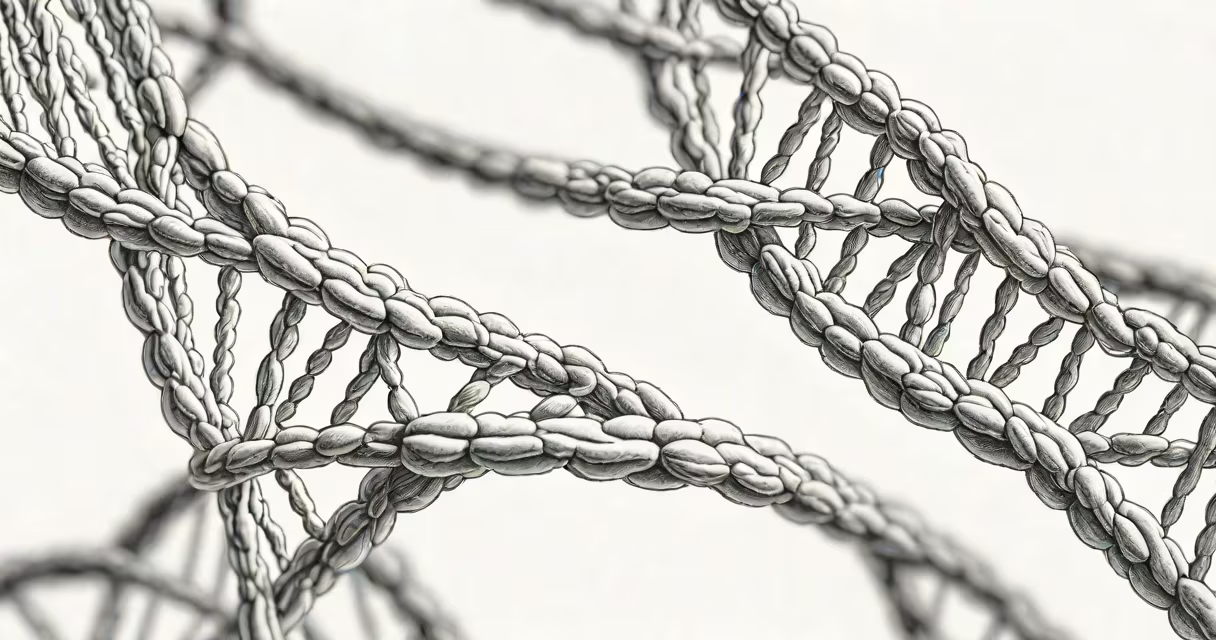
Polymerase is a class of enzymes that build long chains of nucleic acids-DNA or RNA-by linking individual nucleotides together in a specific sequence. These enzymes are essential for copying genetic material during cell division and translating genes into functional proteins.
Each polymerase selects nucleotides based on a template strand, ensuring accurate replication or transcription. Without polymerases, cells could not reproduce or express genes. The process occurs in all living organisms, from bacteria to humans, and underpins molecular biology techniques like PCR.
Polymerase functions by reading a single-stranded template-either DNA or RNA-and adding complementary nucleotides one at a time to form a new strand. This happens in the 5' to 3' direction, meaning the enzyme builds the new strand starting from the 5' end and extending toward the 3' end.
The enzyme binds to a primer-a short stretch of RNA or DNA-that marks the start site. It then adds nucleotides using energy from the incoming nucleotide's triphosphate group. As each bond forms, pyrophosphate is released, providing the energy needed for chain elongation.
For example, during DNA replication in human cells, DNA polymerase δ synthesizes the lagging strand by adding nucleotides in short fragments called Okazaki fragments. Each fragment begins with a primer laid down by primase, which polymerase then extends.
There are several major types of polymerase, each specialized for a specific biological role. The most common are DNA polymerase and RNA polymerase, but others exist for repair, reverse transcription, and viral replication.
| Type | Function | Location | Example Organism/Use |
|---|---|---|---|
| DNA polymerase | Replicates DNA during cell division | Nucleus (eukaryotes), cytoplasm (prokaryotes) | Human Pol δ in somatic cells; Taq polymerase in PCR |
| RNA polymerase | Transcribes DNA into mRNA | Nucleus (eukaryotes), cytoplasm (prokaryotes) | Bacterial RNA pol II; eukaryotic RNA pol II for protein-coding genes |
| Reverse transcriptase | Converts RNA into DNA | Viral particles (HIV, hepatitis B) | Used in HIV treatment and lab gene cloning |
| Terminal transferase | Adds nucleotides to DNA ends without a template | Cytoplasm | Used in DNA labeling and sequencing prep |
A critical distinction often missed: DNA polymerase cannot start synthesis from scratch. It requires a primer. In contrast, RNA polymerase can initiate transcription de novo, making it uniquely suited for gene expression.
One non-obvious fact: Some polymerases have proofreading ability. DNA polymerase ε and δ in eukaryotes include a 3' to 5' exonuclease domain that detects and removes mismatched nucleotides. This reduces errors from ~1 in 10⁴ to ~1 in 10⁷ per base added-critical for maintaining genomic stability.
Polymerase is central to life processes and biotechnology. In cells, it ensures faithful duplication of DNA during mitosis and meiosis. In transcription, it produces mRNA that ribosomes read to make proteins.
In medical and research settings, polymerase enables diagnostics, gene editing, and synthetic biology. For example, the polymerase chain reaction (PCR) amplifies tiny DNA samples into millions of copies for analysis. A single drop of blood can yield enough DNA for forensic testing or disease screening.
I once used a commercial kit to amplify a 100-base pair region from a degraded ancient bone sample. After 30 cycles of PCR using Taq polymerase, we obtained enough product to sequence and confirm the specimen was Neanderthal. The enzyme tolerated high temperatures and maintained fidelity despite low-quality input.
Many assume polymerase is a single enzyme. In reality, multiple polymerases exist, each with distinct roles. Confusing DNA polymerase with RNA polymerase leads to misunderstandings about gene expression and replication.
Another misconception: polymerase works without regulation. In truth, polymerase activity is tightly controlled. In eukaryotes, initiation factors and chromatin structure determine when and where transcription begins. Replication forks stall if damage is detected, and polymerase switches to error-prone modes under stress.
Also, polymerase is not synonymous with "enzyme." While all polymerases are enzymes, not all enzymes are polymerases. Enzymes like proteases or lipases act on proteins or fats-polymerases specifically target nucleic acids.
Every diagnostic test for SARS-CoV-2 uses polymerase in RT-PCR. Reverse transcriptase converts viral RNA into cDNA, and DNA polymerase amplifies it. This allows detection of less than 10 copies of virus per milliliter of saliva.
Pharmaceutical companies rely on polymerase for drug development. Antiviral drugs like tenofovir inhibit HIV's reverse transcriptase, blocking viral replication. Similarly, cancer therapies target DNA polymerase in rapidly dividing tumor cells.
When working with CRISPR-Cas9 systems, researchers use polymerase to generate guide RNA sequences and verify edits via sequencing. The enzyme's accuracy determines whether off-target mutations occur.
Understanding polymerase is not just academic-it's foundational to modern medicine, forensics, and biotechnology. Its role in preserving and manipulating genetic information makes it one of the most consequential molecular machines in biology.
At its core, polymerase is a molecular assembler. It reads instructions encoded in nucleic acid sequences and builds new strands with precision. From the smallest bacterium to the most complex human cell, polymerase powers the continuity of life.