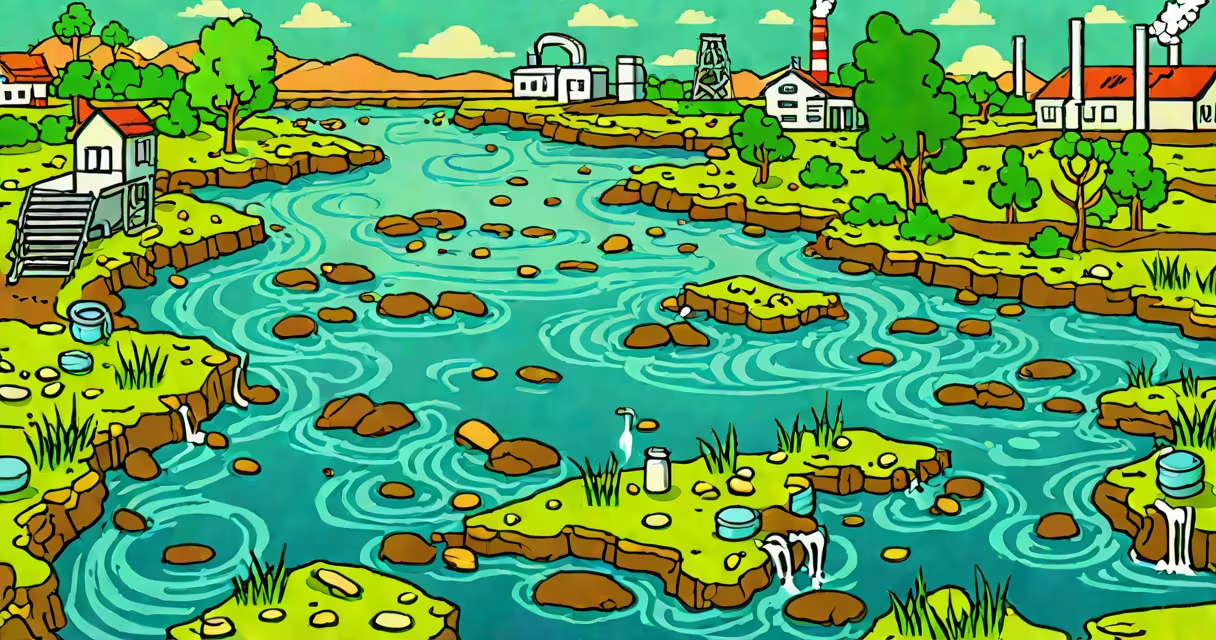
Water pollution health hazards refer to adverse effects on human health caused by exposure to toxic substances in water sources, including pathogens, heavy metals, and synthetic chemicals. These contaminants enter drinking water, recreational water, and food sources through industrial discharge, agricultural runoff, sewage overflow, and improper waste disposal.
Contaminated water disrupts bodily functions at cellular and systemic levels. Pathogens such as *E. coli* and *Giardia* cause acute gastrointestinal infections. Heavy metals like lead and mercury accumulate in tissues, impairing brain development in children and damaging kidneys. Persistent organic pollutants such as PCBs and dioxins interfere with hormone regulation and increase long-term cancer risk. The World Health Organization (WHO) estimates that 1.8 billion people globally consume drinking water contaminated with feces, leading to over 485,000 diarrheal deaths annually.
Exposure pathways include ingestion, skin contact during swimming, and consumption of contaminated fish. Vulnerable populations-children, pregnant women, and immunocompromised individuals-face higher risks. For example, in Flint, Michigan, lead leaching from aging pipes led to elevated blood lead levels in over 8,000 children between 2014 and 2015, resulting in developmental delays and behavioral issues. This incident illustrates how infrastructure failure combined with regulatory neglect amplifies health hazards.
When ingested, pollutants bypass the body's natural filtration systems. The digestive tract absorbs soluble toxins, which then circulate via the bloodstream. Lead, for instance, mimics calcium and binds to nerve receptors, disrupting neural signaling. Chronic exposure leads to reduced IQ scores, attention deficits, and increased risk of hypertension. A 2021 study published in *The Lancet Planetary Health* found that children exposed to lead above 5 µg/dL had a 7-point average drop in cognitive test performance compared to unexposed peers.
Organic pollutants like pesticides and herbicides degrade slowly and bioaccumulate in fatty tissues. DDT, banned in many countries since the 1970s, persists in ecosystems and appears in breast milk. Its metabolite, DDE, acts as an endocrine disruptor, interfering with reproductive hormones. Research from the National Institute of Environmental Health Sciences (NIEHS) shows that prenatal exposure to DDE correlates with lower birth weight and earlier puberty onset in girls.
Some pollutants trigger immune responses. Microplastics, now detected in 94% of tap water samples tested in the U.S., may carry adsorbed toxins and induce inflammation. While long-term health outcomes remain under study, preliminary findings suggest microplastic particles can cross intestinal barriers and reach organs, potentially contributing to chronic inflammatory conditions.
Water pollution stems from multiple sources, each carrying distinct health risks. Understanding these categories clarifies prevention strategies and policy priorities.
| Type | Primary Contaminants | Health Impact | Example Source |
|---|---|---|---|
| Industrial discharge | Heavy metals (lead, cadmium), solvents | Nerve damage, kidney failure, cancer | Chemical plants, metal refineries |
| Agricultural runoff | Nitrates, pesticides (e.g., atrazine) | Blue baby syndrome, hormonal disruption | Farm fields, livestock operations |
| Sewage and wastewater | Bacteria (*Salmonella*, *Shigella*), viruses | Diarrhea, hepatitis A, typhoid fever | Urban sewers, septic tank failures |
| Plastic and solid waste | Microplastics, polycyclic aromatic hydrocarbons (PAHs) | Inflammation, potential carcinogenicity | Rivers, oceans, landfills |
| Oil and fuel spills | Hydrocarbons, benzene | Respiratory distress, leukemia risk | Offshore drilling, transportation accidents |
Each category presents unique challenges. For instance, nitrate pollution from fertilizers exceeds safe limits in 10% of U.S. drinking water wells, according to the U.S. Geological Survey. High nitrate levels convert hemoglobin into methemoglobin, reducing oxygen delivery-a condition known as methemoglobinemia or "blue baby syndrome." Infants under six months are especially vulnerable due to immature enzyme systems.
Garbage water pollution, a subset of solid waste contamination, involves untreated trash entering waterways. In Jakarta, Indonesia, rivers carry tons of plastic and household waste daily, contaminating water used for bathing and irrigation. A 2023 field study found that 62% of surface water samples from the Ciliwung River contained detectable levels of microplastics and pathogenic bacteria. Residents downstream reported higher rates of skin rashes and respiratory infections, particularly during monsoon season when runoff increases.
Many assume that clear or odorless water is safe. This is false. Harmful contaminants like arsenic and fluoride are colorless and tasteless. Arsenic, naturally occurring in groundwater in parts of Bangladesh and West Bengal, causes skin lesions, cardiovascular disease, and various cancers. WHO guidelines limit arsenic to 10 µg/L, yet over 20 million people in South Asia drink water exceeding this threshold.
Another misconception is that boiling water eliminates all pollutants. Boiling kills microbes but concentrates dissolved solids like nitrates and heavy metals. In regions with high arsenic levels, boiling increases toxin concentration by up to 20%. Reverse osmosis filters or activated carbon systems are required to remove these substances effectively.
People often equate "natural" with "safe." Rainwater collected from rooftops may seem pure, but it picks up pollutants from air and roofing materials. A 2019 study in *Environmental Science & Technology* showed that rainwater from urban areas contained measurable levels of lead, zinc, and PAHs-up to 30 times higher than rural sites. Using rainwater for drinking without treatment poses significant health risks.
The Ganges River in India supports over 400 million people and serves religious, agricultural, and domestic purposes. Despite being considered sacred, it receives over 1.5 billion liters of untreated sewage daily, along with industrial effluent and cremation ashes. Coliform bacteria levels exceed WHO standards by more than 100-fold in major stretches.
Studies by the Indian Council of Medical Research (ICMR) show that residents living along the river have a 3.2 times higher incidence of typhoid and cholera compared to those in non-riverine areas. Children in Varanasi report diarrhea rates of 4.8 episodes per year-nearly double the national average. Even bathing in the river, a common ritual, exposes users to *Vibrio cholerae* and drug-resistant *E. coli* strains.
Efforts like the Namami Gange Programme aim to reduce pollution through sewage treatment plants and riverfront cleaning. As of 2023, 72% of planned treatment capacity was operational, yet water quality improvements remain inconsistent. Monitoring data from the Central Pollution Control Board indicates that bacterial counts dropped by only 18% between 2018 and 2022 in monitored zones.
Individuals can reduce exposure by using certified water filters. NSF International certifies filters that meet standards for removing lead, cysts, and volatile organic compounds. A reverse osmosis system reduces lead levels by 98% and removes over 99% of fluoride and nitrates. For households relying on well water, annual testing is recommended to detect changes in chemical composition.
Public health interventions focus on infrastructure upgrades and regulatory enforcement. The U.S. Safe Drinking Water Act mandates monitoring for 91 contaminants, including arsenic, chromium-6, and disinfection byproducts. Violations trigger corrective actions and public notifications. In 2022, the EPA updated maximum contaminant levels for PFAS (per- and polyfluoroalkyl substances), setting a limit of 4 parts per trillion for PFOA and PFOS combined.
Communities can advocate for stronger policies. In 2021, citizens in Toledo, Ohio, pushed for expanded testing after a harmful algal bloom contaminated the city's water supply. The resulting legislation required monthly testing for microcystin, a toxin produced by cyanobacteria. This proactive measure prevented further outbreaks.