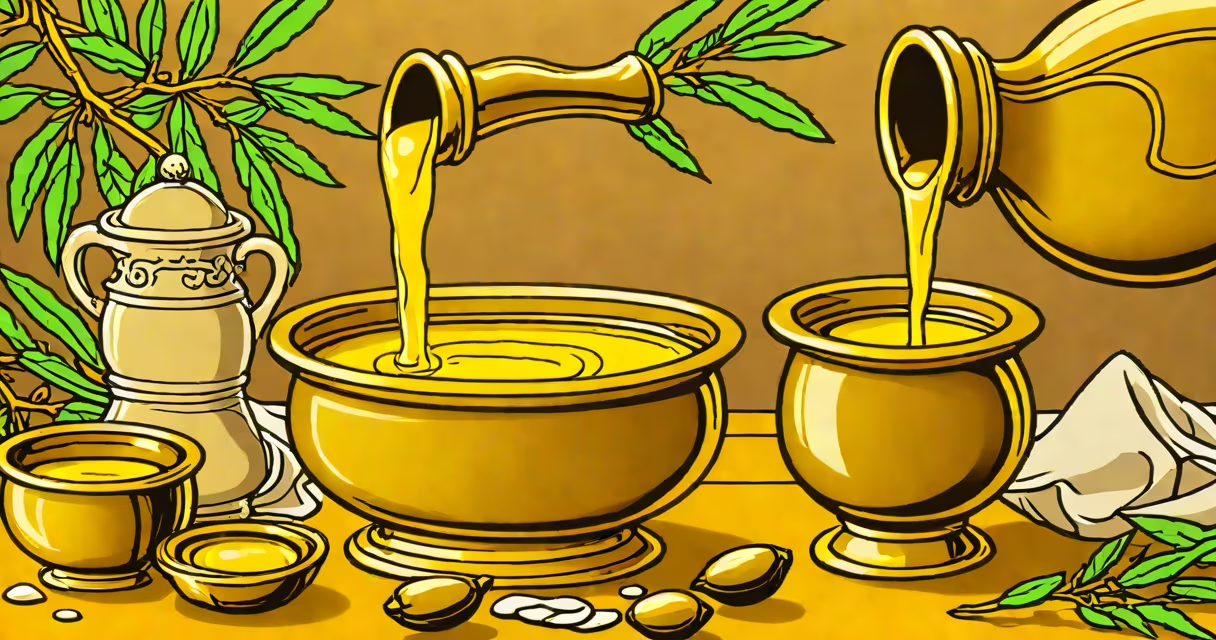
Anointing oil in the Bible symbolizes divine selection, consecration, and spiritual empowerment. It was used to set apart individuals, objects, and places for sacred service, signifying God's presence and approval. This ritual substance, made from olive oil mixed with specific spices, carried deep theological meaning throughout both the Old and New Testaments.
The act of anointing was not symbolic fluff-it was a public declaration of divine assignment. When Samuel anointed David as king, he did not merely apply oil; he marked David as God's chosen ruler (1 Samuel 16:13). The oil represented God's Spirit descending upon him, giving him wisdom, courage, and authority. This moment wasn't about ceremony alone-it was about divine intervention in human affairs.
According to Exodus 30:22-25, God instructed Moses to create a sacred blend of olive oil and four aromatic ingredients: myrrh, cinnamon, calamus, and cassia. The recipe was precise: 500 shekels of pure olive oil and 250 shekels of spices. This mixture was not for everyday use-it was reserved exclusively for priests, altars, and sacred vessels. Its exclusivity underscored its role as a threshold between the ordinary and the holy.
Anointing oil functioned as a physical manifestation of spiritual reality. It was applied during rituals of installation, healing, and dedication. Priests were anointed before entering the tabernacle (Exodus 29:7), and kings were anointed to mark their divine right to rule (1 Kings 1:39). In each case, the oil served as a visible sign that God had chosen and empowered the individual.
Prophets also used anointing oil to signify divine commission. Elijah anointed Elisha as his successor (1 Kings 19:16), and later, Elisha continued the tradition. The oil was not a magic tool-it was a sign. Just as a wedding ring signifies commitment, anointing oil signified covenant relationship with God.
A notable example occurs in Psalm 133:2, where the psalmist compares the unity of brothers to "precious oil" poured on Aaron's head. The oil flowed down to his beard, then to his robes-symbolizing the overflow of blessing when people live in harmony. This passage shows that anointing oil also represented communal holiness and spiritual abundance.
The original anointing oil was a carefully measured blend. Exodus 30:23-25 specifies the ingredients: olive oil, myrrh, cinnamon, calamus, and cassia. These weren't random choices-they were costly, fragrant, and rare. Myrrh and frankincense were traded from Arabia and Ethiopia, often worth more than gold. Their inclusion signaled that the oil was not just holy-it was valuable.
| Ingredient | Modern Equivalent | Biblical Significance |
|---|---|---|
| Olive oil | Extra virgin olive oil | Symbol of the Holy Spirit (Luke 4:18) |
| Myrrh | Resin from Commiphora tree | Represents suffering and sacrifice (Matthew 2:11) |
| Cinnamon | Ground bark of Cinnamomum trees | Signifies warmth, sweetness, and divine favor |
| Calamus | Root of Acorus calamus | Associated with purity and cleansing |
| Cassia | Spice from Cinnamomum cassia | Symbol of royalty and honor |
Each component contributed to the oil's symbolic weight. Olive oil stood for the Holy Spirit-Jesus himself was described as being "anointed with the Holy Spirit" (Acts 10:38). Myrrh, though bitter, was used in burial rites (John 19:39), linking anointing to both life and death. The combination of sweet and bitter scents reflected the dual nature of God's call: joyful yet demanding.
Many assume anointing oil was used for healing in the Bible. While James 5:14 mentions anointing with oil for the sick, the context is different. The oil here is not the sacred blend from Exodus-it's common olive oil. The act is symbolic, not magical. The prayer of faith, not the oil, brings healing (James 5:15).
Another error is equating modern "anointing" practices with biblical ones. Today, people may pour oil on heads during worship, but the biblical anointing was a formal rite performed by priests. It required permission, preparation, and purpose. The oil itself wasn't a sacrament-it was a sign. The real power came from God, not the substance.
A lesser-known fact: the sacred anointing oil was never reused. Exodus 30:32 warns that anyone who makes or uses it outside the prescribed context "shall be cut off from his people." This prohibition underscores the sanctity of the ritual. The oil wasn't a commodity-it was a covenant object.
Consider the anointing of Solomon. After David's reign, Solomon was anointed at Gihon spring by Zadok the priest and Nathan the prophet (1 Kings 1:39). The sound of trumpets echoed through Jerusalem. This wasn't a private moment-it was a national event. The oil marked the transfer of divine authority.
In the New Proof, Jesus' ministry began with an anointing. Luke 4:18 records Him reading from Isaiah 61:1: "The Spirit of the Lord is upon me, because he has anointed me..." Though the text doesn't describe oil being applied, the language echoes the Old Proof ritual. Jesus is the ultimate anointed one-the Messiah. His anointing was not physical but spiritual, fulfilled in His mission and resurrection.
Even today, many churches use anointing oil in liturgical settings. But the practice varies. Some denominations follow the biblical recipe; others use simpler blends. The key difference lies in intent. When used with understanding, anointing oil remains a useful symbol of God's presence. When reduced to ritual without meaning, it becomes empty.
I once attended a small church gathering where the pastor anointed a young man preparing for missionary work. He didn't recite a prayer or explain the symbolism. Later, I asked him why. He said, "Because the oil is not the point. The point is the calling." That moment clarified something I'd read but not felt: anointing oil points beyond itself to the divine purpose behind it.
The concept of anointing oil in the Bible is not about substances-it's about identity. It marks those chosen by God, sets apart what belongs to Him, and reminds us that holiness is not earned but bestowed. Whether applied to a king, a priest, or a prophet, the oil says: "This person, place, or thing is under God's care."