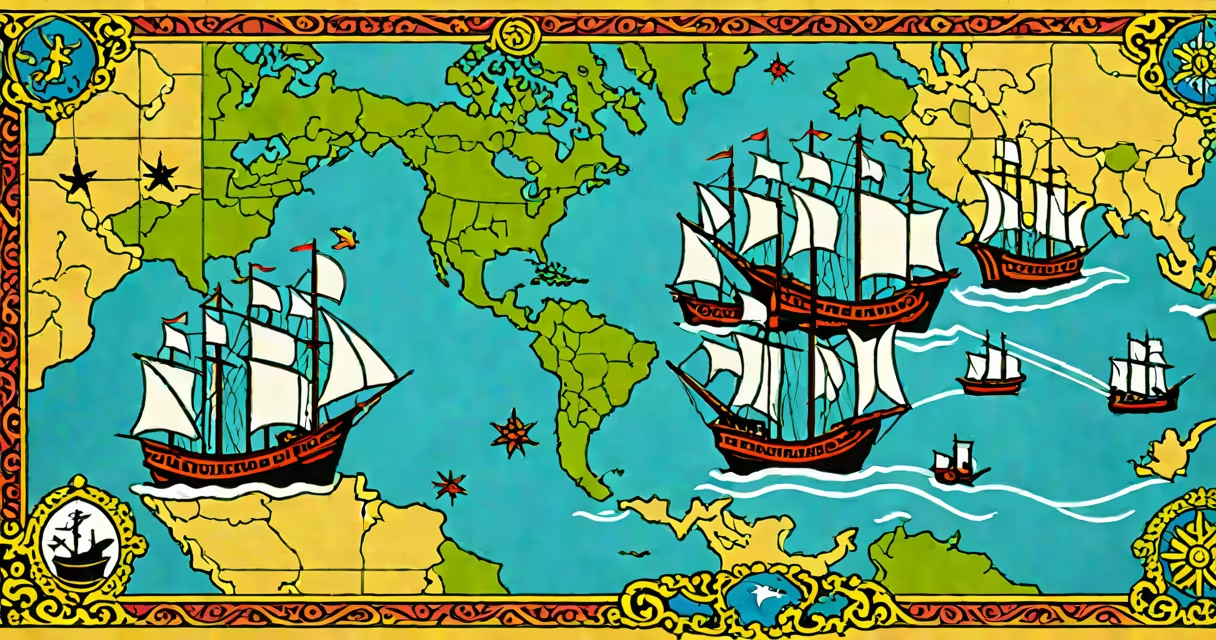
Columbus Day is observed on the second Monday of October each year in the United States, commemorating Christopher Columbus's arrival in the Americas on October 12, 1492.
The date was standardized in 1971 under the Uniform Monday Holiday Act, which moved several federal holidays to Mondays to create three-day weekends. Prior to that, Columbus Day was observed on October 12 annually, regardless of the weekday.
For example, in 2024, Columbus Day falls on Monday, October 14. This date shifts slightly each year depending on the calendar, but it always lands between October 8 and October 14.
The original date, October 12, was chosen because it marks the anniversary of Columbus's landing in the Bahamas during his first voyage across the Atlantic. Historical records from Columbus's journal confirm he reached land on October 12, 1492, after sailing from Spain.
President Benjamin Harrison proclaimed October 12 a national day of celebration in 1892 to mark the 400th anniversary of the event. The federal holiday was later established by Congress in 1937, signed into law by President Franklin D. Roosevelt.
Since 1971, the federal government has observed Columbus Day on the second Monday of October. This change gave workers a long weekend while maintaining continuity with the original date's significance.
Columbus Day honors the European exploration of the Americas, specifically the first documented transatlantic voyage by a European explorer. It reflects a historical narrative centered on discovery, navigation, and cultural exchange.
However, the holiday's meaning has evolved. Many Native American communities and scholars reject the term "discovery" due to the devastating impact of European colonization on Indigenous populations. The arrival of Columbus marked the beginning of centuries of displacement, disease, and violence for millions of people.
As a result, some states and cities have replaced Columbus Day with Indigenous Peoples Day. California, New York, and Nevada officially observe Indigenous Peoples Day on the same date, recognizing the resilience and contributions of Native nations.
Not all states treat Columbus Day uniformly. Some observe it as a paid holiday for public employees, while others do not recognize it at all.
A comparison of state policies shows significant variation:
| State | Columbus Day Status | Paid Holiday? |
|---|---|---|
| New York | Observed | Yes |
| California | Replaced with Indigenous Peoples Day | No |
| Texas | Observed | No |
| Arizona | Recognized but not a paid holiday | No |
According to the U.S. Department of Labor, 26 states and the District of Columbia observe Columbus Day as a state holiday. The remaining 24 states either do not observe it or have replaced it with alternative observances.
For example, in 2023, the city of Seattle declared the second Monday of October as Indigenous Peoples Day, with official events held at the Seattle Center. The city's mayor stated the move honored "the enduring presence of Native peoples in the Pacific Northwest."
One widespread error is assuming Columbus discovered America. He did not. Indigenous peoples had lived in the Western Hemisphere for at least 15,000 years before his arrival. Archaeological evidence from sites like Clovis, New Mexico, confirms human habitation dating back to 13,000 BCE.
Another misconception is that Columbus sailed west to reach Asia. While he believed he was heading to India, he landed in the Caribbean, which he called the West Indies. His miscalculation stemmed from underestimating Earth's circumference by about 25%.
Historians such as Dr. Andrés Reséndez, author of *The Other Slavery*, emphasize that Columbus's voyages initiated a system of forced labor and enslavement among Indigenous groups. In his first letter back to Spain, Columbus wrote of capturing and enslaving Taíno people, stating they were "easily subdued."
In 2019, I attended a community gathering in Oakland, California, where organizers hosted a dual celebration: a parade honoring Italian-American heritage and a separate ceremony for Indigenous Peoples Day. The contrast was striking. One group wore traditional costumes and played folk music; the other included elders sharing oral histories and songs in native languages. The event highlighted how the same date can carry vastly different meanings based on cultural perspective.
Columbus Day is celebrated on the second Monday of October each year. The date aligns with the anniversary of Columbus's 1492 landing, though its meaning continues to evolve in response to historical accuracy and cultural inclusion.