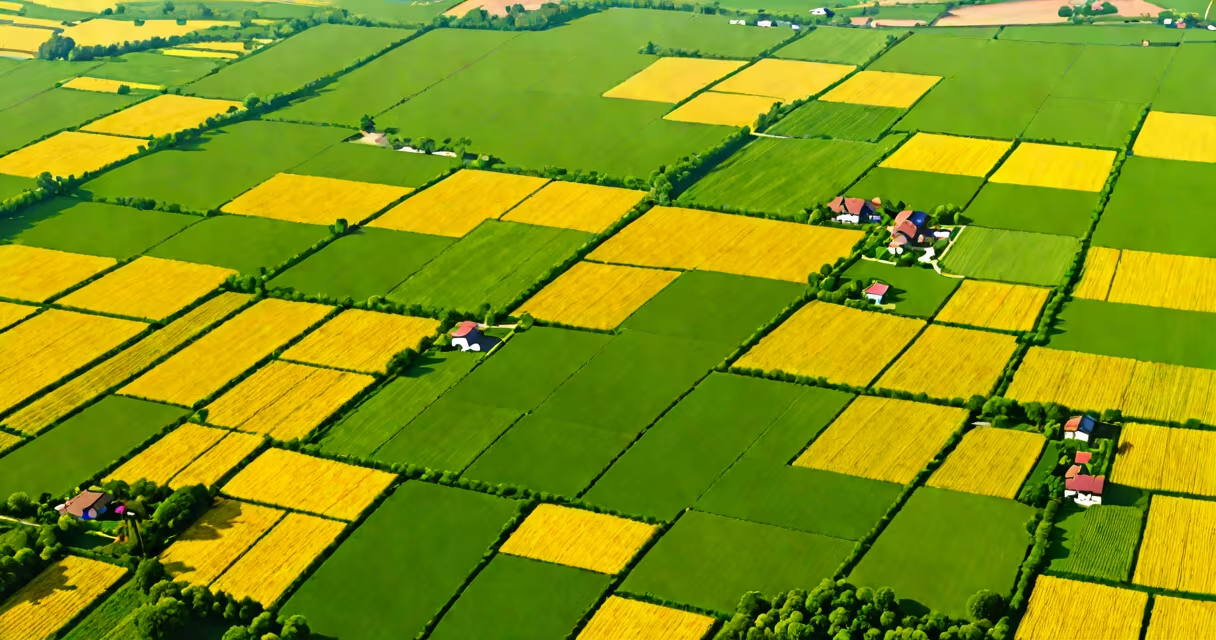
Physiological density is the number of people per square kilometer of arable land, measuring how many individuals rely on productive farmland for sustenance. Unlike arithmetic density, which divides total population by total land area, physiological density focuses exclusively on land capable of growing crops.
This metric reveals strain on agricultural resources. A high value indicates intense pressure on farmland, raising concerns about food security and sustainability. For example, Bangladesh has a physiological density of 1,060 people per km² of arable land-among the highest globally-due to dense populations concentrated on limited fertile plains.
Arable land includes soil suitable for annual crops, excluding deserts, mountains, and urban zones. Physiological density excludes non-farmable terrain, making it a targeted measure of farming capacity under population pressure. The United Nations Food and Agriculture Organization (FAO) defines arable land as land under temporary crops, temporary meadows for mowing or pasture, and land temporarily fallow.
Physiological density is calculated by dividing the total national population by the area of arable land in square kilometers. The formula is:
Physiological Density = Total Population ÷ Arable Land Area (km²)For instance, India's population is approximately 1.4 billion. Its arable land covers about 164 million hectares (1.64 million km²). Dividing 1.4 billion by 1.64 million yields a physiological density of roughly 854 people per km² of arable land. This figure exceeds the global average of 320 people per km² of arable land, signaling significant agricultural stress.
Unlike arithmetic density-which can be misleading in countries with vast uninhabitable regions-physiological density exposes real-world constraints. In Saudi Arabia, arithmetic density is low (about 18 people/km²), but physiological density is higher due to minimal arable land. Only 1.5% of Saudi Arabia's land is arable, supporting a population of 36 million. That gives a physiological density of around 24,000 people per km² of arable land-far above most nations.
Physiological density is used in development planning, environmental science, and agricultural policy. It helps governments assess food system resilience and prioritize land-use reforms. Urban planners use it to evaluate regional food supply risks, especially in rapidly growing cities.
It is often compared with arithmetic density and agricultural density. While arithmetic density counts all land, and agricultural density measures farmers per km² of arable land, physiological density uniquely tracks population pressure on farmable space.
| Metric | Formula | Use Case |
|---|---|---|
| Arithmetic Density | Total Population ÷ Total Land Area | General population distribution |
| Agricultural Density | Farmers ÷ Arable Land Area | Measures labor intensity on farms |
| Physiological Density | Total Population ÷ Arable Land Area | Assesses food production pressure |
High physiological density correlates with increased risk of malnutrition and land degradation. According to the World Bank, countries with physiological density above 500 people/km² face greater challenges in achieving sustainable agriculture goals under climate change.
Many confuse physiological density with agricultural density. Agricultural density counts farmers per unit of arable land. Physiological density counts total people. A country may have low agricultural density (few farmers per km²) but high physiological density (many people relying on that land).
Another error is assuming high physiological density always implies hunger. Not necessarily. Japan has a physiological density of 4,200 people/km² of arable land-higher than most nations-but maintains food self-sufficiency through advanced farming tech, efficient logistics, and trade. The difference lies in productivity, not just pressure.
Also, arable land is not static. Climate change alters suitability. The FAO reports that 25% of global arable land has degraded since 1990 due to erosion, salinization, and pollution. This reduces effective arable area, increasing physiological density even if population stays constant.
Egypt's total population is about 105 million. Its arable land totals 30,000 km²-mostly along the Nile River. Using the formula:
105,000,000 ÷ 30,000 = 3,500 people per km² of arable landEgypt's physiological density is 3,500-among the highest in the world. Despite this, Egypt imports wheat and relies on irrigation systems to sustain agriculture. The country spends over $1 billion annually on imported foodstuffs, highlighting the gap between available farmland and food demand.
I once visited a village near Aswan where families grow vegetables on narrow strips of land beside the Nile. The soil was rich, but plots were less than 10 meters wide. Over 100 people lived on a single hectare. This visual match confirmed the statistical reality: extreme pressure on arable land.