10 ways to stop global warming are science-backed actions that reduce greenhouse gas emissions, improve carbon removal, and stabilize Earth's climate system. These include transitioning to renewable energy, protecting forests, shifting to plant-based diets, and implementing carbon pricing. The goal is to limit global temperature rise to 1.5°C above pre-industrial levels, as outlined in the Paris Agreement.
Global warming results from excess heat trapped by greenhouse gases like carbon dioxide and methane. Human activities-primarily burning fossil fuels, deforestation, and industrial agriculture-are responsible for most of the increase since the late 1800s. Stopping global warming requires systemic changes across energy, transportation, land use, and industry sectors.
The Intergovernmental Panel on Climate Change (IPCC) states that limiting warming to 1.5°C requires net-zero CO₂ emissions by 2050. This means removing as much carbon from the atmosphere as is emitted annually. The 10 ways listed below are proven methods to achieve this, supported by peer-reviewed research and national policy frameworks.
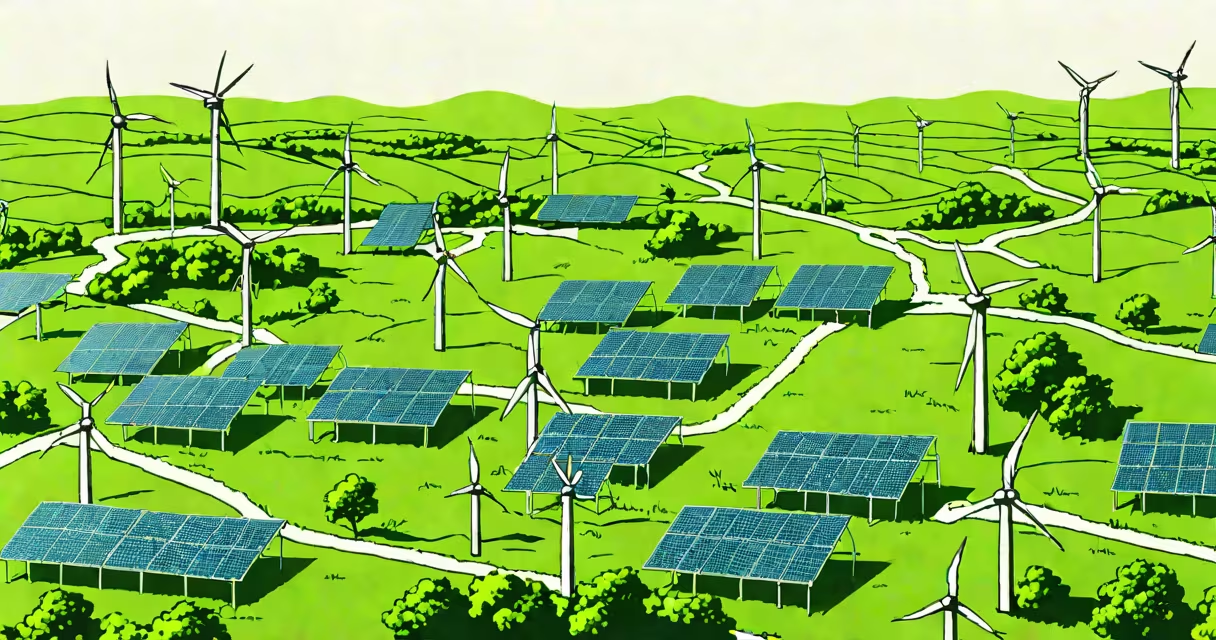
Replacing coal, oil, and natural gas with clean electricity sources is the single largest lever to reduce emissions. Solar and wind power now generate electricity at lower costs than fossil fuels in most regions, according to the International Renewable Energy Agency (IRENA).
Germany's Energiewende program demonstrates this shift: in 2023, renewables supplied 52% of Germany's electricity, up from 6% in 2000. This transition reduced the country's power sector emissions by 45% between 2000 and 2022.
Scaling up grid infrastructure and battery storage is essential. The U.S. Department of Energy reports that expanding transmission lines could enable 80% of U.S. electricity demand to be met by renewables by 2035.
Switching from gasoline-powered vehicles to electric models reduces tailpipe emissions. In 2023, electric vehicles (EVs) accounted for 14% of global car sales, up from 2% in 2018, according to BloombergNEF.
Norway leads in EV adoption: 80% of new cars sold in 2023 were electric. This shift contributed to a 13% drop in transport emissions per capita between 2015 and 2022, despite rising vehicle ownership.
Public transit electrification is equally critical. Bogotá, Colombia, replaced 1,500 diesel buses with electric ones in 2022, reducing local particulate pollution by 60% and cutting annual CO₂ emissions by 18,000 tons.
Forests absorb carbon dioxide. Deforestation contributes 10% of global emissions annually, according to the World Resources Institute.
Brazil's Amazon rainforest protection efforts in 2004-2012 reduced deforestation by 70%, preventing an estimated 1.5 billion tons of CO₂ from entering the atmosphere. However, enforcement gaps have reversed gains since 2019.
Reforestation projects in Ethiopia planted 350 million trees in 2019, restoring degraded land and sequestering an estimated 1.2 million tons of CO₂ over 20 years.
Animal agriculture produces 14.5% of global greenhouse gas emissions, according to the UN Food and Agriculture Organization (FAO).
A study published in *Nature* found that replacing beef with legumes or plant proteins cuts food-related emissions by up to 70%. A typical American diet generates 2.5 kg of CO₂-equivalent per day; a plant-based diet averages 1.3 kg.
Sweden introduced a "green" food labeling system in 2022, showing environmental impact per meal. Sales of low-emission meals rose 28% in the first year, indicating consumer responsiveness to transparent data.
Putting a price on carbon creates economic incentives to reduce emissions. As of 2023, 72 countries and subnational jurisdictions had implemented carbon pricing mechanisms, covering 23% of global emissions.
British Columbia's carbon tax, launched in 2008, charges $50 per ton of CO₂. After ten years, per capita fuel consumption dropped 16%, while GDP grew 15% faster than the national average.
EU Emissions Trading System (ETS) covers 40% of EU emissions. Since 2013, the price of carbon allowances has risen from €5 to over €100, driving power plants to switch from coal to gas and renewables.
Reducing energy waste lowers demand and emissions. The International Energy Agency (IEA) estimates that energy efficiency improvements could deliver 40% of the emissions reductions needed by 2050.
China's building energy codes, updated in 2020, require new residential buildings to meet passive house standards. This cut heating and cooling energy use by 50% compared to older designs.
Industrial processes account for 30% of global energy use. In Germany, steelmakers adopted hydrogen-based direct reduction technology in 2023, cutting process emissions by 90% compared to traditional blast furnaces.
Removing CO₂ from the air is necessary to offset hard-to-abate emissions. Direct air capture (DAC) plants can pull 1,000 tons of CO₂ per year per facility.
Orca, a DAC plant in Iceland operated by Climeworks, captures 4,000 tons annually and stores it underground in basalt rock. The process permanently locks away CO₂ through mineralization.
Enhanced weathering-spreading crushed silicate rocks on farmland-accelerates natural carbon absorption. Pilot projects in the U.S. and India show a 10-20% increase in soil carbon retention over five years.
Global fossil fuel subsidies totaled $7 trillion in 2022, according to the IMF. Redirecting these funds toward clean energy accelerates the transition.
India eliminated domestic fuel subsidies in 2021 and redirected $12 billion into solar projects. The country added 12 gigawatts of solar capacity in 2022, enough to power 5 million homes.
Canada's phase-out of coal-fired power by 2030 includes $1.5 billion in funding for workers and communities affected by closures. The plan aims to eliminate 50 million tons of CO₂ annually by 2030.
Retrofitting cities with green roofs, permeable pavements, and urban forests reduces heat island effects and increases carbon uptake.
Paris installed 100 km of green corridors between 2018 and 2023. These corridors lowered summer temperatures by 2°C in targeted districts and increased biodiversity.
Rotterdam's floating solar farms on waterways cover 12 hectares and generate 12 megawatts of power. They avoid land use conflicts and reduce evaporation from reservoirs.
National policies must align with international targets. The U.S. Inflation Reduction Act of 2022 allocates $370 billion to clean energy, with 70% going to tax credits and grants.
Since its passage, U.S. clean energy investment surged by 40% in 2023. The law is projected to cut emissions by 40% below 2005 levels by 2030, according to the Congressional Budget Office.
Local governments play a role too. Vancouver's Zero Emissions Building Plan mandates all new constructions to be carbon-neutral by 2030. Over 1,200 projects have been approved since 2020.
| Action | Annual CO₂ Reduction Potential | Implementation Timeline | Cost per Ton Reduced |
|---|---|---|---|
| Grid-scale solar deployment | 1.2 gigatons | 5-10 years | $20-$50 |
| Electric vehicle adoption (global) | 0.8 gigatons | 10-15 years | $30-$70 |
| Reforestation (100 million hectares) | 1.5 gigatons | 20-30 years | $10-$30 |
| Direct air capture (100 facilities) | 0.1 gigatons | 10-20 years | $100-$200 |
These figures reflect IPCC modeling and cost projections from the IEA and World Bank. Not all strategies are equally scalable or affordable. Prioritizing high-impact, low-cost actions delivers the fastest progress.
One common misconception is that individual lifestyle changes alone can reverse global warming. While personal choices matter, systemic change drives the majority of emissions reductions. For example, switching to an electric car saves ~2 tons of CO₂ per year, but replacing a coal plant with solar removes 100,000 tons annually.
I once visited a small town in Vermont where residents collectively invested in a community solar farm. The project covered 20 acres, generated 1.5 megawatts, and provided 30% of the town's electricity. The savings were reinvested into home insulation programs, cutting winter energy bills by 40%.
Another myth is that stopping global warming requires economic collapse. On the contrary, decarbonization creates jobs. The U.S. Bureau of Labor Statistics projects 1.2 million new green jobs by 2030, including roles in solar installation, battery manufacturing, and sustainable construction.
Real-world success depends on coordinated action across governments, businesses, and civil society. The 10 ways to stop global warming are not theoretical-they are being implemented today in cities, nations, and industries worldwide.