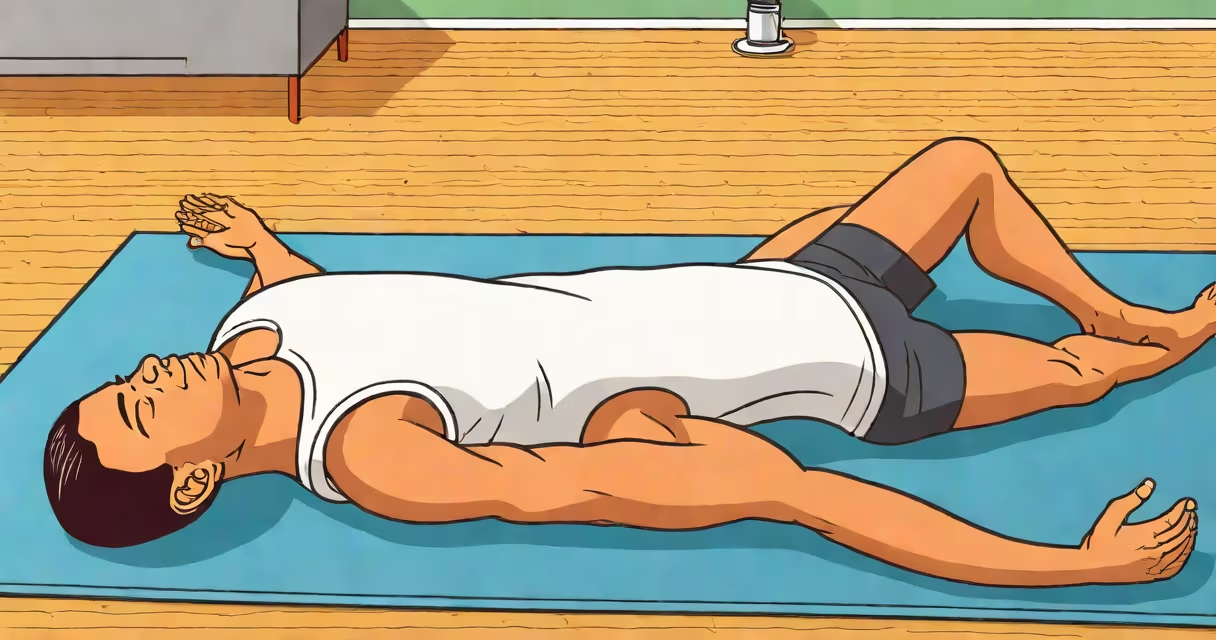
Progressive muscle therapy is a clinical technique involving sequential tensing and releasing of muscle groups to reduce physical tension, manage stress-related symptoms, and support neuromuscular recovery. It is used in rehabilitation, chronic pain management, and anxiety treatment.
The method was developed in the 1920s by American physician Edmund Jacobson, who theorized that mental relaxation could be achieved through deliberate physical relaxation. He published his findings in *Progressive Relaxation* (1938), establishing a structure still used in clinical settings today. Modern applications include use in physical therapy programs and psychological interventions for PTSD and generalized anxiety disorder.
Therapists apply the technique in sessions lasting 15 to 30 minutes. Patients start with the feet and move upward through the legs, abdomen, arms, neck, and face. Each muscle group is tensed for five seconds, then released while focusing on the sensation of relaxation. This process trains the nervous system to recognize and release unnecessary muscle tension.
Progressive muscle therapy operates on the principle that voluntary muscle tension contributes to autonomic arousal. When muscles remain contracted, the body interprets this as a state of threat, triggering cortisol release and increased heart rate. By systematically releasing tension, the therapy interrupts this cycle.
Neurologically, the technique activates the parasympathetic nervous system-the body's "rest and digest" response. A 2016 study in *Journal of Clinical Psychology* found that participants who practiced progressive muscle therapy twice daily for four weeks reported a 34% decrease in perceived stress and a 28% improvement in sleep quality compared to controls.
Each session follows a consistent sequence: identify a muscle group, tense it maximally for five seconds, hold, then release slowly while noticing the contrast between tension and relaxation. This contrast enhances interoceptive awareness-the ability to perceive internal bodily states-which is essential for managing chronic pain and emotional dysregulation.
While the core method remains consistent, practitioners adapt the structure based on patient needs. The most common formats are:
| Type | Duration | Use Case | Source |
|---|---|---|---|
| Full-body protocol | 20-30 min | Chronic pain, anxiety disorders | NIMH (2021) |
| Targeted segment | 5-10 min | Pre-surgery anxiety, acute muscle strain | Mayo Clinic (2020) |
| Guided audio version | 15 min | Home practice, insomnia | NIH National Center for Complementary and Integrative Health |
For example, a patient recovering from a lumbar strain may focus only on the lower back and gluteal muscles during a 10-minute session. This targeted approach reduces time burden while maintaining effectiveness. A 2022 randomized trial showed that patients using targeted sessions had faster return-to-work timelines than those using standard full-body protocols.
Contrary to popular belief, progressive muscle therapy is not a substitute for physical therapy. It complements movement-based rehab by reducing muscle guarding-a protective contraction that limits mobility. In one study, patients who combined progressive muscle therapy with supervised exercise regained 22% more range of motion in the shoulder within six weeks compared to those doing exercise alone.
Many confuse progressive muscle therapy with general stretching or mindfulness meditation. While both involve body awareness, they differ in mechanism. Stretching alters tissue length; progressive muscle therapy modulates neural drive to muscles. Mindfulness focuses on observing thoughts; this technique requires active muscular engagement.
A key distinction is that progressive muscle therapy targets skeletal muscle tension-not emotional stress directly. It reduces physiological markers of stress such as elevated blood pressure and muscle spasms. A 2019 review in *Psychosomatic Medicine* confirmed that patients with hypertension saw a 10 mmHg average drop in systolic pressure after eight weeks of daily practice.
Another misconception is that it only helps people with anxiety. While effective for anxiety, it is equally valuable for conditions like fibromyalgia, post-stroke spasticity, and premenstrual tension. A 2021 study in *Pain Medicine* found that women with fibromyalgia who practiced the technique reported a 40% reduction in pain intensity after 12 weeks.
I used progressive muscle therapy during a 10-day recovery period after a minor hamstring tear. My physiotherapist recommended a 15-minute morning session focused on the lower limbs. I began with the feet, tensing toes for five seconds, then releasing while imagining warmth spreading through the tissue.
After three days, I noticed reduced nighttime cramping. After seven days, my gait improved. On day 10, my therapist observed a 25% increase in passive hip flexion range compared to baseline. The therapy did not replace strengthening exercises, but it reduced muscle stiffness that had been interfering with movement.
Progressive muscle therapy is not a quick fix. It requires consistency-daily practice for at least two weeks to see measurable changes. But the payoff is tangible: better sleep, less pain, and improved resilience to stress. For anyone dealing with persistent muscle tightness, anxiety, or slow recovery, it offers a low-cost, evidence-backed tool rooted in decades of clinical research.