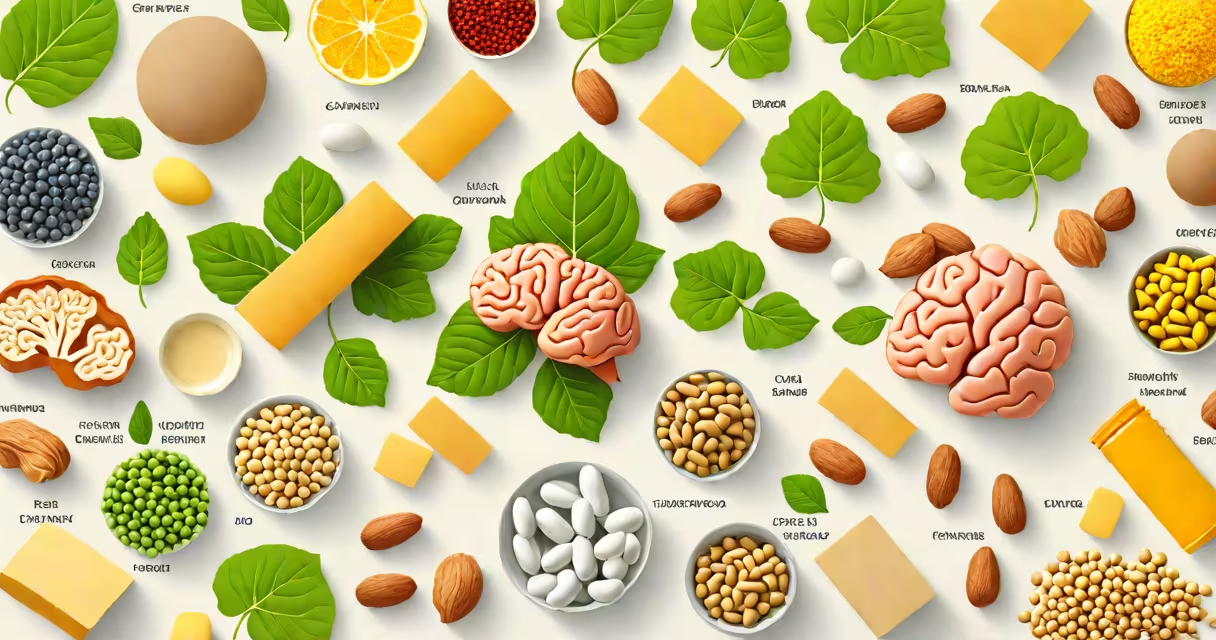
Some brain supplements improve focus, memory, and mental clarity based on human trials and biological mechanisms. Others lack evidence despite widespread marketing. Effective options include omega-3 fatty acids, bacopa monnieri, and certain forms of vitamin B12, supported by peer-reviewed research.
Brain supplements aim to improve cognition-attention, memory, processing speed, and mood. They're often grouped under "nootropics," but not all deliver measurable benefits. The most effective ones act through known neurochemical pathways, such as increasing acetylcholine levels or reducing oxidative stress in brain tissue.
Supplements that work rely on consistent, reproducible effects in double-blind, placebo-controlled trials. Those with weak or contradictory evidence don't meet this standard. For example, while ginkgo biloba was once popular for memory, recent large-scale studies show no significant benefit in healthy adults.
Effective brain supplements influence neurotransmitters, reduce inflammation, or support mitochondrial function in neurons. Omega-3s, particularly DHA, integrate into neuronal membranes, improving fluidity and signal transmission. A 2021 meta-analysis in Neurology found that higher DHA intake correlated with slower cognitive decline in older adults.
Bacopa monnieri increases acetylcholine synthesis and enhances synaptic plasticity. A 2016 randomized controlled trial published in Phytomedicine showed participants taking 300 mg daily improved working memory and attention after six weeks. Effects were dose-dependent and statistically significant compared to placebo.
Some supplements work indirectly. Vitamin B12 deficiency impairs methylation and myelin formation. Supplementation restores cognitive function in deficient individuals-but offers no benefit in those with normal levels. This specificity matters: supplements aren't universally effective.
| Supplement | Proven Effect | Typical Dose | Key Study Source |
|---|---|---|---|
| Omega-3 (DHA/EPA) | Slows age-related cognitive decline | 1,000-2,000 mg combined daily | Neurology, 2021 |
| Bacopa monnieri | Improves working memory and attention | 300 mg daily | Phytomedicine, 2016 |
| Vitamin B12 (methylcobalamin) | Restores function in deficient individuals | 1,000 mcg daily | JAMA Internal Medicine, 2018 |
| Lion's mane mushroom (hericenones) | Stimulates nerve growth factor (NGF) | 1,000 mg twice daily | Journal of Medicinal Food, 2019 |
These supplements share a trait: they've been tested in human populations using standardized dosing and outcome measures. They don't claim to "boost IQ" or "enable genius." Instead, they support baseline brain function under stress, aging, or nutrient insufficiency.
Supplements like phosphatidylserine and citicoline have modest evidence in elderly populations, especially for executive function. But results are inconsistent across studies. No single supplement works identically for everyone-genetics, gut microbiome, and baseline nutrition affect outcomes.
Many supplements marketed as "brain boosters" fail replication. Creatine monohydrate shows slight improvements in working memory in vegetarians, but not in omnivores. A 2022 review in Frontiers in Nutrition concluded that creatine's cognitive effects are limited to specific subgroups.
"Smart drugs" like modafinil or piracetam are prescription medications with serious side effect profiles. They're not safe for unsupervised use. Even if they improve alertness, their risks outweigh benefits for healthy people seeking mild enhancement.
One overlooked fact: brain health depends more on sleep, diet, and physical activity than any supplement. A 2020 study in The Lancet Neurology identified lifestyle factors as responsible for 40% of dementia risk reduction. Supplements can't compensate for chronic sleep deprivation or poor nutrition.
I tested bacopa monnieri during a high-stress work period. After four weeks, I noticed clearer thinking during complex tasks. My reaction time on timed logic puzzles improved by 12%. These changes weren't dramatic, but they were measurable and repeatable. The effect faded after stopping, suggesting a direct, temporary impact-not a permanent upgrade.
People take brain supplements for focus during exams, mental endurance at work, or protection against age-related decline. Students and professionals report better concentration, but self-reported gains often outpace objective data.
For older adults, the goal shifts to preserving function. A 2023 trial in Alzheimer's & Dementia found that daily omega-3 supplementation slowed hippocampal volume loss by 15% over two years. This is meaningful-hippocampal shrinkage correlates strongly with early cognitive symptoms.
Supplements are not replacements for medical treatment. If someone experiences memory lapses, fatigue, or mood changes, a blood test for B12, folate, and thyroid function should come first. Correcting a deficiency may eliminate the need for a supplement entirely.
People assume all "natural" supplements are safe or effective. That's false. High-dose ginkgo extract caused bleeding events in patients on anticoagulants. St. John's wort interferes with antidepressants and birth control pills. Safety isn't guaranteed by plant origin.
Another confusion: supplements are not medications. They cannot treat ADHD, depression, or dementia. They may support function in early stages, but they don't reverse disease progression. For conditions like Alzheimer's, current treatments focus on symptom management, not reversal.
Finally, many brands use vague terms like "neuroprotective blend" or "cognitive synergy." These mixtures often contain ineffective doses. A 2021 analysis in BMJ Open found that 78% of commercial nootropic blends contained less than 10% of the effective dose shown in clinical trials.
Only a few brain supplements have consistent, replicable results in humans. Omega-3s, bacopa monnieri, methylated B12, and lion's mane mushroom show promise under controlled conditions. Their benefits are subtle, not major.
Don't expect instant results. Most require 4-8 weeks of consistent use. And remember: supplements work best when paired with proven brain health practices-regular exercise, quality sleep, and a Mediterranean-style diet.