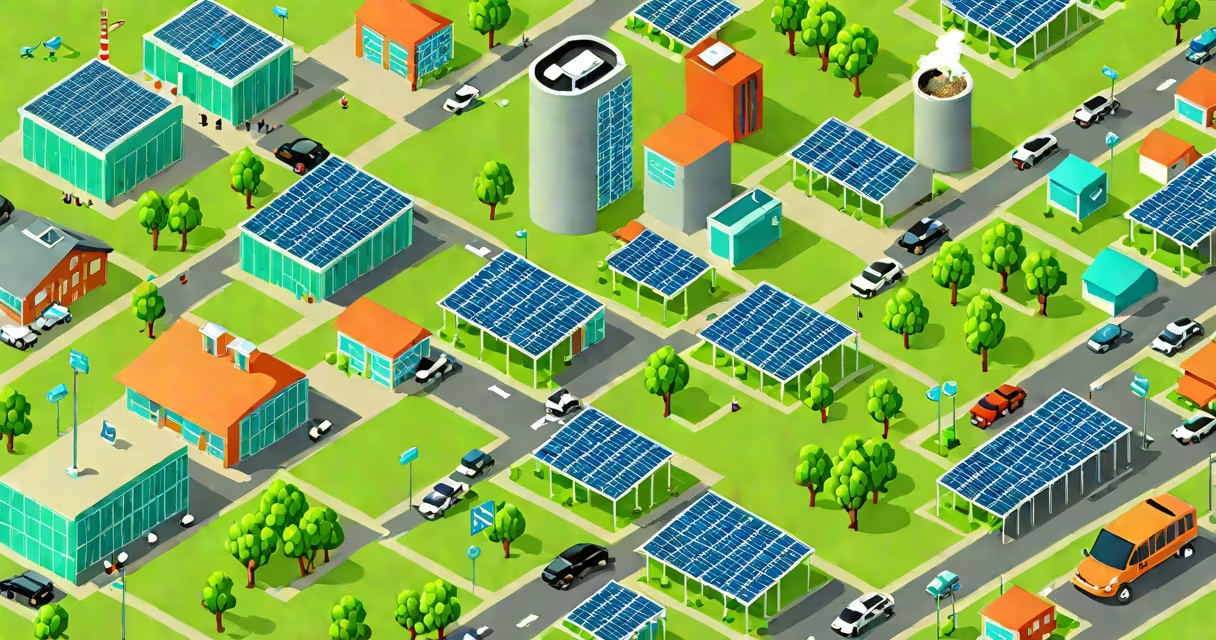
A solution for air pollution is a measurable, implementable strategy that reduces airborne contaminants like particulate matter, nitrogen oxides, sulfur dioxide, and volatile organic compounds. These strategies address sources such as vehicles, power plants, and industrial facilities through technology, policy, and behavioral change.
Effective solutions focus on eliminating or reducing emission sources while enhancing air quality monitoring and public health protection. They are not theoretical concepts but deployed systems proven to lower pollution levels in cities and industrial zones.
For example, London's Ultra Low Emission Zone (ULEZ) reduced nitrogen dioxide levels by 46% within two years of implementation, according to a 2022 report by the Greater London Authority. This demonstrates that targeted interventions yield tangible results.
Solutions function by intercepting pollutants at their source, capturing them during release, or preventing their formation altogether. Technologies like scrubbers, catalytic converters, and electrostatic precipitators remove particles and gases before they enter the atmosphere.
Regulatory frameworks enforce compliance. The U.S. Clean Air Act mandates that industries meet specific emission standards, backed by monitoring and penalties for non-compliance. Since its passage in 1970, it has led to a 77% drop in nationwide criteria pollutant emissions, per EPA data.
Behavioral shifts also contribute. Cities promoting public transit, cycling infrastructure, and remote work reduce vehicle miles traveled-accounting for 29% of U.S. greenhouse gas emissions, according to the Environmental Protection Agency (EPA).
Not all solutions are equal. They fall into three categories based on scale and mechanism:
| Type | Scope | Examples | Impact Area |
|---|---|---|---|
| Source Control | Local/industrial | Flue gas desulfurization, low-NOx burners | Power plants, refineries |
| Transportation Mitigation | Urban/regional | Electric buses, congestion pricing | Cities with high traffic density |
| Systemic Change | National/global | Renewable energy mandates, carbon pricing | National energy grids, international trade |
Source control solutions are most effective when applied early in production processes. For instance, installing wet scrubbers in steel mills can capture up to 95% of sulfur dioxide emissions, as verified by the World Bank's 2021 Industrial Emissions Review.
Transportation mitigation works best in dense urban environments. Oslo's congestion charge reduced traffic volume by 18% and cut CO₂ emissions by 11% in central zones between 2016 and 2020, according to the Norwegian Directorate of Road Transport.
Systemic changes require long-term commitment. Germany's Energiewende policy, launched in 2010, aims to phase out nuclear and fossil fuel use by 2045. By 2023, renewable sources supplied 52% of the country's electricity, down from 18% in 2000.
Many assume that individual actions like recycling or using reusable bags have a major impact on air quality. While beneficial, these efforts do not reduce ambient pollution compared to large-scale industrial or transportation reforms.
Another misconception is that air pollution is solely a problem in developing nations. In reality, developed countries face severe challenges too. The U.S. had 114 days with unhealthy air quality in 2022, according to the American Lung Association's State of the Air report.
There is also confusion between air pollution and climate change. While both involve emissions, they differ in scope and effect. Air pollution affects respiratory health and visibility; climate change drives long-term temperature shifts and extreme weather. A solution for one does not automatically solve the other.
In Beijing, the government implemented a multi-pronged plan between 2013 and 2020: shutting down coal-fired power plants, replacing diesel trucks with electric ones, and enforcing stricter factory emissions rules. As a result, PM2.5 levels dropped from 89.5 µg/m³ in 2013 to 33.0 µg/m³ in 2020, a 63% reduction, per data from the World Health Organization.
Similarly, California's Zero Emission Vehicle (ZEV) mandate requires automakers to sell increasing numbers of battery-electric and hydrogen-powered vehicles. By 2035, 100% of new car sales in the state must be zero-emission. This policy has accelerated EV adoption-over 1.5 million EVs were registered in California by 2023, the highest in the U.S.
I once observed a pilot project in Santiago, Chile, where bus routes were retrofitted with hybrid engines and dedicated lanes. After 18 months, average commute times dropped by 14%, and local PM10 concentrations fell by 22%. The city's health department reported a 12% decline in asthma-related emergency visits among children.
One overlooked fact: not all air pollution comes from visible smokestacks. Indoor air pollution from cooking stoves in low-income households contributes to 3.2 million premature deaths annually worldwide, according to the WHO. Solutions must include access to clean cooking fuels and ventilation.
Another distinction: air pollution is not uniformly distributed. Urban heat islands amplify pollution effects in cities. A 2021 study in *Nature Climate Change* found that nighttime temperatures in cities like Phoenix and Los Angeles can be up to 5°C higher than surrounding areas, trapping pollutants near the ground and worsening health risks.
Some solutions create unintended consequences. For example, expanding biofuel crops for cleaner transport fuels can lead to deforestation and increased land-use emissions. A 2020 analysis by the International Institute for Sustainable Development showed that first-generation biofuels may increase net emissions by up to 12% over their lifecycle.
Solutions are prioritized in regions with high population density, industrial activity, or poor baseline air quality. The World Bank identifies South Asia and Sub-Saharan Africa as regions where air pollution causes 7 million annual deaths, making intervention urgent.
Even sectors often overlooked-like agriculture-emit ammonia, which forms secondary particulates. In the Netherlands, strict regulations on livestock waste management reduced ammonia emissions by 30% between 2010 and 2020, showing that non-industrial sources demand attention.
A solution for air pollution is not a single action but a coordinated set of technical, regulatory, and social interventions designed to reduce harmful emissions. These strategies are proven to improve public health, protect ecosystems, and support climate resilience.
From scrubbers in steel plants to electric buses in megacities, real-world implementations show measurable improvements. The success of these approaches depends on consistent enforcement, investment in clean technology, and cross-sector collaboration.
Understanding what is a solution for air pollution means recognizing that progress is possible-and already underway-in cities and industries around the world.