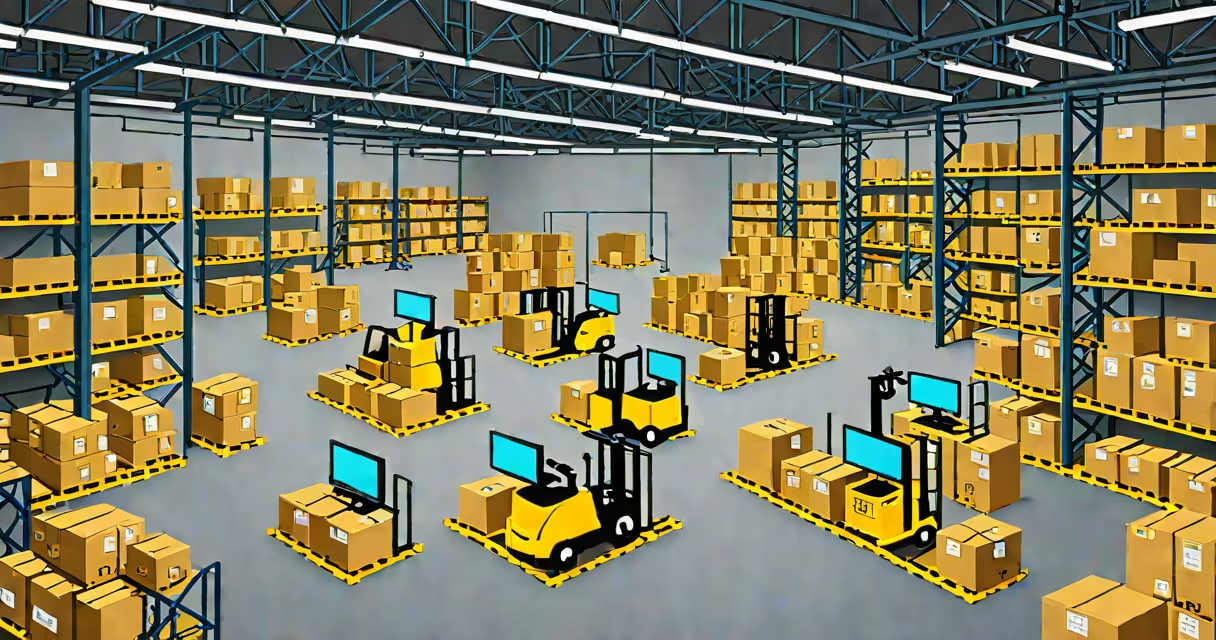
An asset management tracking system is a digital platform that monitors the location, condition, maintenance history, and ownership of physical and financial assets across an organization's operations. It uses identifiers like barcodes, RFID tags, or serial numbers to record and update asset data in real time, ensuring accurate inventory visibility and regulatory compliance.
These systems integrate with accounting, procurement, and maintenance workflows to automate tracking from acquisition to disposal. They reduce manual errors, prevent asset loss, and support audit readiness. For example, a hospital using such a system tracks MRI machines across multiple departments, automatically flagging overdue maintenance or unauthorized movement.
According to the Association for Asset Life Cycle Management (AALM), organizations that implement automated asset tracking report a 30% reduction in equipment downtime and a 25% decrease in replacement costs due to better lifecycle visibility. The International Organization for Standardization (ISO) also emphasizes standardized asset tracking in ISO 55000, the global structure for asset management.
The system begins with asset registration. Each item-such as a laptop, server, or industrial drill-is assigned a unique identifier and entered into a centralized database. This entry includes details like purchase date, cost, department assignment, and warranty period.
When the asset moves, changes status, or requires service, staff scan the identifier via mobile device or desktop interface. Data flows instantly to the central system, updating location, usage logs, and maintenance schedules. Alerts trigger when an asset exceeds its service window or leaves a designated zone.
For instance, a construction firm uses RFID tags on heavy machinery. When a bulldozer is moved from site A to site B, the system logs the transfer, checks if the machine passed its last inspection, and notifies the field supervisor if it hasn't. This prevents operational delays and ensures safety compliance.
Systems vary based on scale, industry, and integration needs. The most common types include:
| Type | Best For | Technology Used | Example Use Case |
|---|---|---|---|
| Barcode-based | Small to mid-sized businesses with low mobility | Scanners, QR codes, basic software | Tracking office printers across five branches |
| RFID-enabled | High-volume environments with frequent movement | Passive RFID tags, readers, cloud platforms | Monitoring surgical tools in a hospital operating set |
| GPS-integrated | Field teams managing remote assets | GPS trackers, cellular connectivity, dashboards | Locating delivery trucks in real time during a storm |
| Cloud-based ERP modules | Enterprises with existing finance and HR systems | Integration with SAP, Oracle, or Microsoft Dynamics | Automatically depreciating company vehicles in payroll reports |
Barcodes are cost-effective but require line-of-sight scanning. RFID allows bulk reading without direct contact-ideal for warehouses. GPS tracking enables real-time location updates but depends on signal strength and battery life. Cloud-based systems offer scalability and remote access but require secure network configurations.
A lesser-known fact: many systems fail not from technical flaws but from poor data governance. A 2022 study by Gartner found that 60% of failed implementations stemmed from inconsistent data entry practices, not software limitations. Training staff to scan correctly and assign assets to the right categories is critical.
People often confuse an asset management tracking system with a simple inventory list or spreadsheet. A tracker isn't just a record-it actively responds to changes. For example, a spreadsheet may show a printer is in Room 305, but a tracking system will notify the IT team if it was moved to Room 307 without authorization.
Another misconception is that these systems only track physical items. Modern platforms handle intangible assets too-software licenses, patents, domain names. A university using a tracking system logs not just lab equipment but also research grants and digital courseware licenses.
Some assume the system replaces human oversight. In reality, it enhances it. During a 2021 audit at a regional power utility, an automated system flagged a discrepancy: a transformer listed as "in service" had no maintenance log since 2018. An engineer verified the asset was offline and scheduled repairs, preventing a potential outage.
In 2020, a mid-sized manufacturing plant in Ohio replaced its paper-based asset register with a barcode-driven tracking system. They began by tagging 1,200 tools, machines, and safety gear. Each tool received a label with a unique ID linked to the worker who checked it out.
Managers set up rules: tools must be returned within 48 hours, and any overdue item triggers an email to the supervisor. After six months, the plant reported a 40% drop in lost tools and a 22% increase in equipment uptime. Maintenance teams reduced unplanned stops because they could see which machines were due for servicing.
One technician recalled a moment when the system alerted him that a lathe hadn't been used in seven days. He discovered it had been left running overnight due to a miscommunication. The system prevented a fire risk and saved $12,000 in potential repair costs.
An asset management tracking system is not a passive logbook. It's a responsive infrastructure that connects people, devices, and data to protect organizational value. Its success hinges not on features alone, but on consistent use, clear policies, and ongoing training.