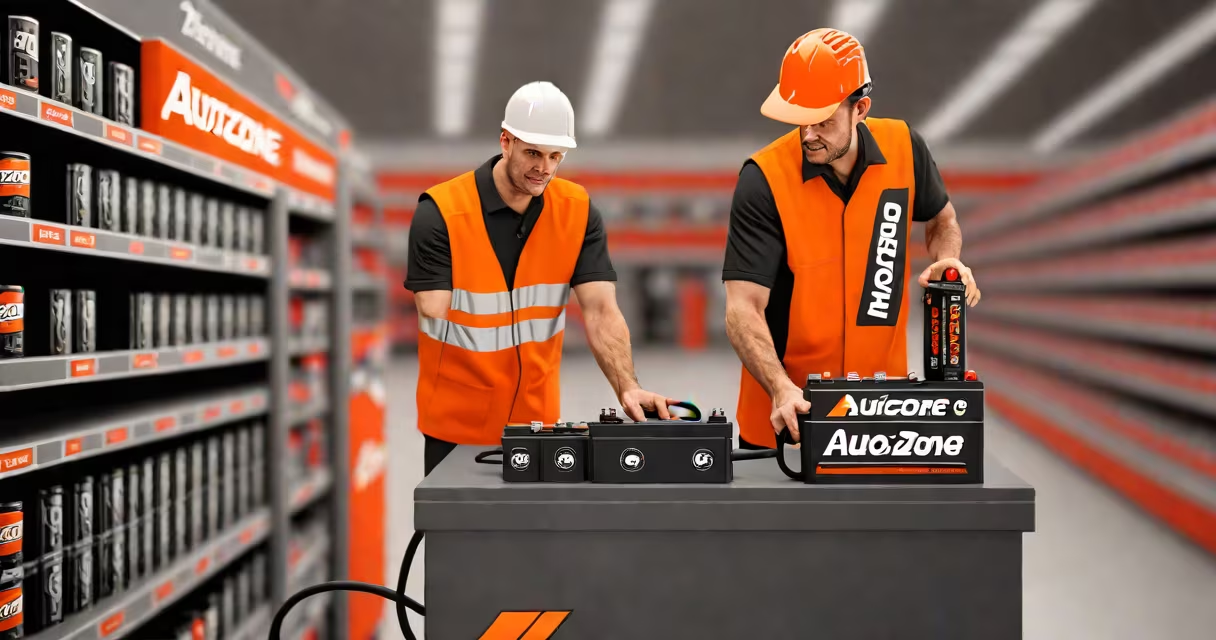
AutoZone battery replacement is a service offered at participating locations where trained staff install a new car battery after testing the old one. The process includes diagnostic checks, battery selection based on vehicle specifications, and free installation with a warranty.
When a vehicle's battery fails, especially in cold weather, drivers often turn to AutoZone for a fast, reliable fix. The service begins with a free battery test using a digital load tester. This test confirms whether the battery holds charge under simulated engine start conditions. If the battery fails, AutoZone recommends a replacement based on the make, model, and year of the vehicle.
Installation takes 15 to 30 minutes. Technicians disconnect the old battery, clean terminals, install the new unit, and reconnect the system. Most batteries come with a 36-month warranty, and many stores offer a free replacement if the new battery fails within the first 90 days. Customers receive a receipt and a warranty card.
Each AutoZone location uses a standardized process to ensure consistency and safety. The first step is a free battery test conducted with a calibrated load tester. According to the National Institute for Automotive Service Excellence (ASE), load testers simulate the electrical demand of starting an engine and measure voltage drop under stress. A battery that drops below 9.6 volts under load is considered weak and likely to fail soon.
After testing, the technician selects a battery that matches the vehicle's cold cranking amps (CCA) rating. For example, a 2018 Honda Civic requires a minimum of 400 CCA. AutoZone stocks AGM (absorbent glass mat) and standard lead-acid batteries. AGM batteries are more durable and better suited for vehicles with stop-start systems, which are common in newer models.
During installation, the technician removes the negative cable first, then the positive. They clean corrosion from the terminals with a wire brush and apply anti-corrosion spray. The new battery is secured with clamps, and cables are reconnected in reverse order. After installation, the vehicle's computer may need a reset to prevent warning lights from appearing.
AutoZone offers several battery types, each suited to different driving conditions and vehicle needs. The table below compares common options:
| Type | Best For | Typical Lifespan | Price Range (2024) |
|---|---|---|---|
| Standard Lead-Acid | Basic sedans, older vehicles | 3-5 years | $90-$140 |
| AGM (Absorbent Glass Mat) | Start-stop engines, luxury vehicles | 5-7 years | $160-$280 |
| Enhanced Flooded Battery (EFB) | Hybrid systems, frequent short trips | 4-6 years | $130-$200 |
AGM batteries are more expensive but handle deeper discharges and higher vibration levels. They're ideal for vehicles with advanced electronics, such as BMWs and Teslas. EFB batteries are a middle ground-better than standard lead-acid but less costly than AGM. They're used in many Ford and Toyota hybrids.
A non-obvious distinction: AutoZone does not sell batteries online for in-store replacement. Customers must visit a physical location to complete the service. This ensures proper handling and installation, reducing the risk of damage or improper fit.
Many drivers assume that replacing a battery fixes all electrical issues. That's not true. A failing alternator can drain a new battery within hours. AutoZone technicians perform a charging system check as part of the service. If the alternator output is below 13.5 volts while the engine runs, they recommend further diagnostics.
Another mistake is choosing a battery with too high CCA. While higher CCA seems better, it can overload the starter motor in cold climates. The Society of Automotive Engineers (SAE) recommends matching CCA to the manufacturer's specification. For example, a 2020 Toyota Camry requires 550 CCA-not 700, even though the latter is available.
I once observed a customer bring in a dead battery from a 2016 Subaru Outback. The technician tested it and found it failed the load test. The customer had driven the car daily for months, relying on the alternator to recharge the battery. The alternator was drawing 12.3 volts, below the required 13.5. Replacing the battery alone would have led to rapid failure. The technician recommended checking the alternator first. The customer returned after repair and reported no further issues.
As of 2024, the average cost for autozone battery replacement ranges from $110 to $220, depending on the battery type and vehicle. Labor is free at most locations. The price includes the battery, installation, and a 36-month warranty. Some stores offer a 90-day free replacement guarantee if the battery fails early.
Warranty terms vary by brand. Interstate batteries, sold at AutoZone, include a 36-month warranty with a 12-month free replacement period. Optima batteries offer a 36-month limited warranty and a 12-month pro-rated refund if the battery fails. All warranties require proof of purchase and valid registration.
If a battery fails due to a defect, AutoZone replaces it at no cost. However, damage from improper use-such as leaving lights on or jump-starting incorrectly-is not covered. The company advises customers to avoid deep discharges and to drive the vehicle regularly to maintain charge.
Before visiting AutoZone, verify your vehicle's battery group size and CCA requirement. Check the owner's manual or use AutoZone's online battery finder tool. Enter your vehicle's year, make, model, and engine size to get a list of compatible batteries.
After replacement, reset the vehicle's computer if needed. For example, some GM models require a battery reset procedure via the infotainment screen. Failure to do so can trigger the "Check Engine" light or cause erratic behavior in the radio and climate control.
AutoZone battery replacement is a straightforward, no-hassle solution for vehicle owners facing battery failure. The service combines free testing, accurate battery matching, professional installation, and warranty protection. It's not just a swap-it's a system check that improves reliability and prevents future breakdowns.