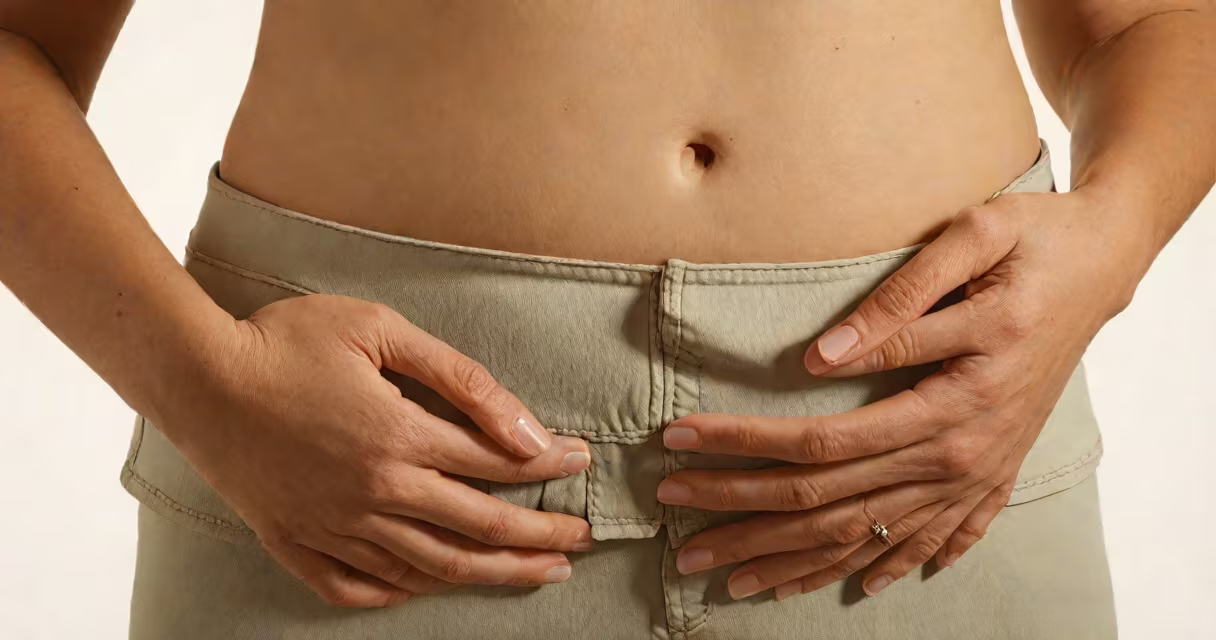
Period cramps occur when the uterus contracts to shed its lining, driven by hormone-like substances called prostaglandins. These contractions reduce blood flow to the uterine tissue, causing pain that can range from mild to severe.
Prostaglandins are produced in the uterine lining during menstruation. Higher levels correlate with stronger contractions and more intense pain. This process is normal and affects most people with periods, though severity varies widely.
Cramps typically begin just before or at the start of bleeding and last 1-3 days. They often peak on day 1 or 2 of the cycle. Pain may radiate to the lower back or thighs and can be accompanied by nausea, fatigue, or headaches.
The uterus is a muscular organ designed to contract during labor and menstruation. During the menstrual cycle, estrogen and progesterone rise and fall. When progesterone drops, the uterine lining breaks down and sheds.
As the lining detaches, cells release prostaglandins. These chemicals bind to receptors in the uterine muscle, causing rhythmic contractions. When contractions are strong enough, they compress blood vessels, reducing oxygen supply to the tissue and triggering pain signals.
A 2021 study published in *The Journal of Pain* found that people with dysmenorrhea (severe menstrual pain) had higher prostaglandin levels in their menstrual fluid compared to those with mild or no pain. Levels peaked on day 1 of menstruation.
Several factors increase prostaglandin production and cramp intensity. High stress, poor sleep, and high caffeine intake are linked to worsened symptoms. A 2019 study in *Pain Medicine* showed that people who consumed more than 300mg of caffeine daily reported 30% higher pain scores.
Underlying conditions also play a role. Endometriosis, where uterine-like tissue grows outside the uterus, causes inflammation and excessive prostaglandin release. Adenomyosis, where tissue invades the uterine wall, leads to thickening and painful contractions. Both conditions affect 5-10% of reproductive-age individuals.
Low body weight and low fat stores may also contribute. Fat tissue produces anti-inflammatory hormones. People with very low body fat often report more severe cramping due to reduced natural pain modulation.
Many assume cramps are just "normal" and must be endured. While mild cramping is typical, severe pain that interferes with daily life is not. The World Health Organization defines moderate-to-severe menstrual pain as a condition requiring medical evaluation.
Another myth is that cramps only happen during periods. Some people experience cramping before bleeding begins. This occurs because prostaglandin release starts before the lining sheds. A 2020 survey in *Obstetrics & Gynecology* found 68% of participants felt cramps up to 24 hours before spotting.
Some confuse period cramps with ovulation pain (mittelschmerz), which happens mid-cycle. Ovulation pain is usually sharp, one-sided, and lasts minutes to hours. Period cramps are dull, cramping, and persist for days.
Cramps are categorized by pain intensity and impact:
| Severity Level | Characteristics | Impact on Daily Life |
|---|---|---|
| Mild | Dull ache, occasional discomfort | No missed work or school |
| Moderate | Sharp or throbbing pain, may require rest | Missed 1-2 hours of activity |
| Severe | Pain lasting more than 3 days, nausea, dizziness | Missed school/work, requires medication |
Severe cramps often signal an underlying issue. The American College of Obstetricians and Gynecologists (ACOG) recommends evaluation if pain prevents routine activities or persists beyond 3 days.
I experienced debilitating cramps for six months before seeking care. Pain began 12 hours before my period started, lasted four days, and included vomiting. Over-the-counter ibuprofen helped slightly but didn't stop the nausea.
After seeing a gynecologist, I was diagnosed with adenomyosis via transvaginal ultrasound. My prostaglandin levels were elevated. Treatment with a combination of NSAIDs and hormonal birth control reduced cramps to mild levels within two cycles.
This case shows that while cramps are common, persistent or severe pain should not be ignored. Early diagnosis improves quality of life and reduces long-term complications.
Seek care if cramps worsen over time, start suddenly after years of mild pain, or include fever, heavy bleeding, or fainting. These signs may indicate endometriosis, pelvic inflammatory disease, or fibroids.
People under 25 with severe cramps should be evaluated. A 2022 review in *Human Reproduction* found that early diagnosis of endometriosis reduces infertility risk by 40%.