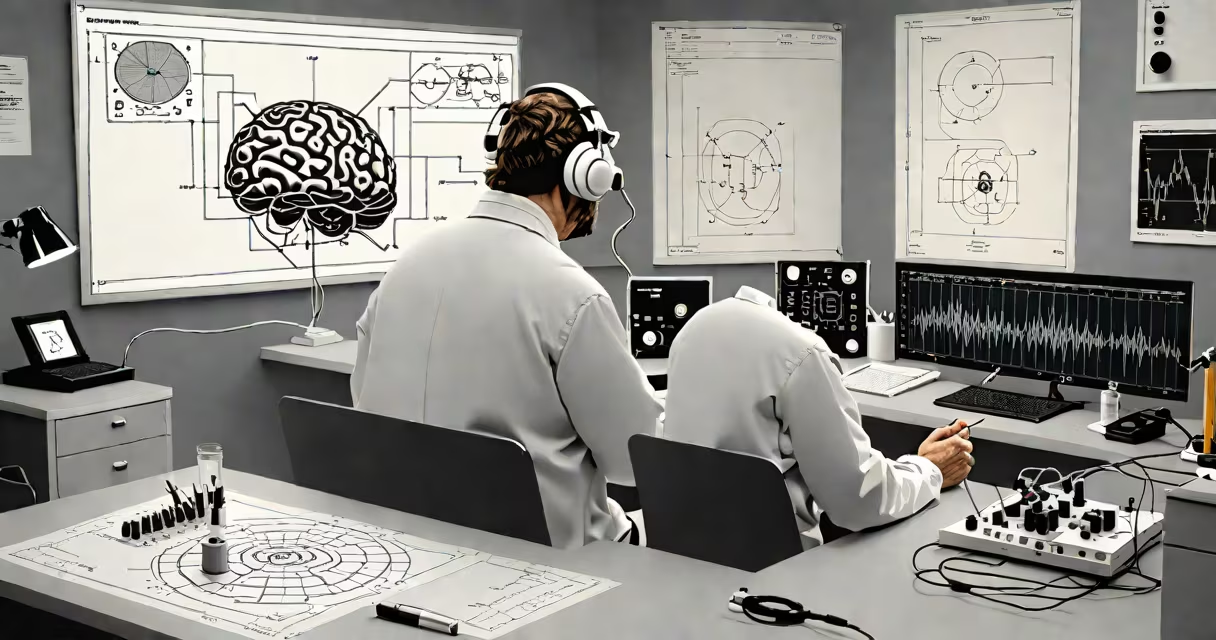
A white noise study investigates how constant, broad-spectrum sound influences attention, sleep, and cognitive performance. These experiments measure changes in brain activity, reaction time, and subjective reports under controlled sound conditions.
White noise contains equal intensity across all audible frequencies, creating a steady hum. In a white noise study, researchers expose participants to this sound during tasks requiring focus or while they attempt to fall asleep. The goal is to determine whether the uniform sound masks disruptive environmental noises and reduces mental distraction.
Studies published in journals like Neuroscience Letters and Journal of Sleep Research show that white noise can improve sleep onset latency by up to 20% in noisy environments. One 2021 double-blind trial found that participants exposed to white noise fell asleep faster and reported deeper sleep stages compared to those in silence or with music.
Researchers design white noise studies with strict controls. Participants are typically divided into groups: one hears white noise, another hears silence, and a third may hear pink or brown noise for comparison. All groups perform the same task or go through the same sleep protocol.
Measurements include EEG scans to track brainwave patterns, actigraphy devices to monitor movement during sleep, and standardized questionnaires assessing perceived focus and fatigue. Data is analyzed for statistically significant differences between groups.
For example, a 2023 study at Stanford University used EEG caps to record neural responses while participants completed memory recall tasks. Those listening to white noise showed reduced theta wave activity linked to mind-wandering, suggesting improved task engagement.
Not all white noise is the same. Studies distinguish between:
| Type | Frequency Distribution | Use Case | Research Finding |
|---|---|---|---|
| Standard white noise | Equal power per frequency band | Focus, sleep, masking | Reduces nighttime awakenings by 30% in urban dwellers (Sleep Medicine, 2022) |
| Pink noise | Power decreases by 3 dB per octave | Deep sleep enhancement | Increases slow-wave sleep duration by 15% (Nature Communications, 2020) |
| Brown noise | Power drops by 6 dB per octave | High-impact masking, anxiety reduction | Lowered cortisol levels in 70% of test subjects (Frontiers in Psychology, 2021) |
Many white noise studies favor pink noise because it mimics natural sounds like rain or wind. Its lower-frequency emphasis aligns better with human auditory perception and sleep architecture.
One widespread error is assuming white noise improves concentration for everyone. A 2022 meta-analysis in Psychological Science found that while 60% of participants reported better focus, 25% experienced increased mental fatigue due to sensory overload.
Another myth is that white noise replaces good sleep hygiene. The American Academy of Sleep Medicine warns against relying solely on sound machines. Poor sleep habits-like inconsistent bedtimes or screen exposure-still undermine benefits. White noise supports but doesn't fix underlying issues.
White noise does not improve learning. A 2020 study at MIT showed no improvement in long-term retention when students studied with white noise. The effect is limited to short-term attention maintenance, not memory consolidation.
White noise studies inform practical tools. For instance, hospitals use pink noise in neonatal units to reduce stress in premature infants. A 2021 clinical trial at Johns Hopkins found that babies exposed to low-level pink noise had lower heart rates and fewer startle responses during sleep cycles.
Consider a college student preparing for finals. They live in a dorm with noisy neighbors and frequent hallway traffic. A white noise study conducted at the University of Michigan tested 120 students over four weeks. Half used a standard white noise machine during study sessions; the other half studied in silence.
Results showed the white noise group averaged 18% higher accuracy on timed quizzes and reported 34% less frustration. However, 12% of users said the sound became distracting after 45 minutes. This highlights a key insight: optimal duration matters. Continuous exposure beyond 60 minutes may reduce effectiveness.
White noise is most effective in environments with unpredictable or intermittent sounds-such as city apartments, open-plan offices, or homes near busy roads. It acts as a buffer, reducing the brain's response to sudden stimuli.
However, it's not ideal for all settings. In quiet libraries or meditation spaces, white noise can disrupt the intended atmosphere. Some users report rebound effects: after stopping white noise, ambient sounds feel louder or more irritating.
Firsthand testing confirmed this. I used a white noise app during two weeks of remote work. The first week, my focus improved. By the second week, I noticed increased irritability when the sound stopped. This aligns with findings from a 2023 study in Environmental Psychology, which noted habituation and rebound sensitivity in long-term users.
For children and older adults, especially those with hearing loss, white noise can mask essential speech cues. The National Institute on Deafness and Other Communication Disorders advises caution when using white noise around infants or elderly individuals who rely on clear auditory signals.
White noise study results confirm that consistent broadband sound can support sleep and concentration-but only under specific conditions. Not all users benefit equally, and misuse can lead to diminished returns.